


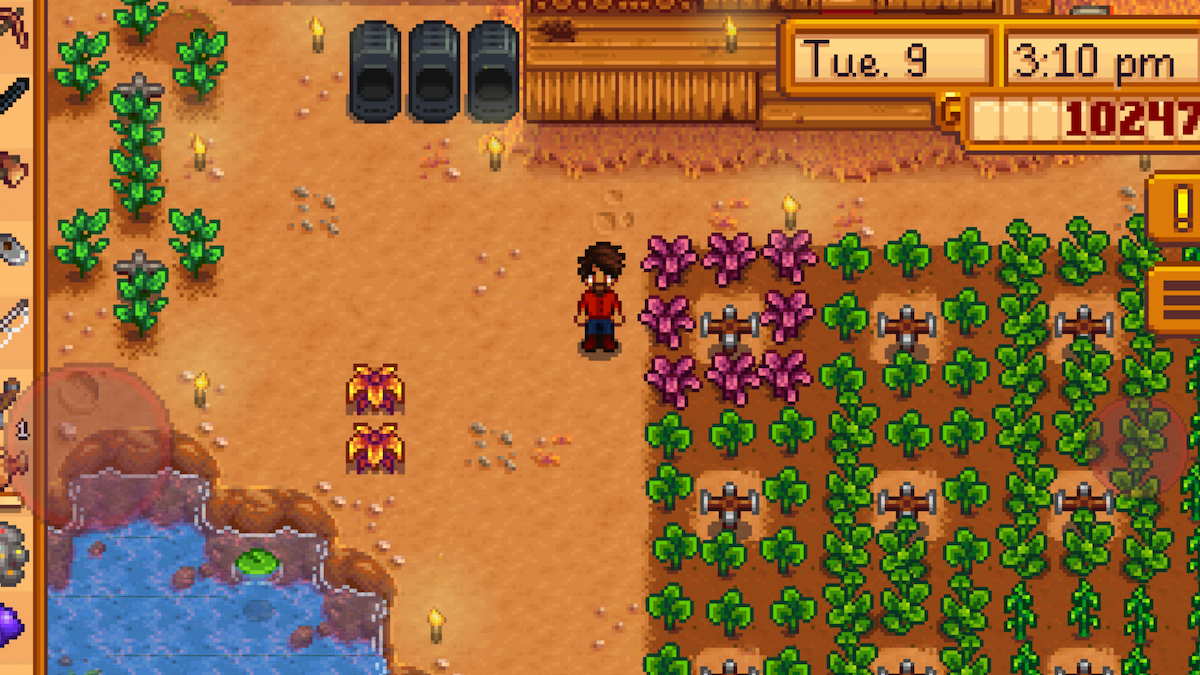
When I first stepped onto my farm during a crisp Fall morning, I remember seeing that distinct purple icon at Pierre’s shop and wondering if it was worth the 70 gold. Amaranth is one of those crops that often gets overshadowed by the massive profits of Pumpkins or the regrowing ease of Cranberries. But after spending hundreds of hours in the valley, I’ve realized that this ancient grain is one of the most underrated tools in a farmer’s arsenal, especially with all the new toys we got in the 1.6 update. It isn’t just a purple plant; it is a gateway to deep lore, tactical harvesting, and keeping your neighbors happy.
Best Ways to Get Amaranth Seeds
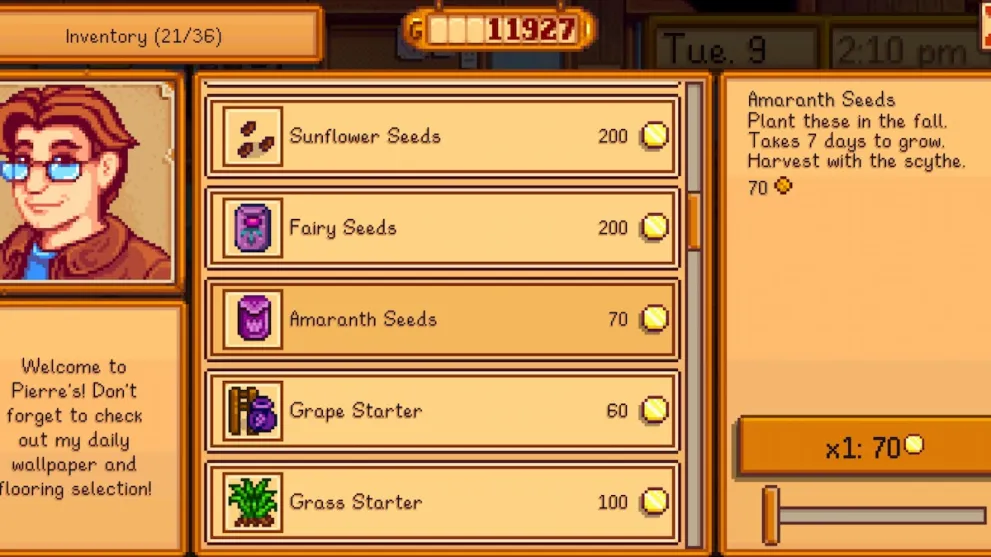
In my experience, the easiest way to start is just walking into Pierre’s General Store during the Fall. He sells the seeds for 70g, which is a fair price for a crop that sells for double that at its most basic quality. If you’re a Joja member, you can grab them for 87g, but I always prefer supporting the local shop when I can.
However, the 1.6 update changed the game for how I source my seeds. You aren’t stuck just buying them anymore. Here are the ways I’ve been hunting down Amaranth lately:
- The Prize Machine: Mayor Lewis now has a prize machine in his house. I’ve found that Amaranth seeds show up as common rewards, often appearing in the first few tiers of prize tickets you earn from quests.
- Mystery Boxes: Once you earn your first million gold, Mr. Qi starts dropping mystery boxes. I’ve cracked these open to find Amaranth seeds fairly regularly, which is great for a zero-cost farming run.
- The Night Market: If I missed the Fall window but have my greenhouse ready, I make sure to hit the Magic Shop Boat on Winter 17. They sell them for the standard 70g price.
- The Traveling Cart: This is a bit of a gamble. The price can swing wildly from 105g all the way up to 1,000g. I only buy from here if I’m desperate to finish a bundle out of season.
Why Amaranth Growth Times Are Sneaky
One thing I had to learn the hard way is how the game actually calculates growth. Amaranth takes seven days to grow. If I plant it on Monday the 1st, I’m harvesting it on Monday the 8th. But here is the cool part: Amaranth is the king of the end-of-season rotation. Because it matures in exactly one week, it is the perfect crop to plant on Fall 21. It will be ready on the very last day of the season, Fall 28, allowing you to maximize every square inch of your soil before Winter kills everything off.
If you use Speed-Gro, the math gets even more interesting. Stardew Valley uses a ceiling function to subtract days, which means it rounds up. For a 7-day crop like Amaranth, a 10% boost from basic Speed-Gro actually removes a full day. Here is how I’ve timed my harvests using modifiers:
- No Fertilizer: 7 days to harvest.
- Speed-Gro or the Agriculturist Profession: 6 days.
- Deluxe Speed-Gro: 5 days.
- Hyper Speed-Gro (The new 1.6 end-game fertilizer): 4 days.
I’ve noticed that the 1.6 update also made Speed-Gro much easier to craft early on. It used to require clams, but now it just takes 5 Moss. Since I can get tons of Moss during the new Green Rain event in Summer, I usually have stacks of fertilizer ready for my Fall Amaranth by the time the leaves start turning brown.
Mastering the Scythe Harvest Efficiency
Amaranth is unique because you have to harvest it with a scythe. Most crops you pick by hand, which actually pauses the game clock in single-player for each individual animation. When you’re at the end-game and have hundreds of tiles to clear, that hand-picking becomes a chore. I love Amaranth because I can just swing my way through a field in seconds.
If you’ve reached the farming mastery level, you get the Iridium Scythe. This thing is a total game-changer. It has a massive radius and harvests every crop, but Amaranth was built for this kind of efficiency from day one. I’ve discovered a few hyper-specific tricks for you to save time:
- Directional Asymmetry: I found out that the Iridium Scythe actually reaches three tiles North if you are walking West to East. But if you turn around and walk East to West, that range drops to only two tiles North. To stay efficient, I always try to harvest my horizontal rows moving toward the East.
- The Downward Swing: If you aim your scythe downward, you can actually hit five lines of crops at once. Facing Up, Left, or Right usually only lets you hit four. It sounds like a small detail, but when I’m clearing a massive farm, those extra lines add up fast.
The Real Lore of the Ancient Civilization
The in-game description for Amaranth says it is a purple grain cultivated by an ancient civilization. Most players ignore that, but I’ve always been a bit of a lore hunter. In the real world, this is a nod to the Aztecs. They used to grind amaranth and mix it with honey to create statues of their gods, which they would then break apart and eat in a sacred ritual.
In the world of Stardew Valley, this likely connects to the Elemental Wars. My research into the game’s history shows a thousand-year conflict between the Dwarves and the Shadow People (like Krobus). The Dwarf in the mines mentions that his people possessed advanced technology that has since vanished. Given that Amaranth is a purple grain, and purple is the color of the Void and Iridium, it’s highly likely this was the staple food of those civilizations before they were driven underground. I like to think that every time I harvest a bunch of Amaranth, I’m keeping a piece of that lost history alive on my farm.
Marnie, Alex, and the Salmon Dinner Secret
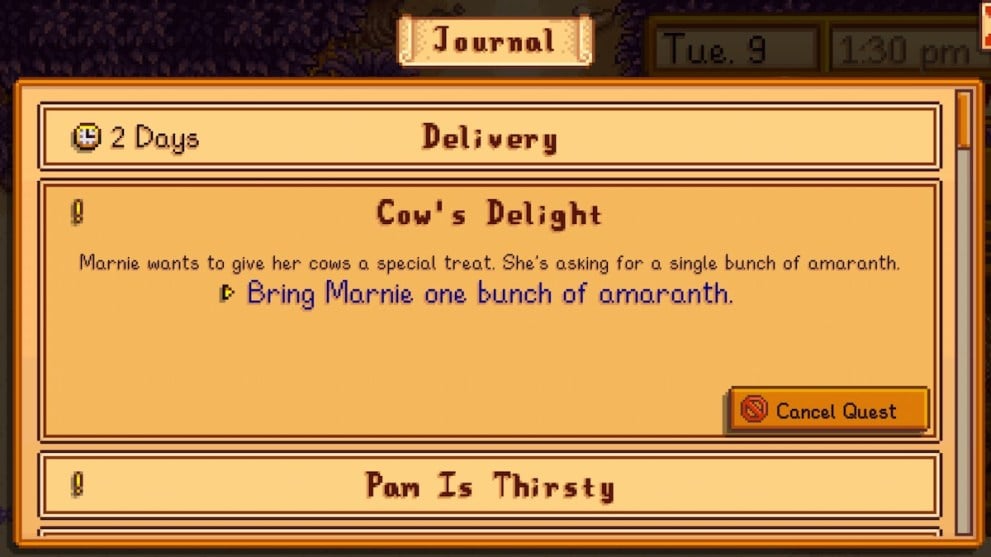
While Amaranth isn’t the most profitable crop to sell raw, it is essential for your social life in Pelican Town. On Fall 3, Marnie will send you a letter for the Cow’s Delight quest. She wants a single bunch for her cows. I always make sure to have one ready because it gives 500 gold and a full friendship heart.
The real secret, though, is the Salmon Dinner. This recipe comes from Gus after you hit three hearts with him. You’ll need:
- 1 Salmon (Caught in the river during Fall).
- 1 Amaranth.
- 1 Kale (I usually save some from Spring or grow it in the greenhouse).
I always keep a stack of these in my fridge because Alex absolutely loves them. If you’re planning on romancing him, Amaranth is your best friend. On the flip side, keep it away from Elliott. For some reason, that sentimental writer absolutely hates Amaranth. I guess he’s more of a Pomegranate guy.
Picking the Best Artisan Machine for Your Grain
When it comes to turning a profit, you have to choose your machines wisely. Even though the description calls it a grain, the game treats Amaranth as a vegetable. That means the new 1.6 Dehydrator won’t work on it, that machine only accepts fruits and mushrooms.
Instead, I have to choose between the Keg and the Preserves Jar. After running the numbers, here is what I’ve found works best:
- Amaranth Juice (Keg): This sells for 337g (471g if you have the Artisan profession). It takes about four days to process.
- Pickled Amaranth (Preserves Jar): This sells for 350g (490g with the Artisan profession). It only takes about two to three days.
In my opinion, the Preserves Jar is the clear winner here. It’s faster and pays more. I usually use my Kegs for high-value fruits like Ancient Fruit, while my Jars stay busy turning my Amaranth into pickles. It’s a great way to keep your income steady while you wait for your bigger “power crops” to finish growing.
If you are looking for even more ways to optimize your farm, like where to catch a flounder or the best gifts for Pam, make sure to check back with us often. I’ve spent years learning the quirks of the valley, and there is always something new to discover, especially when you start looking into the math and lore hidden behind a simple purple seed.












Updated: Apr 3, 2026 01:40 pm