


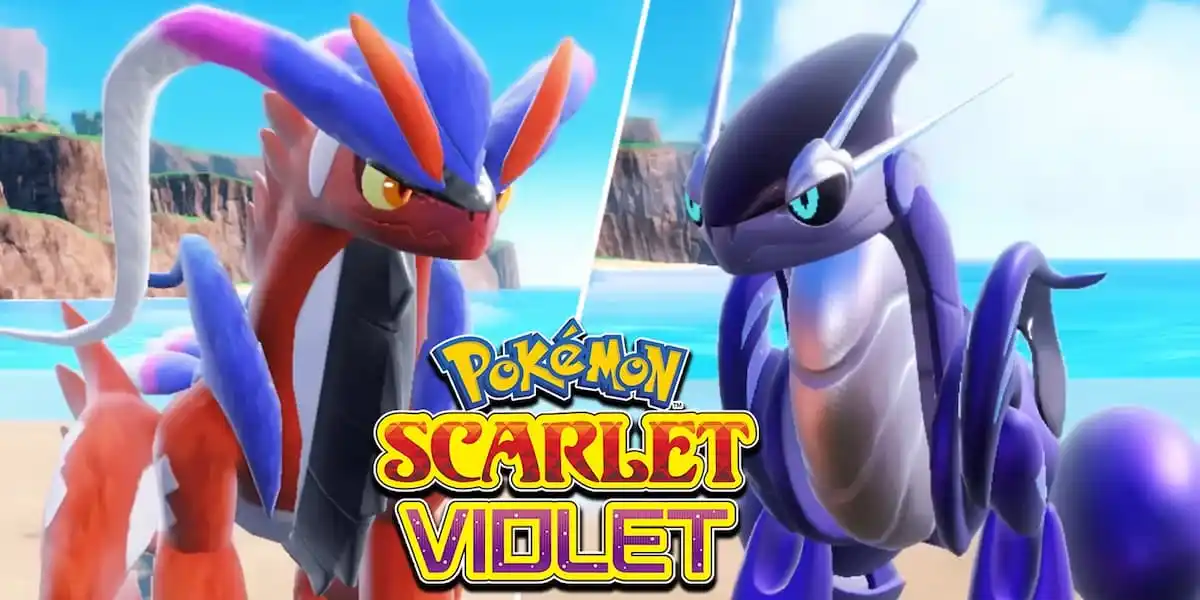
Generation IX of the Pokémon franchise introduced 120 new species across Pokémon Scarlet, Pokémon Violet, downloadable expansions, and event distributions, expanding the National Pokédex to 1,025 species. Debuting on November 18, 2022, on the Nintendo Switch, Generation IX marked Game Freak’s transition to a seamless open-world engine. Driven by visual ecological realism and supported by post-launch hardware patches, the generation spans major console releases, cross-media animated series, and collaborative simulation spinoffs.
How Does the Pokédex Registry Expand?
Historical records of Generation IX contain systematic counting errors, frequently misidentifying the transition from Generation VIII’s final entry, Enamorus (#905), to the beginning of the Paldean registry with Sprigatito (#906). While early guides claimed the base games introduced 104 species, launch software actually cataloged exactly 103 new designs, concluding with Miraidon (#1008). Exactly 17 post-launch species brought the total Generation IX count to 120 additions. Post-launch additions such as Sinistcha (#1013), Walking Wake (#1009), and the mythical Pecharunt (#1025) expanded the roster through event updates and downloadable expansions.
The official classification breaks down across initial launch entries and subsequent updates:
| Registry Category | Pokédex Range | Species Count | Representative Entries |
|---|---|---|---|
| Generation VIII Final Entry | #905 | 1 | Enamorus |
| Paldea Base Software | #906 to #1008 | 103 | Sprigatito, Fuecoco, Quaxly, Koraidon, Miraidon |
| Post-Launch and DLC Additions | #1009 to #1025 | 17 | Walking Wake, Sinistcha, Pecharunt |
| Generation IX Total | #906 to #1025 | 120 | Complete regional and expansion roster |
| National Pokédex Index | #001 to #1025 | 1,025 | Complete global franchise registry |
How Did Hardware Transitions Affect Performance and Timelines?
The launch of Pokémon Scarlet and Pokémon Violet on November 18, 2022, generated over 10 million unit sales globally within three days. However, the studio’s new seamless open-world engine experienced early technical performance constraints, including frame-rate drops, memory leak issues, and reduced draw distances. On June 5, 2025, Game Freak deployed a dedicated optimization patch alongside the release of the Nintendo Switch 2 console. This patch resolved memory leaks, doubled wild overworld spawn rates, and locked performance at native 1080p resolution.
The chronological sequence of releases and major updates outlines this technical and operational evolution:
| Date | Event or Release | Operational and Technical Notes |
|---|---|---|
| November 18, 2022 | Pokémon Scarlet and Violet Launch | Mainline release on Nintendo Switch with 10 million opening weekend sales |
| May 24, 2023 | Pokémon HOME Version 3.0.0 Update | Enabled Paldean transfer compatibility and starter distribution |
| August 11 to 30, 2023 | Path to the Peak Miniseries Broadcast | Four-episode TCG-focused web series by TAIKO Studios |
| September 5, 2023 | Pokémon GO Paldea Integration | Mobile debut of Sprigatito and core Paldean species |
| September 13, 2023 | DLC Part 1: The Teal Mask Launch | Debut of Kitakami region, Ogerpon, and the Loyal Three |
| October 6, 2023 | Detective Pikachu Returns Release | Spinoff title released exclusively on Nintendo Switch |
| November 17, 2023 | Pokémon TCG Classic Launch | Hardware set co-developed by TPC, Creatures Inc., and nendo |
| December 14, 2023 | DLC Part 2: The Indigo Disk Launch | Expansion featuring Blueberry Academy and Area Zero resolution |
| June 5, 2025 | Nintendo Switch 2 Optimization Patch | Native 1080p update, memory leak fix, doubled wild spawn density |
| March 5, 2026 | Pokémon Pokopia Spinoff Launch | Sandbox simulation co-developed with Omega Force on Nintendo Switch 2 |
| August 2026 | Pokémon Pokopia Update and DLC Part 1 | Free software update introducing Dive alongside paid Biomes expansion |
Which Design Philosophies and Creators Shaped Generation IX?
By 2025, Game Freak’s internal workforce expanded to 249 full-time employees, working with 100 3D modelers at Creatures Inc. and over 100 quality assurance testers. Studio leadership maintained a dual-department structure to separate mainline Pokémon titles from original non-Pokémon initiatives. Senior Director Shigeru Ohmori guided Paldea’s creation through an approach centered on ecological realism.
In an official development interview regarding character design philosophy, Shigeru Ohmori stated:
“One thing that sets Pokémon apart from other character brands is that we don’t set out to design the Pokémon to be characters themselves. Instead, they’re supposed to be these living creatures that are believable as existing in their own environment. Like Wooloo, for example. You can picture that living on its own in the wild like an animal would.”
Personal experiences directly influenced narrative arcs within the games. Born on February 29, 1980, in Matsudo, Chiba Prefecture, Ohmori lost his parents at a young age, an experience he cited as the emotional groundwork for Arven’s backstory. Furthermore, voice acting was deliberately omitted from human dialogue. Ohmori noted that leaving voice tracks out enables players to imagine unique voices for each character during gameplay.
Game scope decisions also required roster adjustments across modern titles. Addressing regional Pokédex limitations, game director Kazumasa Iwao explained:
“Going forward, thinking about the future of Pokémon, we want to prioritize all those new gameplay ideas, and want to challenge ourselves at Game Freak to create new ways to enjoy the game. That’s really what drove the decision [to limit the amount of creatures in the game].”
How Does the Collaborative Spinoff Pokémon Pokopia Function?
The focus on overworld biological habitats inspired the creation of Pokémon Pokopia, co-developed by Game Freak and Koei Tecmo’s Omega Force studio using the Katana Engine. Shigeru Ohmori originally conceived the habitat restoration idea while working as a map designer on Pokémon Ruby and Pokémon Sapphire. The concept remained unproduced for over two decades until Ohmori pitched a prototype and promotional trailer.
Producer Kanako Murata noted that Omega Force and Game Freak completed three to four months of pre-production alignment prior to full development. Director Edagawa confirmed that the title required the largest development team in Omega Force’s 30-year studio history. Game Freak led script localization, producing more dialogue lines than any mainline Pokémon game.
Released on March 5, 2026, for the Nintendo Switch 2, Pokémon Pokopia puts players in control of a humanoid Ditto exploring a post-apocalyptic Kanto alongside a guiding Tangrowth. Gameplay focuses on clearing debris, rebuilding soil, crafting biomes, and attracting wild Pokémon.
Commercial metrics record strong market performance:
- Four-Day Global Launch Sales: 2.2 million units
- Japanese Domestic Launch Sales: 1.0 million units, included within the global total
- Lifetime Sales by End of March 2026: 4.0 million units
Ongoing support included an August 2026 update introducing the field move Dive, enabling underwater biome access alongside the paid expansion pass Part 1: Biomes. Pass holders purchasing prior to August 31, 2027, receive exclusive Ditto print blocks and a Mystery Gift code for 30 rare Pokémetal crafting items.
What Official Lore and Animated Media Connect Paldea?
Canonical history details how the mythical Poison/Ghost-type Pecharunt used toxic Binding Mochi to exploit human desire in Kitakami. Through toxic chains, Pecharunt subjugated Okidogi, Munkidori, and Fezandipiti. Known locally as the Loyal Three, this group attacked Ogerpon and its human partner, killing the partner before Ogerpon defeated them, forcing Pecharunt into a centuries-long dormancy.
To adapt Paldean academy life, The Pokémon Company partnered with WIT Studio to animate the four-episode web series Pokémon: Paldean Winds. The miniseries aired from September 6 to December 13, 2023, following academy students Ohara, Aliquis, and Hohma.
Official voice cast credits span both Japanese and English dubbing productions:
| Character | Japanese Voice Actor | English Voice Actor |
|---|---|---|
| Ohara | Shion Wakayama | Cat Protano |
| Aliquis | Minako Kotobuki | Paul Castro Jr. |
| Hohma | Marin | Caroline Spinola |
| Nemona | Eriko Matsui | Olivia Vidas |
| Arven | Makoto Furukawa | Henry Mason |
| Clavell | Tadashi Wakabayashi | Pete Zarustica |
| Aliquis Brother | Shohei Kajikawa | Robb Moreira |
| Iono | Fairouz Ai | Julia Gu |
| Eri | Asami Seto | Emily Cramer |
| Ryme | Subaru Kimura | Zuri Washington |
The animated finale documented key academy faculty and Gym Leaders alongside their signature partner creatures, several of whom appear in the recommended order for challenging Paldea’s eight Gyms.
Official partner assignments include:
| Character | Role | Partner Pokémon |
|---|---|---|
| Saguaro | Academy Faculty (Home Economics) | Pachirisu |
| Hassel | Academy Faculty (Art) / Elite Four | Gible |
| Dendra | Academy Faculty (Battle Studies) | Medicham |
| Raifort | Academy Faculty (History) | Gengar |
| Katy | Cortondo Gym Leader (Bug) | Teddiursa |
| Brassius | Artazon Gym Leader (Grass) | Sudowoodo |
| Kofu | Cascarrafa Gym Leader (Water) | Crabominable |
| Larry | Medali Gym Leader (Normal) / Elite Four | Staraptor |
| Ryme | Montenevera Gym Leader (Ghost) | Greavard |
| Grusha | Glaseado Gym Leader (Ice) | Altaria |
| Tulip | Alfornada Gym Leader (Psychic) | Espathra |
Future Franchise Roadmap and Developer Status
Following technical stabilization on Nintendo Switch 2, future main series and spinoff entries remain in development. Confirmed upcoming projects include Pokémon Legends: Z-A, launched in 2025, and Pokémon Champions, scheduled for 2026. Generation X then begins with Pokémon Winds and Waves, indexed for a 2027 release.










Updated: Aug 4, 2026 03:32 pm