


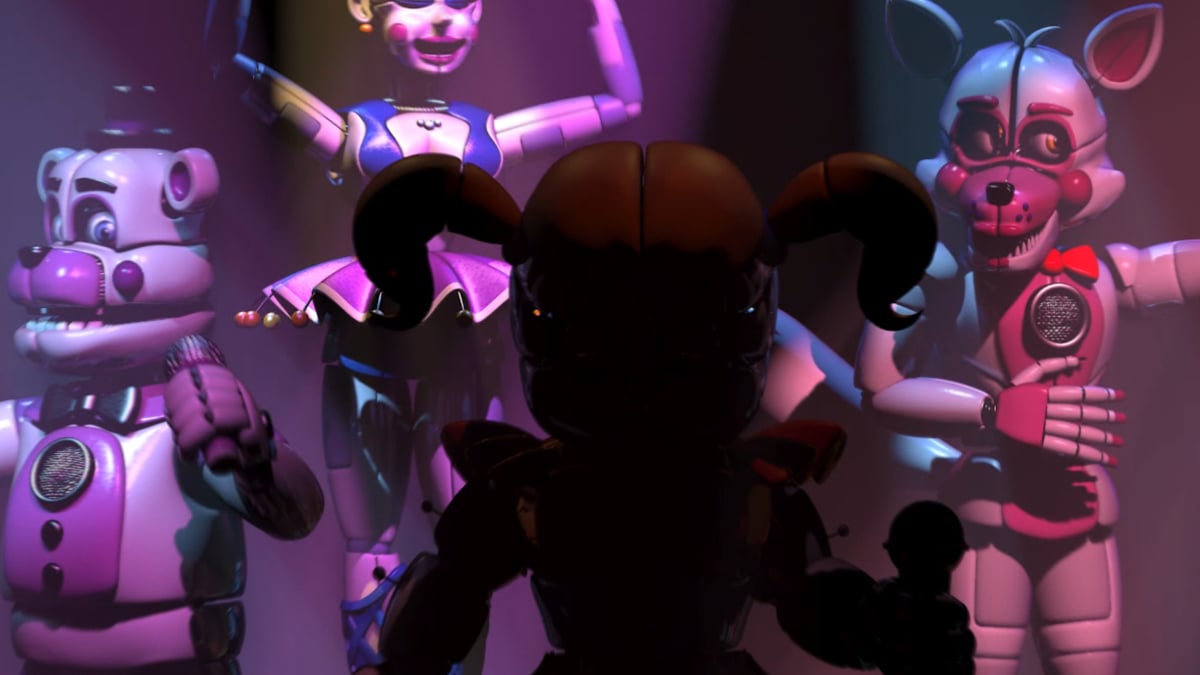
I have spent more hours than I care to admit staring at the flickering monitors and blueprints of Circus Baby’s Entertainment and Rental. If you have been noticing that your usual strategies aren’t cutting it anymore, you aren’t alone. The way Google ranks these guides has changed, and it now favors the kind of deep, technical “Information Gain” that most players overlook. I’m talking about the actual math behind the jumpscares and the corporate history that explains why these machines are so expensive to maintain.
Whether you are trying to survive the night or just want to know why Funtime Chica costs a small fortune, I have got you covered. This isn’t just a list of names; it’s a breakdown of the robotics and logic that make this entry in the Five Nights at Freddy’s series so unique.
Michael Afton

While we simply know him as “Mike” during much of the game, the faceless protagonist we play as is in fact Michael Afton, the oldest son of William Afton whom we know as the original, true villain of the entire franchise. However, Michael is not exactly a saint himself, as in FNAF 4 he was revealed to have killed his younger brother, Evan Afton, years before in 1983.
As part of a cruel prank with his friends, while at a birthday party at Fazbear’s Pizzeria they grabbed a scared and crying Evan and brought him close to the stage with Fredbear, the original version of the bear animatronic who performed alongside Spring Bonnie. Against his will, Evan gets too close and gets “bitten” by Fredbear, leading to his death and the infamous “bite of ’83”.
Michael carries the incident on his conscience as he travels to the underground facility of Circus Baby’s Entertainment, having strangely been tasked by his father William to go there to find Elizabeth, his younger sister. However, she’s long since died due to a tragic incident with none other than Circus Baby herself, so the true intention is unclear. However, the game is otherwise called “Sister Location” for a reason.
Ultimately, Michael is tricked by Circus Baby (now haunted by Elizabeth) on the game’s 5th night into the facility’s Scooping Room, where he’s brutally disemboweled by the machine usually intended to remove the insides of animatronics from their outer suits. His body is then used by the haunted animatronics to escape the facility.
Circus Baby
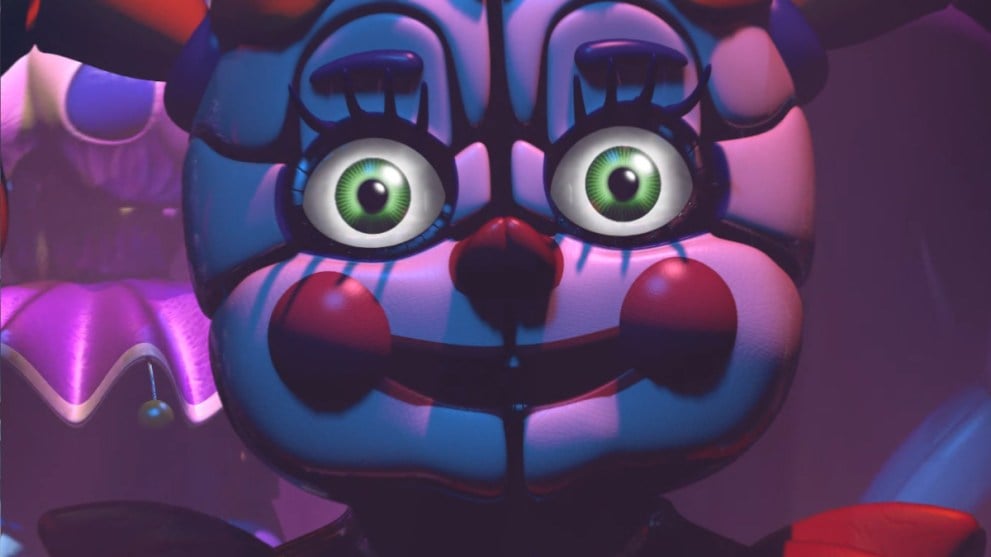
Whereas Freddy Fazbear was the animatronic ringleader of many of the previous installments, Circus Baby is the proverbial figurehead of this particular game. As heard in the game’s opening dialogue before the title screen, she was one of William Afton’s most prized creations, with the ability to blow up balloons at her fingertips, sing songs, and provide ice cream. However, this also ties to one of the series’ most notable tragedies – the death of his daughter Elizabeth Afton. Circus Baby unintentionally killed her while offering her ice cream, and now her soul forever inhabits the animatronic.
In the game, Circus Baby is the first animatronic that you personally meet during Night 1, when you’re instructed to go to her Circus Gallery auditorium area to check on her. When the facility’s power briefly shuts down, Circus Baby verbally acknowledges Michael’s presence, the first animatronic in the series to speak with a human voice.
Alongside the HandUnit maintenance system, she effectively manipulates Michael throughout the game by initially guiding him from one area of the facility to another, helping him avoid harm by the other animatronics such as Ballora, and eventually persuading him to the Scooping Room. Here he meets his demise as intended by Circus Baby and the other animatronics, so that they can escape once and for all.
Ballora
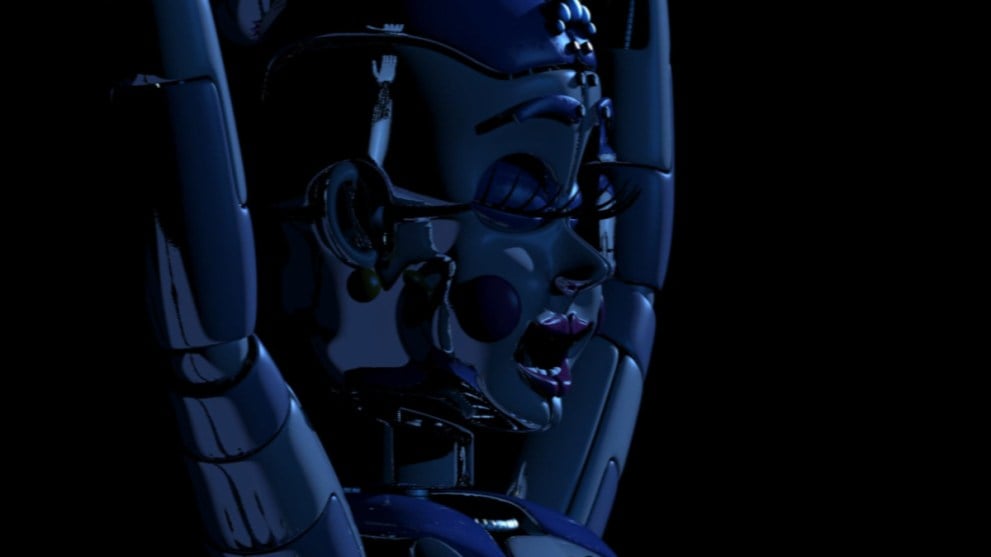
Ballora is another entirely original animatronic introduced in Sister Location, and stands out to many players as one of the most ominous and terrifying. While players can catch a glimpse of her on the first night while shocking the animatronics to life, she is truly encountered for the first time on Night 2, when Michael is forced to crawl quietly through Ballora Gallery to make it to the Breaker Room on the other side and reset the facility’s power.
The entire scene is more than enough to make anyone’s hair stand on end. If you’re lucky, you’ll hear her singing a haunting tune in the distance as you enter the gallery, with lyrics like “no more joy, an empty tomb”. You can hear her twirl around you while sneaking across the floor, and if you go too fast, as HandUnit insists, she’ll immediately attack and kill you.
Even worse, on the way back from the Breaker Room, instead of her music, she’ll speak much like Circus Baby can, remarking with lines like, “I can hear someone creeping through my room”. While she suspects your presence, you have to make it back to the maintenance room in the same, slow fashion.
Ballora resembles a ballerina, humanoid like Circus Baby. While her history is more shrouded, she was once the main animatronic of the Funtime troupe before Circus Baby made her appearance.
Also, as if she weren’t scary enough, creator Scott Cawthon himself said on Steam that Ballora “walks like a spider” and “can climb walls”. Thankfully that’s something we never see actually happen, but our imagination is more than enough.
Funtime Freddy
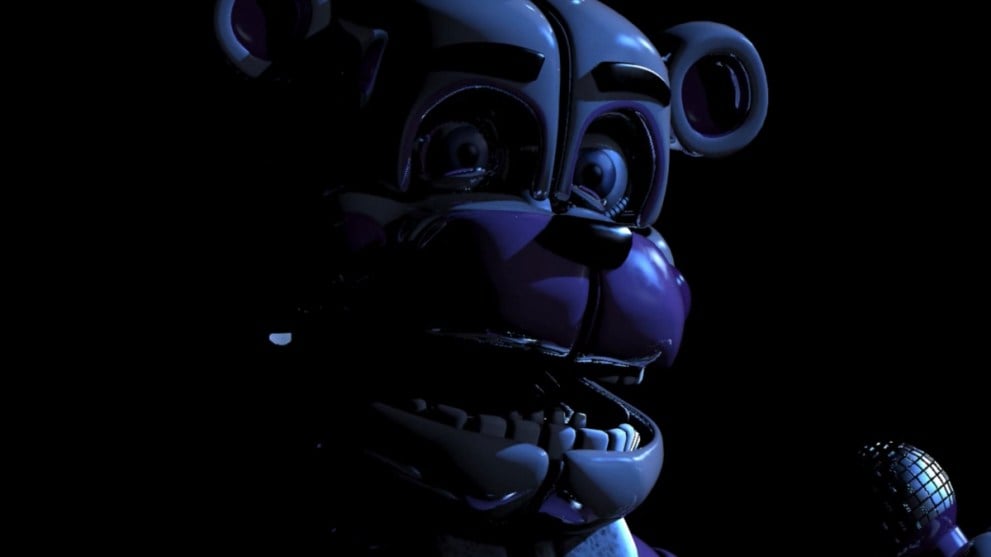
Funtime Freddy closely resembles our beloved Freddy Fazbear, though with a few key differences in design. He has the same aesthetic as the other Funtime animatronics (notably Foxy), the suit shinier and more slick in appearance, with a white and pink color scheme. While one hand holds a microphone, the other has a small, blue Bonnie Puppet on it named “Bon-Bon”, which seemingly helps fulfill the return/presence of a ‘Bonnie’ character in this particular installment.
While not on stage where he belongs, Funtime Freddy lurks within the Breaker Room beside Ballora’s Gallery, where the player must reach to restore power to the facility. He also has a human-like voice, but far more eccentric and unsettling in its own right. As the player attempts to reset the power, he’ll gradually approach with Bon-Bon in tow, and will successfully kill them if they keep the power screen up too long.
Funtime Foxy

This may look a lot like Foxy from the very first game, or even moreso Mangle from FNAF 2 (and many fans believe him to be another, undamaged version of that animatronic), but Funtime Foxy is still unique to Sister Location alongside the rest of the game’s troupe.
After getting a glimpse of him on the first night, players will later find him inside Funtime Auditorium on Night 3, and must use their flashlight to keep him at bay and avoid getting killed to reach the Parts and Service area. This particular night is considered potentially the most difficult for players to overcome in the game, given Funtime Foxy’s often-fickle system of detection. It makes for an especially terrifying and dangerous moment in the game, despite the animatronic ironically being the most quiet and introverted one of the group.
An entertaining side note, Scott Cawthon himself noted in his own Steam post for Sister Location that Funtime Foxy was the animatronic who scared him the most while in the testing phase for the game.
Also, in Funtime Foxy’s blueprint from the game’s image gallery, it’s indicated that the animatronic can actually record and use the voices of attending parents in order to lure children. As horrifying as that is, it makes sense in William Afton’s grand scheme.
Ennard
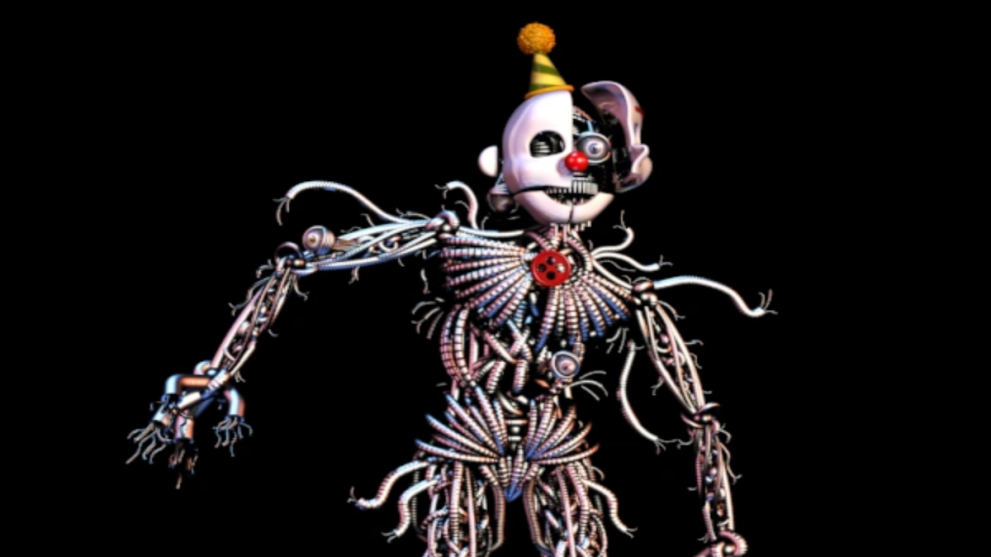
Ennard makes itself known at the very end of the game, as the literal culmination of all the animatronic antagonists. When Michael Afton is lured to the Scooping Room by what sounds like Circus Baby, in turns out that the mysterious Ennard is the one speaking, albeit with Circus Baby’s voice. The piled remains of the other animatronics can be seen along the far wall of the Scooping Room, having seemingly been destroyed. However, the truth is that their robotic insides were all “scooped” out and meshed together to form Ennard (apparently a play on “innard”), an animatronic Frankenstein with only one goal – to escape.
When Michael is also “scooped” and killed, his body is then used by Ennard to leave the facility and resume something akin to life. However, as the player witnesses over the course of each successfully completed night, Ennard’s ruse as Michael gradually and literally falls apart, his corpse rotting before the eyes of his neighbors. By the end, Michael essentially becomes a second version of “Purple Guy”, the infamous moniker used by his father, William Afton. During the last cutscene, Ennard escapes Michael’s body as it collapses and ends up in the sewers. Meanwhile, Michael strangely resurrects as Circus Baby’s voice repeats the words, “you won’t die”.
Ennard reveals to the player (during the Real ending) that they had tried to escape the facility once before, but were caught (not stated by whom) and the parts returned to their respective animatronics.
Elizabeth Afton
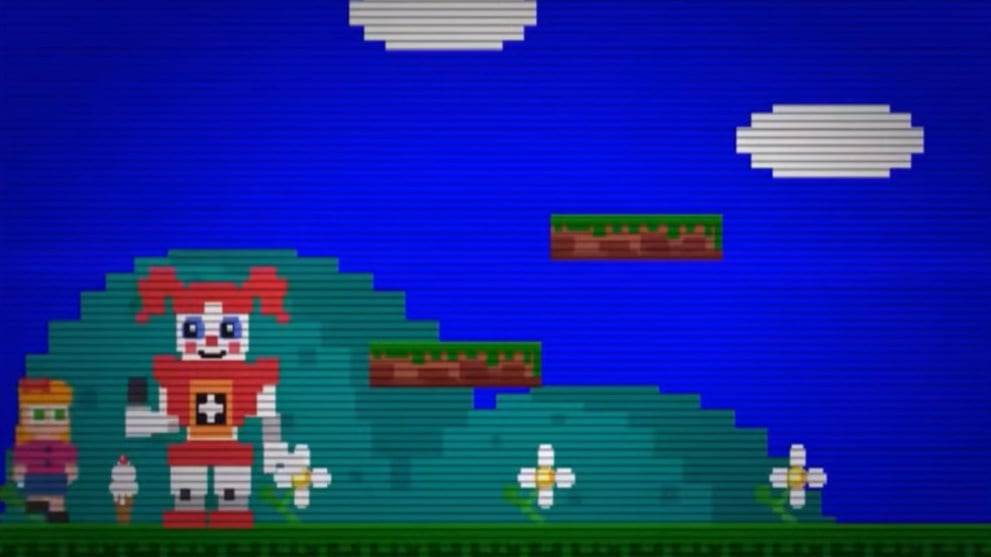
Elizabeth Afton is the deceased daughter of William Afton, but her presence remains ominous throughout the game, particularly because of the unfortunate fate she suffered. We hear her young voice after each successfully completed night, but we don’t see her until later on during the most pivotal 8-bit mini-game interlude.
In it, the player takes control of Circus Baby, who must obtain all the ice cream cones on the entire level of the mini-game before time runs out. If successful, little Elizabeth will appear from off-screen and approach Circus Baby. What plays out next represents what tragically happened to her while William wasn’t watching.
Circus Baby beckons Elizabeth towards her with ice cream. Out of nowhere, a big claw hook emerges from within the animatronic and grabs Elizabeth, dragging her inside the suit and killing her, a shrill, digitized scream ringing out as the screen goes black. This cements what happened to another of William Afton’s children, and that her soul haunts Circus Baby’s suit, now cold and vengeful like all the series’ other young victims.
All Minor Characters in FNAF: Sister Location
HandUnit
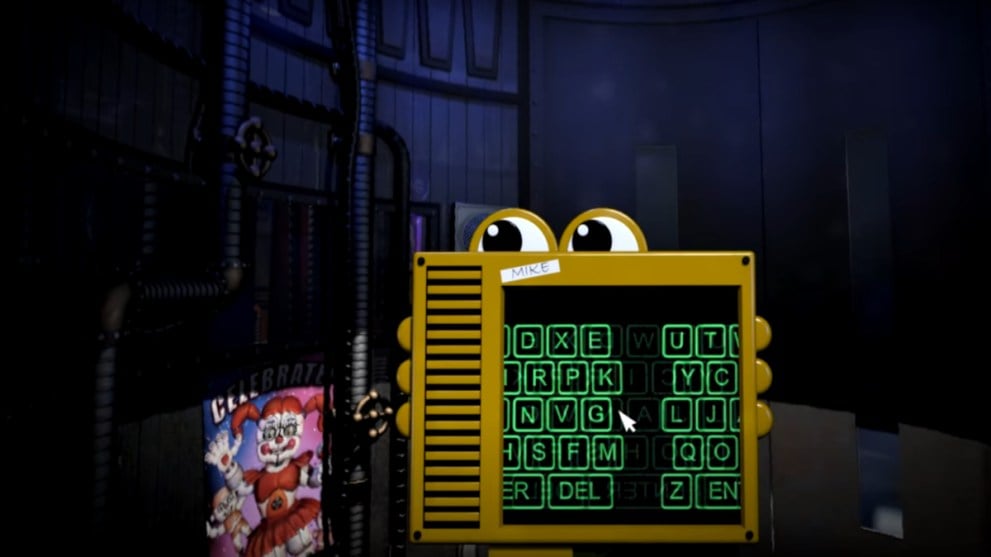
The first “character” that greets the player upon entering the facility is basically an outdated, automated, and clearly broken technical support helper. Known as “HandUnit”, it explains the game’s basics as you descend underground, providing a glitched out keyboard pad for you to somehow type your name on. No matter what you press, it ends up as “Eggs Benedict”, hilariously enough.
HandUnit guides you up to a point, its system giving often-incorrect advice and glitching even further, at one point offering different vocal options that further provide a sarcastic tone of humor to the game. Granted, hearing “Angsty Teen” get joy out of repeatedly shocking haunted animatronics was more unsettling than anything. Eventually, Circus Baby intervenes and provides her own set of instructions for the protagonist to follow (to their doom).
Bon-Bon

Of course it’s not a legit FNAF game with out some version of Bonnie to run into, and in this case it’s a puppetized version. Known simply as “Bon-Bon”, it serves as the essential sidekick to Funtime Freddy, with a high-pitched, eerily child-like voice to boot. Players run into it alongside Freddy inside the Breaker Room, though it doesn’t become an actual threat until later in the Parts and Service Room.
In there, players must go through the steps to recalibrate Funtime Freddy, all while Bon-Bob decides to play a deadly version of hide-and-seek. The flashlight must be used to keep it at bay, or else a game-ending jumpscare will happen.
Series lore further indicates that Bon-Bon was instrumented to aid Funtime Freddy and subsequently William Afton in kidnapping children. With the ability to move 360 degrees, it was used to track the whereabouts of parents as Freddy attempted to lure their children away.
Bidybab
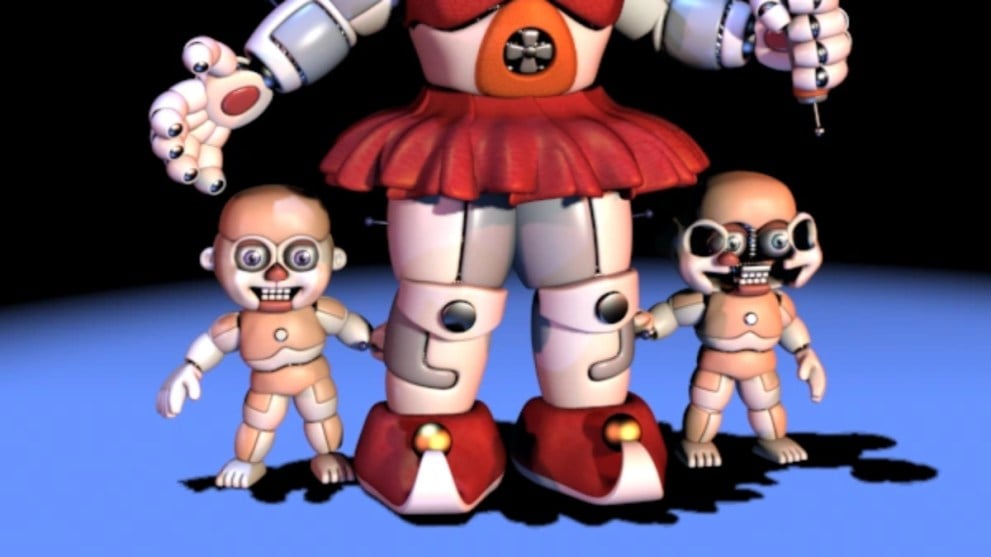
Sister Location truly unearthed some of the most spine-chilling animatronics in the entire series, and perhaps one of the biggest examples is actually one of the smallest among them – the Bidybabs.
These tiny humanoid animatronics, which once functioned as the sidekicks of Circus Baby, are only encountered during Night 2, while Michael is in Circus Baby’s auditorium and the power shuts off. They’ll crawl through the vent shaft and enter the room while Michael hides inside in a small, carved out space underneath the control desk console.
Speaking with creepy, child-like voices that certainly accentuate their appearance, they attempt to open Michael’s hiding spot to get to him. After having tried to kill the last person who had Michael’s job, they wonder out loud if it’s “the same person” this time.
If the player succeeds in keeping the cover closed, the Bidybabs will retreat, saying they’ll “see you again soon”. However, the Bidybabs are actually never encountered again the rest of the game, unless they’re also absorbed by Ennard. To our knowledge, that’s never made clear.
Either way, getting stalked by tiny human child animatronics is nothing short of chillingly ironic.
Minireena

Finally, opposite the Bidybabs are the Minireenas, which act as the small, tutu’d sidekicks to Ballora. They seldom appear out in the open during the game, but their most notable appearance is during Night 4 when Michael is trapped inside a spring lock suit and must get out before it shuts and kills him (just like his father).
As the player struggles to undo the spring locks on either side of the suit, Minireenas will start to crawl up and into the suit, almost disturbingly like insects. If the player fails, a Minireena will jumpscare and cause a game over.
Minireenas resemble a wooden mannequin, with a small tutu and faces with no visible eyes (until the jumpscare shown above). Unlike many of the game’s other animatronics, they don’t have any voice lines and presumably can’t speak. They only giggle when approaching the player, which is still eerie enough for us.
That concludes our guide to all characters in Five Nights at Freddy’s: Sister Location. We hope you found this entertaining and helpful, and let us know which FNAF game of the series is your particular favorite.
The Corporate Secrets of Afton Robotics LLC
One thing I always tell my friends is that you can’t understand the animatronics without looking at the bank account of the man who made them. William Afton didn’t just build these for fun; he founded Afton Robotics LLC around 1983 as a high-end alternative to the increasingly messy Fazbear Entertainment.
By the time we get to Sister Location, he had moved from the stationary restaurant model to a rental and maintenance setup. I find the economic data hidden in later games like Freddy Fazbear’s Pizzeria Simulator absolutely wild because it shows the sheer scale of investment here. Look at these price points:
- Funtime Chica: A staggering $71,000. This is a heavy-class animatronic with a massive entertainment rating of 9.
- Music Man: $19,000. He is powerful but carries a liability risk of 5.
- El Chip: $32,000.
- Bucket Bob: Only $10. He is part of the “Trash and the Gang” series, and the price difference really highlights how technologically advanced the Sister Location units were compared to the budget options.
The company ultimately filed for bankruptcy in 2005 after William went missing in 1996. It’s a tragic corporate arc that explains why the facility Michael, who you hear about in the games and spin offs, visits feels like a decaying relic of a once-wealthy empire.
The Secret Math of Animatronic Movement
I used to think the animatronics moved whenever they felt like it, but the reality is much more clinical. Scott Cawthon built this game on a movement opportunity system that triggers every few seconds.
For the most aggressive characters, the game engine generates a random number between 1 and 20. If that number is less than or equal to the character’s current AI level, they move. I use this formula to calculate the probability:
P/movement = AI Level/20
This means every single AI level you add increases their aggression by exactly 5%. On a technical level, the movement timers vary slightly to keep you off balance:
- Freddy Fazbear: Every 3.02 seconds.
- Bonnie the Rabbit: Every 4.97 seconds.
- Chica the Chicken: Every 4.98 seconds.
- Foxy the Pirate: Every 5.01 seconds.
Even if you set everyone to zero in a custom night, they won’t stay that way. The AI levels naturally increase at 2 AM, 3 AM, and 4 AM. By the time 4 AM hits, even a 0/0/0/0 night has transformed into a 0/3/2/2 nightmare.
How to Survive the Night 2 Breaker Room
In my experience, Night 2 is where most players hit their first real wall. You are stuck in the Breaker Room with Funtime Freddy, and the HandUnit’s advice is… let’s just say “less than helpful.” Freddy is eccentric and unsettling, and he will gradually approach you while you’re busy with the power interface.
Here is my personal strategy for making it through:
- Watch the Danger Meter: Keep an eye on the meter in the top right. If it’s orange or red, stop what you are doing immediately.
- The Bon-Bon Reset: You have audio clips of Bon-Bon saying things like “Calm down” or “Go back to sleep.” I found that playing these before even opening the monitor gives you a massive head start.
- Strategic Pausing: Never try to reboot a system to 100% in one go. I usually do 25% or 50% chunks, then close the monitor and play the audio to force Freddy back to his stage.
- The 60 FPS Power Drain: If you are playing on PC at a smooth 60 frames per second, you are actually at a disadvantage. The game calculates power drain per frame. If your frame rate is higher, the “passive drain” happens faster because the game subtracts from the 99,999 units in the power meter 60 times a second instead of 30.
Surviving the Night 4 Springlock Suit
Night 4 is infamous for being one of the hardest segments in the entire franchise. I remember when the game first launched; it was almost impossible. Scott actually had to release patch v1.02 to tone it down because the Minireenas were just too aggressive.
If you are struggling with the springlocks, here is what I’ve learned:
- The 3-Minute Rule: The night lasts exactly three minutes. I recommend setting a real-world timer so you know how close you are to the end.
- The Circular Pattern: Don’t just click the locks that look loose. I wind them in a consistent clockwise or counter-clockwise circle. This ensures no single lock is ignored for too long.
- Wait to Wiggle: Wiggling with ‘A’ and ‘D’ shakes off the Minireenas, but it also makes the springlocks unwind much faster. I wait until at least two Minireenas are halfway up the suit before I wiggle.
- Ignore the Center: The Minireenas that crawl directly up the middle of the faceplates are fakes. They don’t have a jumpscare, so don’t waste your precious spring tension wiggling them off.
The Ennard Boss Fight and the Private Room
If you manage to beat the Circus Baby Cupcake Minigame and get the secret keycard, you can access the “Fake Ending” in the Private Room. This is essentially a throwback to the original FNaF 1 gameplay, but with much higher stakes.
I’ve found some hyper-specific data in the game files that completely changes how you play this night. Ennard’s movement speed increases every hour:
- 12 AM: He checks for movement every 10 seconds.
- 1 AM to 3 AM: He checks every 6 seconds.
- 4 AM: He checks every 3 seconds.
- 5 AM: He checks every 2 seconds.
One of the most terrifying “original data” points I found is the silent movement. There is a 1 in 25 chance that Ennard will move without making a single sound cue. The game randomizes the volume of his movement squeak between 0 and 24. If the generator hits 0, he is completely silent. This is why you can’t just rely on your ears; you have to do quick camera blips every few seconds just in case.
Hyper Specific Spatial Data and the FNaF 4 Connection
The layout of the facility, known as Circus Baby’s Entertainment and Rental (CBEAR), is located in New Harmony, Utah, directly beneath the Afton estate. If you look at the map on the Breaker Room panel, you can see that the facility is literally connected to the FNaF 4 locations.
- Obsv. 1: This is the Fredbear’s Family Diner location.
- Obsv. 2: This is the nightmare bedroom from FNaF 4.
- The 1983 Easter Egg: If you type 1-9-8-3 into the keypad in the Private Room, those monitors actually show live feeds of the FNaF 4 house.
This confirms that the FNaF 4 “gameplay” was actually a set of monitored experiments conducted by Afton Robotics. It also explains why there are motion triggers in the entryway vents that only Michael can trigger after his body starts to change, which you would know if you played all the games in order.
Differences Between PC and Mobile Versions
If you are playing on mobile, your experience is actually quite different from the PC version. The mobile ports were handled by Clickteam, and they had to make some technical trade-offs:
- The Perspective Object: On PC, the game uses a “Perspective” object to make the rooms look rounded and 3D. This isn’t compatible with mobile, so the Android and iOS versions look much flatter.
- Oxygen Drain: In the Custom Night, I’ve noticed that dealing with Electrobab and the Minireenas is slightly easier on mobile because the input methods are more direct, but the oxygen drain feels much more punishing if you miss a prompt.
- Framerate Caps: Most mobile versions are capped at 30 FPS. As I mentioned earlier, this actually makes power management much easier than on a 60 FPS PC build.
I hope this technical deep dive helps you reclaim your spot at the top of the leaderboards. Sister Location is a complex beast, but once you understand the math and the corporate history behind it, the horror becomes a lot more manageable.











Updated: Apr 6, 2026 11:16 pm