


What Are Paradox Pokemon in Scarlet and Violet?
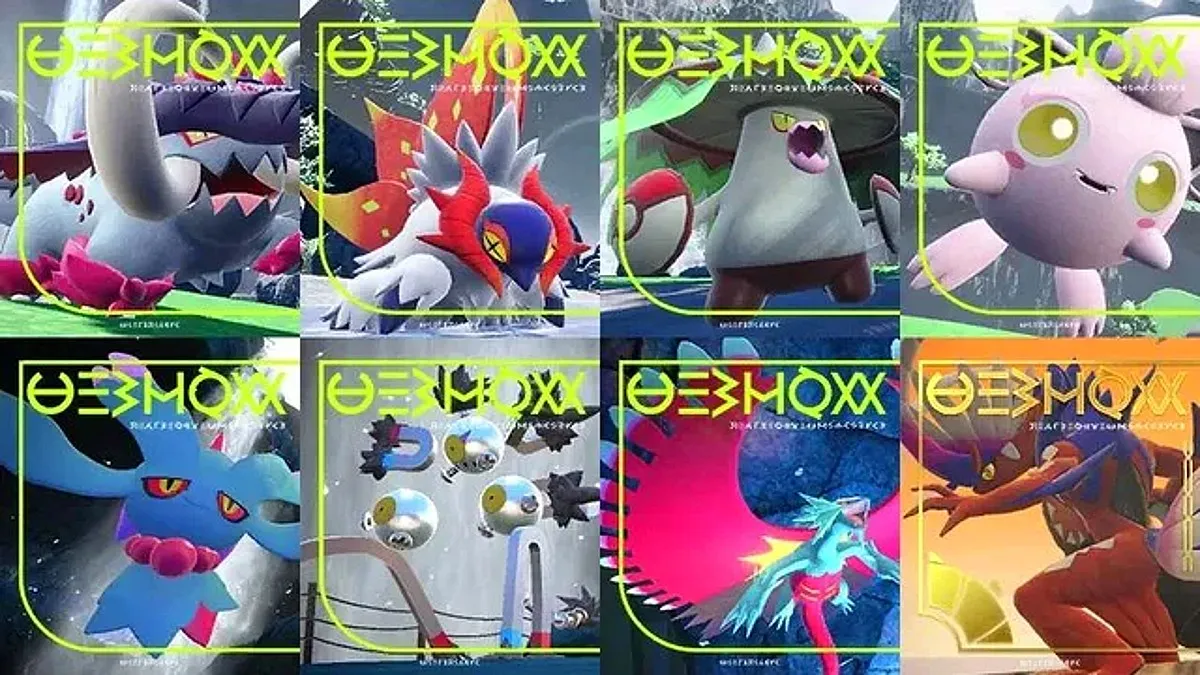
Paradox Pokemon represent powerful single-stage biological anomalies introduced in Generation IX’s Pokemon Scarlet and Pokemon Violet. Existing in the depths of Area Zero, these entities closely resemble contemporary species but originate from alternate timelines. Classified as ancient past variants in Pokemon Scarlet or cybernetic future forms in Pokemon Violet, Paradox Pokemon operate entirely outside standard evolutionary lines, lacking evolutionary stages and unable to be used as breeding partners or to produce an Egg at a picnic. They serve as central narrative pillars in the Paldea region, bridging prehistoric origins with futuristic design concepts while driving high-level competitive mechanics.
Distinct biological characteristics and statistical archetypes separate ancient variants from futuristic forms. Ancient Paradox species utilize the Protosynthesis ability, which boosts their highest statistical attribute in harsh sunlight or when holding a Booster Energy capsule, an item gathered in the Great Crater of Paldea. Future Paradox species utilize the Quark Drive ability, which enhances their highest attribute on Electric Terrain or when holding the same capsule. Although the legendary cover icons Koraidon and Miraidon are introduced early in the campaign as traversal partners, they are later revealed as highly powerful Paradox variants of the modern dragon Cyclizar.
The canonical taxonomy of Paradox species reflects explicit parallels to contemporary creatures across both version-exclusive rosters, which split alongside the two games’ other differences and exclusives.
| Ancient Paradox Species | Future Paradox Species | Primary Extant Relative | Ancient Type / Future Type | Ability Archetype |
|---|---|---|---|---|
| Koraidon | Miraidon | Cyclizar | Fighting/Dragon vs Electric/Dragon | Orichalcum Pulse vs Hadron Engine |
| Great Tusk | Iron Treads | Donphan | Ground/Fighting vs Ground/Steel | Protosynthesis vs Quark Drive |
| Scream Tail | Iron Bundle | Jigglypuff / Delibird | Fairy/Psychic vs Ice/Water | Protosynthesis vs Quark Drive |
| Brute Bonnet | Iron Hands | Amoonguss / Hariyama | Grass/Dark vs Fighting/Electric | Protosynthesis vs Quark Drive |
| Flutter Mane | Iron Jugulis | Misdreavus / Hydreigon | Ghost/Fairy vs Dark/Flying | Protosynthesis vs Quark Drive |
| Slither Wing | Iron Moth | Volcarona | Bug/Fighting vs Fire/Poison | Protosynthesis vs Quark Drive |
| Sandy Shocks | Iron Thorns | Magneton / Tyranitar | Electric/Ground vs Rock/Electric | Protosynthesis vs Quark Drive |
| Roaring Moon | Iron Valiant | Salamence / Gardevoir-Gallade | Dragon/Dark vs Fairy/Fighting | Protosynthesis vs Quark Drive |
| Walking Wake | Iron Leaves | Suicune / Virizion | Water/Dragon vs Grass/Psychic | Protosynthesis vs Quark Drive |
| Gouging Fire | Iron Boulder | Entei / Terrakion | Fire/Dragon vs Rock/Psychic | Protosynthesis vs Quark Drive |
| Raging Bolt | Iron Crown | Raikou / Cobalion | Electric/Dragon vs Steel/Psychic | Protosynthesis vs Quark Drive |
When Were the Different Paradox Pokemon Released?
The deployment history spans base game launches, major expansions, and periodic digital distributions. While 16 native species were available at launch, special event forms like Walking Wake and Iron Leaves require specific event access. Additionally, the final four species, Gouging Fire, Raging Bolt, Iron Boulder, and Iron Crown, remain locked behind a late-game sidequest managed by the photographer Perrin, requiring at least 200 species registrations in the Blueberry Academy Pokedex.
The structured release chronology outlines the introduction and technical evolution of these entities across software revisions.
| Milestone Date | Distribution Vehicle | Canonical and Technical Impact | Availability Status |
|---|---|---|---|
| November 18, 2022 | Base Game Global Launch | Establishes the Paldea region and introduces 16 native Paradox species. | Globally Available |
| February 27 to March 12, 2023 | 5-Star Tera Raid Event Run 1 | Initial localized event distribution introducing Walking Wake and Iron Leaves. | Completed |
| May 1 to 14, 2023 | 5-Star Tera Raid Event Run 2 | Re-run of initial event with software patch resolving rendering glitches. | Completed |
| September 13, 2023 | The Teal Mask Expansion | Establishes Kitakami territory, Crystal Pool locus, and Briar research notes. | Globally Available |
| December 14, 2023 | The Indigo Disk Expansion | Establishes Blueberry Academy and introduces four static sidequest Paradox species. | Globally Available |
| December 25, 2023 to January 7, 2024 | 5-Star Tera Raid Event Run 3 | Holiday digital distribution re-run for Walking Wake and Iron Leaves. | Completed |
| January 11, 2024 | Mochi Mayhem Epilogue | Introduces Pecharunt and concludes primary Paldean narrative arc. | Globally Available |
| February 21 to 27, 2025 | 5-Star Tera Raid Event Run 4 | Mid-lifecycle limited distribution event. | Completed |
| June 5, 2025 | Nintendo Switch 2 Optimization Update | Delivers visual enhancements and expanded draw distances in Area Zero. | Globally Available |
| December 18/19, 2025 to January 4, 2026 | 5-Star Tera Raid Event Run 5 | Fifth seasonal distribution window for Water Tera Walking Wake and Psychic Tera Iron Leaves. | Completed |
How Does Science Explain the Temporal Paradox in Area Zero?
The lore of Generation IX presents a deliberate temporal conflict between historical records and laboratory construction. The explorer Heath documented direct eyewitness sightings of Paradox species in the Scarlet Book and Violet Book 200 years before the main story. However, Professor Sada and Professor Turo constructed the physical Time Machine inside Zero Lab only 10 years before the player arrives.
This apparent contradiction resolves during the narrative climax of expansion content. By bringing Terapagos to the Crystal Pool in Kitakami, high concentrations of Terastal energy trigger a spatial-temporal rift that summons the living Professor from their past timeline. The Professor explains that the Zero Lab machine does not travel across a single linear timeline. Instead, it uses Terapagos energy to extract biological organisms from parallel realities within the multiverse.
This multiversal extraction framework clarifies the canonical origin of the ancient Legendary Beasts. Traditional Johto lore establishes that Ho-Oh revived three unnamed creatures that perished in the Brass Tower fire 150 years ago, creating Suicune, Entei, and Raikou. Because Walking Wake, Gouging Fire, and Raging Bolt originate from parallel dimensions where primeval reptilian forms evolved over millions of years through natural selection, both narrative timelines remain entirely valid.
This temporal interaction creates a closed causal loop structured as a bootstrap paradox:
- The Professor utilizes Briar research notes from the future to construct the Zero Lab Time Machine.
- The Professor leaves the Scarlet Book or Violet Book in the laboratory, enabling the player to embark on the Area Zero expedition centuries later.
- The player travels to Kitakami, summons the past Professor using Terapagos, and transfers the research notes that allow the machine to be built in the first place.
What Is the Production History Behind These Designs?
Art Director Mana Ibe led the visual design direction of Generation IX alongside senior graphic designers Mari Shimazaki and James Turner. Turner collaborated on key Paldean concepts, including Professor Sada, Professor Turo, regional Tauros forms, Tatsugiri, and Dondozo, before leaving Game Freak in June 2022 to found All Possible Futures. Mari Shimazaki designed key human character assets like Miriam and Raifort, as well as the Fidough and Dachsbun evolutionary line.
The conceptual groundwork for these visual shifts builds upon design philosophy changes dating back to Generation III. In an industry interview published in Nintendo Dream (Volume 84, 2003), character designer Ken Sugimori explained a pivot during the development of Pokemon Ruby and Pokemon Sapphire:
“I thought about how wide the variety of Pokémon could be and wanted to push the envelope of what would be accepted. So the first one I made was Blaziken. I wondered if people would go for such a humanoid Pokémon, I was intentionally testing the waters.”
Game Freak frequently incorporates broader cultural and mechanical themes into creature development. Unova starters were designed around regional aesthetics: Serperior modeled a European knight, Emboar represented Chinese general Zhang Fei, and Oshawott reflected a Japanese samurai. Similarly, the Hydreigon line originally featured a mechanized war tank motif, leaving purple tread patterns on Zweilous. James Turner also created the Golurk and Vanillite lines prior to leading visual direction on Paldea version-exclusive professors.
Director Shigeru Ohmori noted that Arven’s storyline concerning parental abandonment drew from personal life experiences. This emotional development inspired Pokemon Pokopia, a sandbox spinoff title inspired by Ohmori’s early career as a map designer on Pokemon Ruby and Pokemon Sapphire. To overcome internal experience gaps in the sandbox genre, Game Freak partnered with Koei Tecmo’s Omega Force team. Pokemon Pokopia released globally on March 5, 2026, for the Nintendo Switch 2.
The operational roadmap for Pokemon Pokopia details planned feature expansions and regional expansions.
| Expansion Phase | Release Window | Core Gameplay Additions | Playable Area |
|---|---|---|---|
| Base Game | March 5, 2026 | Habitat restoration, base species roster, Ditto human disguise mechanics. | Post-Apocalyptic Kanto |
| Free Update | June 2026 | Introduction of the move Dive, enabling transitions between land and underwater exploration. | Marine Seafloor |
| Expansion Part 1 | Mid-2026 | Deep-sea structures and marine habitat expansion. | Bubbly Basin |
| Expansion Part 2 | Late 2026 | Industrial reclamation mechanics and mechanized ancient tools. | Ruined Saffron District |
| Expansion Part 3 | Early 2027 | High-altitude sky island reconstruction and legendary habitat creation. | Stratus Heights |
How Are Paradox Pokemon Integrated Into Cross Media Lore?
In Pokemon Horizons: The Series, Paradox species appear as volatile forces within Paldea. During the Great Crater expedition in Episode 80, Explorers admin Coral encounters a wild Scream Tail, nicknames it “Screamypuff”, and captures it. The animated adaptation demonstrates physical and tactical variations from video game mechanics. In Episode 80, a wild Great Tusk uses the move Rollout despite physical tusk geometry preventing it from rolling into a sphere in core game lore. In Episode 81, ancient figures Lucius and Rystal mistook Gouging Fire for an alternate form of Entei because formal Paradox classification did not exist in ancient times. During that trial battle, Dot, Liko, and Roy aimed to retrieve Lucius’ belt rather than defeat the opponent. In Episode 135, after Penny’s Sylveon faints from an Explosion by Indi and Rubina’s Electrode, Coral substitutes Screamypuff using Fairy-type Terastallization.
The Pokemon Trading Card Game introduced split mechanics in the Paradox Rift expansion, dividing basic Pokemon ex into Ancient and Future archetypes that do not evolve.
Distinct mechanical identities define both archetypes across card aesthetics, supporter synergy, and battle utility.
| Card Attribute | Ancient Card Archetype | Future Card Archetype |
|---|---|---|
| Border Visuals | Layered geological strata pattern on right border. | Pixelated digital grid pattern on right border. |
| Battle Strategy | High health pools and heavy damage outputs. | High speed, rapid setup, and low cost technical attacks. |
| Dedicated Supporters | Professor Sada’s Vitality (energy acceleration and draw power). | Professor Turo’s Scenario (returns active cards directly to hand). |
| Energy Capsules | Ancient Booster Capsule (+60 HP and status immunity). | Future Booster Capsule (0 retreat cost and +20 damage). |
| Representative Species | Roaring Moon ex, Sandy Shocks ex. | Iron Valiant ex, Iron Hands ex. |
The Paradox Rift expansion also reintroduced Technical Machines as a card subtype after a 14-year hiatus dating back to Diamond & Pearl: Rising Rivals in 2009. In Pokemon TCG Pocket: Paradox Drive (Set B3a), released May 27, 2026, Scream Tail utilizes the high-risk move Shooing Shout. Requiring one Psychic and one Colorless energy, the attack flips two coins; landing double heads discards the opponent’s Active Pokemon directly.
The single-attempt probability p of flipping two consecutive heads is:
p = 0.5 x 0.5 = 0.25
The cumulative probability P(X<=3) of achieving at least one double-heads success across three independent turns is calculated as:
P(X<=3) = 1 – (1 – p)^3
P(X<=3) = 1 – (1 – 0.25)^3
P(X<=3) = 1 – (0.75)^3
P(X<=3) = 1 – 0.421875 = 0.578125
This results in a precise 57.8125% cumulative probability of successfully discarding the active card within three active attempts.






Updated: Aug 4, 2026 04:29 pm