


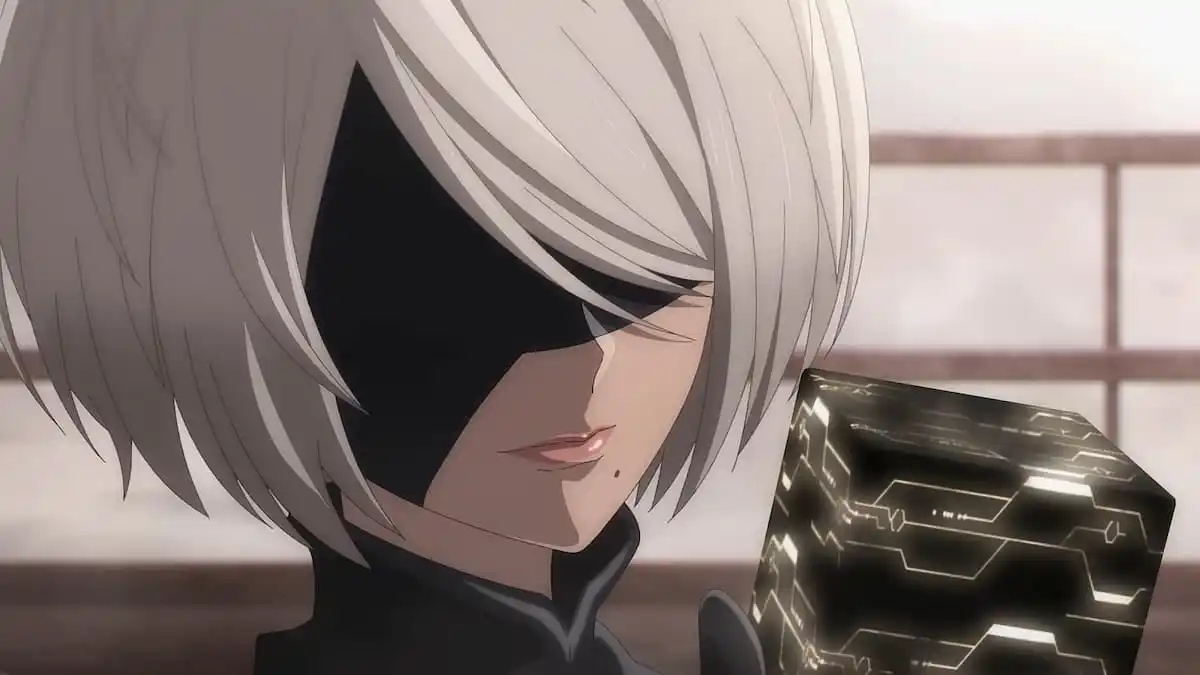
YoRHa Type A No. 2, commonly known as A2, is a pivotal rogue prototype android in NieR Automata whose tragic past shapes the foundation of the YoRHa military organization. First deployed during the Pearl Harbor Descent Operation of 11941, A2 became the sole survivor of her squad after discovering systemic betrayal by her superiors. Classified as a deserter, her operational telemetry directly enabled the development of standardized production models such as 2B and 9S. A2 represents the original chassis design, equipped with high-density combat specs and volatile experimental subsystems.
What Are the Physical and Mechanical Specifications of A2?
Engineered specifically to test extreme close-quarters kinetic thresholds, the physical frame of A2 was constructed prior to the standardization of subsequent production series. High-density military alloys and complex internal mechanical assemblies significantly increase her physical mass compared to organic human proportions. The mathematical relationship governing a YoRHa unit weight relative to an organic human of comparable height is expressed as M(YoRHa) is approximately 2.5 x M(human).
Because YoRHa mechanical frames lack natural buoyancy, units cannot swim. When submerged in aquatic environments, they sink immediately to the bottom and must rely on tactical support Pods using thrust assistance for emergency underwater rescue operations. A2’s prototype frame also features Berserker Mode, an overclocking feature that dramatically increases offensive strike power by bypassing thermal limiters and exhausting defensive barrier systems. Because this system caused severe hardware degradation and system strain, it was omitted from standardized combat units like 2B. Though black accents cover her torso and limbs, these are not clothes, but rather exposed endoskeleton from sustained dermis damage.
What Is the Confirmed Chronology of the Pearl Harbor Descent?
The proxy war between the android Army of Humanity and the alien machine lifeforms has spanned thousands of years. The YoRHa organization was created by Zinnia, Chief of Research and Development, as a psychological initiative to rekindle the fighting spirit of androids following human extinction in 4198 CE.
A2’s pivotal historical event is the Pearl Harbor Descent Operation, cataloged officially as the 126th Descent Mission on December 8, 11941. Sent to destroy a Goliath-class machine server beneath Mount Ka’ala on Oahu Island, 16 prototype units dropped from orbit, though Bunker archives were altered to list only 12. Heavy anti-air defenses eliminated most units during descent, leaving only four surface survivors: Attacker No. 2, Attacker No. 4, Gunner No. 16, and Scanner No. 21. The survivors partnered with a local Resistance group composed of android desertion remnants from the 8th Descent force.
Official records refute early claims that 2B was constructed directly from A2’s physical chassis post-descent. Type B and Type E designs were finalized prior to Pearl Harbor, with 2B rolling out on January 7, 11942. A2’s operational data was harvested to create the Type E executioner line, establishing the cycle where 2B was repeatedly assigned to execute her lineage predecessor.
How Does A2 Differ From Kaine in Official Canon?
A common fan theory suggests a theoretical connection between A2 and Kaine from NieR Replicant. This speculation arose from a monologue delivered by Number 2 in early stage play performances, where she recounts false memories of a peaceful rural childhood tending a farm and knitting with her grandmother. Because Kaine was raised by her grandmother Kali, fans assumed A2 was programmed with Kaine’s memories.
Official canon disproves this theory through three major facts:
- First, Kaine never lived on a farm. Human Gestalt Kaine lived in a grand high-society mansion with her grandmother Kali, while Replicant Kaine lived in a broken shack outside the Aerie where she suffered violent abuse from villagers.
- Second, A2’s original personality prior to Pearl Harbor was exceptionally cheerful, timid, and optimistic, leading Resistance leader Rose to call her Freesia. This contrasts sharply with Kaine’s abrasive and aggressive demeanor.
- Third, the original 2014 stage play script was written by Kaoru Asakusa before being directly integrated into the overarching franchise lore. When Yoko Taro took direct script control for later play revisions, the manga, and the anime, he removed the grandmother and farm monologue completely.
What Is the Production History of the YoRHa Stage Plays?
Before appearing in the 2017 video game, the character of A2 and the YoRHa concept were developed through experimental live performances. In 2012, creator Yoko Taro collaborated with music studio MONACA and talent agency DearStage to form an idol vocal group called YoRHa. He adapted this premise into a theatrical stage play, YoRHa Ver. 1.0, which premiered in October 2014. Square Enix producer Yosuke Saito watched an early show and proposed turning the premise into a console video game.
Behind-the-scenes details reveal verified lore connections from the creators. Despite being portrayed by male actor Kyousuke Suga in the Ver. 1.3 series, Yoko Taro confirmed during a 2020 livestream that Accord is strictly a female model android. Yoko Taro stated that “the Accord that appears in YoRHa Ver. 1.3a/aa was never said to be male… He decided from the very beginning that there were only female-type Accord androids. No male-types exist.” Furthermore, casting Hiroki Yasumoto as Pod 042 was intentional, as Pod 042 contains the salvaged personal data of Zinnia. Yoko Taro confirmed this connection, stating that “Pod 042 possess the Personal Data of Zinnia.”
How Does the Anime Adaptation Diverge From the Video Game?
The television series NieR Automata Ver1.1a, co-written by Ryoji Masuyama and Yoko Taro, functions as a distinct narrative timeline branch. Critical episodes focus on A2: Episode 6, Lone Wolf, introduces Lily’s backstory and contrasts A2’s early gentle personality with her current state; Episode 17, Bad Judgment, shows her memories of Pearl Harbor; and Episode 24, The End of YoRHa, presents her final confrontation with 9S, a character whose bond with 2B the anime reframes in more complex terms than the game.
While A2 sacrifices herself in the video game ending, Episode 24 introduces a major divergence. The temporal recorder Accord appears in animated form, repairing A2’s damaged frame and placing her to rest beside a blooming Lunar Tear. This timeline branch is officially titled Alternative Eden.
This change brings significant lore implications:
- First, Accord’s physical presence proves the anime is a distinct multiverse branch monitored by her network to prevent future catastrophes.
- Second, rather than splitting into Terminal Alpha and Terminal Beta through infinite replication as seen in the game, the Red Girls are infected by Pod 042 using logic education protocols. This causes an internal ideological fracture that forces the terminals into self-destruction.
- Third, encrypted hexadecimal metadata in the broadcast of Episode 24 warns that saving 2B, 9S, and A2 in this branch is linked to the Great Calamity. By rescuing them, Accord achieves local peace while potentially triggering global disaster.
Production easter eggs include Pod 567 aiding A2 at the end. The number 567 reads phonetically in Japanese as Corona, acknowledging real-world production delays caused by the pandemic. Pod 567 is voiced by Kouji Yusa, who voiced adult Nier in NieR Replicant. In addition, A2 reflects on her journeys with quiet emotion, mirroring her character line “I never quite realized…how beautiful this world is.” Her Pod’s bold statement was translated from the original Japanese dialogue “Kuso kurae da” into the English localization “Suck it.”






Updated: Jul 29, 2026 07:41 pm