


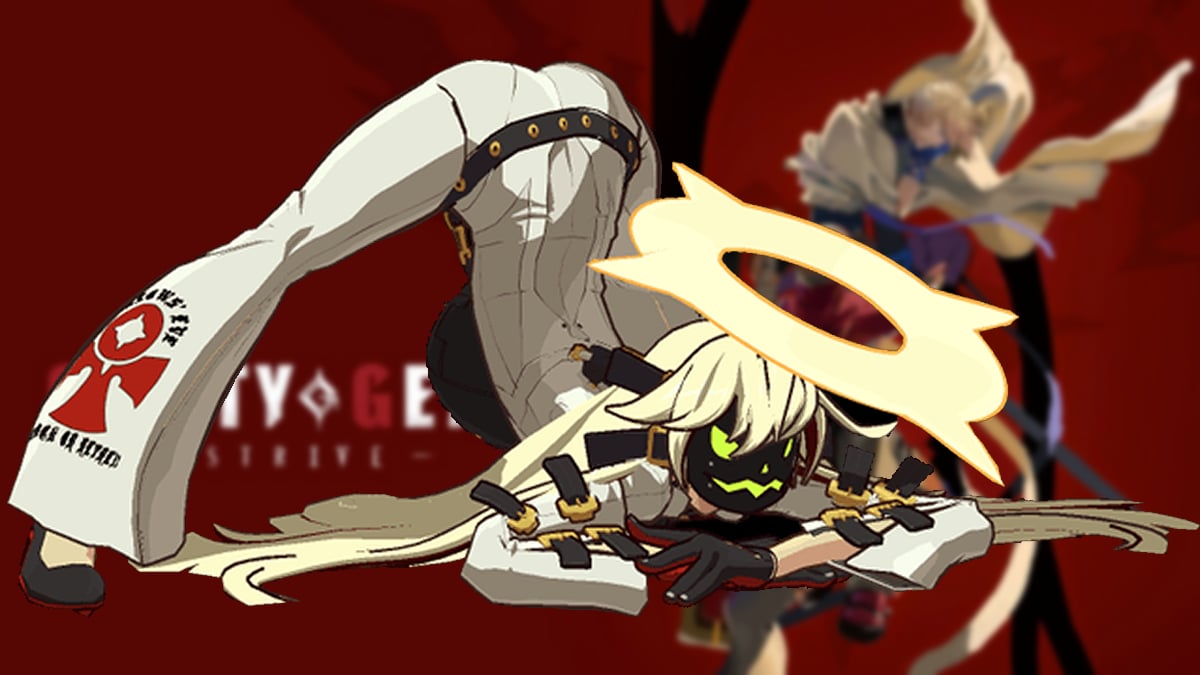
The Jack O Pose is a distinctive crouching animation associated with the character Jack O Valentine from the Arc System Works fighting game series Guilty Gear. First introduced in Guilty Gear Xrd Revelator in August 2015 as her standard crouching stance, the pose features the character resting her upper torso and palms flat against the ground while elevating her hips high in the air. The stance achieved widespread global viral recognition in August 2021 following the announcement of her return as downloadable content for Guilty Gear Strive.
What is the Origin and Significance of the Jack O Pose
The crouching animation originally functioned as a tactical stance within the fighting game mechanics of Guilty Gear Xrd Revelator. By dropping her chest and head to the floor plane, the animation vertically compresses her hurtbox. This physical profile enables her to pass beneath high physical strikes and horizontal projectiles without requiring precise blocking commands. While recognized by fighting game players following her 2015 arcade launch, digital media coverage often misattributes the origin of the posture to an August 2021 internet challenge.
The widespread internet trend began on August 15, 2021, when Arc System Works broadcasted the reveal trailer for her inclusion in Guilty Gear Strive during the EVO 2021 tournament. The trailer confirmed that her crouch animation was preserved in full high-definition 3D rendering, showcasing the anime-style art direction that made Strive one of the best-looking fighting games of its release year. Fans, illustrators, and animators subsequently recreated the stance under dedicated social media hashtags. Community creators extended the trend into PC modding, adding the movement animation into custom character mods for games such as Rivals of Aether.
What is the Official Production and Release History
The development lifecycle of Jack O Valentine spans arcade cabinets, home video game consoles, PC ecosystems, and broadcast media. The initial narrative mention of the character occurred in 2001, though her playable debut occurred 14 years later in Japanese arcades. Her core gameplay design underwent a major transition between releases. In Guilty Gear Xrd Revelator, her combat style relied on real-time strategy mechanics derived from Guilty Gear 2 Overture, where she placed static structures that automatically spawned autonomous minion units. In Guilty Gear Strive, developers replaced automated houses with direct manual summon mechanics to improve dynamic neutral combat.
The historical lifecycle of the character spans early lore entries, arcade deployments, global console launches, and animated adaptations. The following record documents the confirmed production milestones across all official media releases.
| Milestone Event | Platform or Medium | Confirmed Release Date | Regional Details |
|---|---|---|---|
| Lore Origin Mention | Guilty Gear X Plus | November 29, 2001 | Sol Badguy ending lore mention |
| Playable Arcade Debut | Arcade ALL.Net P-ras MULTI | August 25, 2015 | Japanese arcade deployment |
| Japanese Console Launch | PlayStation 3 and PlayStation 4 | May 26, 2016 | Japanese home console launch |
| North American Launch | PlayStation 3 and PlayStation 4 | June 7, 2016 | Localized North American release |
| European Console Launch | PlayStation 3 and PlayStation 4 | June 10, 2016 | European regional launch |
| Worldwide PC Release | Microsoft Windows via Steam | December 14, 2016 | Global Steam release for Revelator |
| Arcade Expansion Launch | Arcade ALL.Net P-ras MULTI | March 30, 2017 | Japanese arcade deployment of REV 2 |
| Console Expansion Launch | PS3, PS4, and PC | May 25 to 26, 2017 | Worldwide deployment of REV 2 update |
| GGST Character Reveal | EVO 2021 Tournament Stream | August 15, 2021 | Revealed as Season 1 DLC Character 2 |
| GGST Season Pass Launch | PS4, PS5, and Steam | August 27, 2021 | Early access for Season Pass holders |
| GGST Standalone DLC | PS4, PS5, and Steam | August 30, 2021 | Standalone DLC purchase launch |
| GGST Arcade Launch | ALL.Net P-ras MULTI Ver.3 | July 29, 2021 | Japanese arcade version launch |
| GGST Xbox and Windows | Xbox One, Series X and S, Win | March 6, 2023 | Ecosystem expansion to Xbox platforms |
| GGST Switch Launch | Nintendo Switch | January 23, 2025 | Nintendo Switch global launch |
| Television Anime Debut | Broadcast TV and Crunchyroll | April 5, 2025 | Broadcast of Guilty Gear Strive Dual Rulers |
How Was Jack O Designed and Developed Behind the Scenes
Series creator Daisuke Ishiwatari designed Jack O Valentine to express complex human themes through visual dualism and mechanics. Daisuke Ishiwatari stated that the core narrative theme revolves around seeking the answer to the question, “What does it mean to be human?” To reflect this theme, her personality splits between an intellectual adult persona and a sugar-reliant child persona.
During production of Guilty Gear Strive, Arc System Works prioritized integrating prominent story characters into the playable roster early in the post-launch life cycle. Discussing the DLC character selection strategy, director Akira Katano explained that “after the players become fans of these characters through the story, we should make them playable in the game.” When asked about returning classic roster members in developer interviews, creator Daisuke Ishiwatari joked that “if we can sell enough we will put every character in the game.” That approach shaped later additions to the roster as well, including the reveal of Sin Kiske as a Season Pass DLC character.
Voice acting production varied across game entries due to development constraints and localized schedules. Arc System Works omitted English voice acting entirely from Guilty Gear Xrd Revelator worldwide due to compressed release schedules between Japanese and Western deployments. Consequently, the character was voiced exclusively in Japanese by Hiromi Igarashi until Guilty Gear Strive restored multi-language dubbing. The official vocal cast roster across Japanese, English, and Korean localizations reflects these changes.
| Production Title | Japanese Voice Actor | English Voice Actor | Korean Voice Actor |
|---|---|---|---|
| Guilty Gear Xrd Revelator | Hiromi Igarashi | English dub omitted by developer | None |
| Guilty Gear Xrd REV 2 | Hiromi Igarashi | English dub omitted by developer | None |
| Guilty Gear Strive | Hiromi Igarashi | Nicole Tompkins | Ah-yeong Yoon |
| Guilty Gear Strive Dual Rulers | Hiromi Igarashi | Cast unannounced | Cast unannounced |
What is the Canon Lore and Profile of Jack O Valentine
In official series lore, Jack O Valentine is an artificial life form synthesized in 2073 by Asuka R. Kreutz, also known as That Man. She was constructed using fragmented memory sectors of Aria Hale, the deceased lover of Sol Badguy. Designed as a physical patch, her primary purpose was to fuse with the core of Justice to prevent the resurrection of the biological weapon and restore Aria’s soul. Forced awake by I-No on November 6, 2187, before her soul download was complete, she required a pumpkin mask and high-sugar candy consumption to stabilize her physical form.
During the climax of Guilty Gear Xrd Revelator, Jack O completed her fusion with Justice. While neutralizing Justice, the process left Aria’s consciousness dormant while preserving Jack O as an independent individual. In Guilty Gear Strive, she works alongside Sol Badguy as a bounty hunter. Her physical design reflects her stabilized state, featuring permanent green eyes, inverted hair color, and a cracked floating halo. Newcomers navigating this dense backstory can lean on the in-game GG World encyclopedia that explains the series timeline and terminology.
Official developer profile records establish the biological, physical, and personal traits of the character within canonical lore. The verified attributes detail her personal background and physical metrics.
| Canonical Attribute | Official Record | Lore Context |
|---|---|---|
| Full Character Name | Jack O Valentine | Surname often omitted in fighting game selection screens |
| Species and Origin | Artificial Valentine | Created by Asuka R. Kreutz inside the Sanctuary |
| Gender | Female | Modeled after the physical blueprint of Aria Hale |
| Height Metric | 165 cm or 5 feet 5 inches | Standard height maintained across game entries |
| Weight Mass | 45 kg or 99 pounds | Formally recorded physical mass |
| Biological Blood Type | Type O | Matches human blood type unlike sister Valentine models |
| Official Birthday | December 13 | Self-selected date chosen upon her awakening |
| Eye Color Evolution | Reddish-brown to green | Green eye color indicates soul stabilization in Strive |
| Hair Color Evolution | White to red with highlights | Visual shift reflecting Aria Hale dormant soul presence |
| Favorite Items | Candy, memories, novel ideas | High-sugar intake stabilizes her physical soul structure |
| Personal Dislikes | Scientific ideas | Reflects an aversion to detached logic |
| Sister Constructs | Ramlethal and Elphelt | Parallel Valentine constructs created by the Universal Will |
How Does the Pose Work in Competitive Gameplay and Media
In competitive combat, the crouching posture functions as an evasive tool within character movement toolsets. Because her upper body rests directly on the floor during the animation, high hitting attacks pass harmlessly overhead. This interaction alters spacing during neutral encounters, allowing skilled players to avoid incoming attacks without expanding guard meter. Players drilling these defensive options online can set up private rooms and player matches to practice the interaction against a sparring partner.
Beyond video games, Jack O Valentine has appeared in major crossover collaborations, including playable guest roles in mobile games such as Seven Knights, Crusaders Quest, Brave Frontier, Chain Chronicle 3, Last Period, Elemental Story, Code Shifter, and Epic Seven. Her design extended to narrative television in Guilty Gear Strive Dual Rulers, an official anime series produced by Arc System Works and studio SANZIGEN. Set after the events of Guilty Gear Strive, the story follows the wedding of Ky Kiske and Dizzy while Jack O and Sol Badguy confront new emergent threats.





Updated: Aug 4, 2026 04:09 pm