


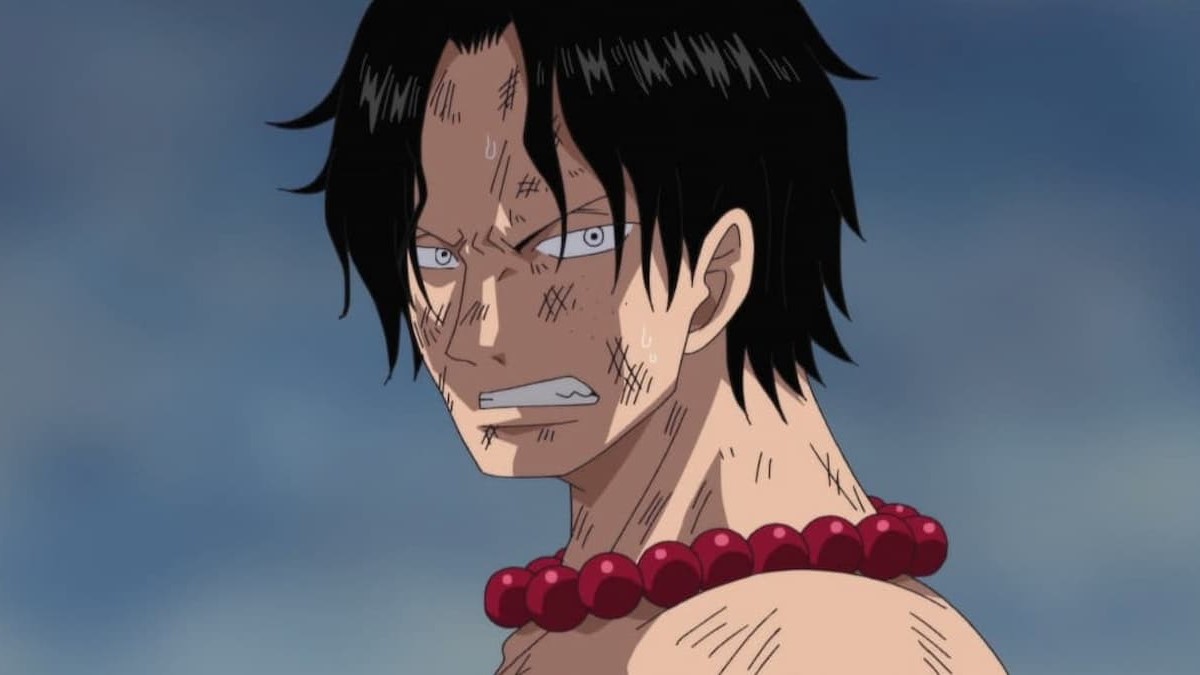
The tragic death of Portgas D. Ace occurs in One Piece anime episode 483, titled “Looking for the Answer! Fire Fist Ace Dies on the Battlefield!”, and manga chapter 574, titled “Portgas D. Ace Dies”. This iconic narrative turning point in the Marineford Arc permanently concludes the bloodline of the Pirate King, Gol D. Roger, and acts as the catalyst for Monkey D. Luffy’s emotional maturation. The transition from Eiichiro Oda’s serialized manga to Toei Animation’s broadcast introduced key changes in pacing, censorship, and cross-media lore that continue to shape the global franchise across animations, live-action adaptations, and collectibles.
In what episode and manga chapter does Portgas D. Ace die?
The Summit War of Marineford consistently ranks among the most action-packed arcs in the entire series, and to trace the exact cross-media trajectory of this tragic milestone, the verified publication, broadcast, and physical release dates must be aligned chronologically.
| Media Format | Identifier | Official Release Date | Primary Creative Credits | Key Narrative Milestones |
|---|---|---|---|---|
| Manga Chapter | Chapter 574 | February 15, 2010 | Written and Illustrated by Eiichiro Oda | First mention of Sabo; confirmation of Haki use by commanders Marco and Vista. |
| Manga Volume | Volume 59 | August 4, 2010 (JP) / December 6, 2011 (EN) | Compiled by Shueisha / Viz Media | Comprises the narrative climax of the Summit War of Marineford. |
| Anime Episode | Episode 483 | January 16, 2011 | Directed by Hiroaki Miyamoto; Screenplay by Hirohiko Kamisaka | Original broadcast on Fuji TV with simultaneous global streaming. |
| Home Video | Collection 20 | December 17, 2018 (UK/IE) | Distributed physically by Funimation | Includes official US voice cast audio commentaries for the Marineford climax. |
What filler sequences and censorship changes did the anime introduce?
Adapting the 16 graphic pages of manga Chapter 574 into a standard 20-minute television episode forced Toei Animation to integrate several padding sequences. These additions served to extend the pacing of the narrative without introducing non-canonical arc elements. The production team integrated five major anime-original sequences into Episode 483:
- A messenger is explicitly sent to fetch Mr. 3 to unlock Marco’s Seastone handcuffs, stalling the immediate progression of the scene.
- An anime-original battlefield clash is depicted where Edward Newgate attempts to block Admiral Akainu but is intercepted by Admiral Kizaru.
- A field medic is permitted to briefly evaluate and attempt medical treatment on Ace’s fatal wound.
- A desperate, futile plea is made by Luffy to Emporio Ivankov, requesting an injection of Vigor Hormones to stabilize his brother.
- Multiple emotional flashbacks illustrating the pirates’ initial arrival at Marineford are inserted to emphasize the structural weight of the scene.
Beyond structural pacing, the Fuji TV Sunday morning broadcast timeslot required Toei Animation to sanitize the explicit imagery originally illustrated by Oda. In the manga, Akainu’s magma fist creates a smoking, open cavity through Ace’s torso, with continuous trails of heat pouring from the wound. The animated version suppressed the continuous smoke and reduced the detailed depiction of destroyed internal tissue to avoid graphic violence.
Furthermore, the overall environmental brutality of the war was altered; the manga depicts Edward Newgate losing a portion of his skull and face to Akainu’s molten strikes, whereas the anime diverts this damage to his mustache and abdomen. Finally, Jinbe’s physical feats were adjusted. In the manga, the Fish-Man blocks a secondary, lethal strike from Akainu aimed at Luffy using only a single hand, whereas the anime portrays Jinbe utilizing both hands in a more desperate, straining defense.
How does Akainu’s magma power bypass Ace’s elemental intangibility?
While combat experience and sheer willpower dictate most battles, the physical laws of the One Piece world establish a strict hierarchy of elemental superiority among specific Devil Fruits. This mechanic is formally defined by Eiichiro Oda in the SBS section of Volume 79, establishing that certain Logia and Paramecia powers possess innate advantages over others. Within this framework, Admiral Akainu’s Magu Magu no Mi (Magma) represents the direct superior counterpart to Ace’s Mera Mera no Mi (Fire).
Magma naturally smothers, consumes, and extinguishes open flames. Consequently, Akainu’s molten attacks can physically burn fire itself, neutralizing the standard intangibility of the Mera Mera no Mi and dealing direct, lethal thermal damage to Ace’s physical body.
| Superior Devil Fruit | Dominant User | Inferior Devil Fruit | Subordinate User | Physical Mechanism of Superiority |
|---|---|---|---|---|
| Magu Magu no Mi | Akainu | Mera Mera no Mi | Portgas D. Ace | Magma physically smothers and consumes open fire. |
| Ton Ton no Mi | Machvise | Kiro Kiro no Mi | Miss Valentine | Weight manipulation limits far exceed the standard 10,000-kilogram cap. |
| Hie Hie no Mi | Aokiji | Yuki Yuki no Mi | Monet | Ice represents a fundamentally lower and superior thermal state than snow. |
| Buki Buki no Mi | Baby 5 | Supa Supa no Mi | Daz Bonez | Full weapon transformation exceeds simple blade generation. |
This physical system is further illuminated by the mechanics of Marco the Phoenix’s Tori Tori no Mi, Model: Phoenix. Oda explained in SBS Volume 58 that Marco’s blue fire of revival is purely regenerative and does not possess the physical properties of fire. These flames do not spread, consume fuel, or burn external objects. While Marco can withstand devastating thermal attacks by instantaneously regenerating his physical body, his ability has a strict operational limit. Once this limit is reached, attacks inflict standard, lasting physical trauma, contrasting with the absolute elemental immunity typically enjoyed by Logia users.
What are the behind the scenes production secrets and cast reflections?
The decision to terminate Portgas D. Ace was planned long before the Marineford Arc commenced. Eiichiro Oda revealed that he had conceptualized Ace’s demise shortly after the character’s introduction during the Alabasta Saga, designing him specifically to serve as a narrative catalyst for Luffy’s emotional maturation and combat evolution. Oda delayed this plot point because Ace quickly attained high popularity among the readership, which created commercial and editorial hesitation.
Oda’s core creative philosophy has historically resisted character deaths. In a November 1999 interview with the Asahi Evening Newspaper, Oda stated:
“Basically I don’t kill any characters because I wish the readers to feel satisfied after an arc ended.”
This sentiment was reinforced in his 2009 interview with MEN’S NON-NO, where he noted his preference for drawing festive banquet scenes, which would be ruined by lingering, tragic demises.
During the serialization of the Summit War Saga, Oda faced substantial pressure from both the Shueisha editorial team and the public. Fan letters petitioned the author weekly to spare Ace’s life. Oda’s media editor at the time repeatedly questioned the narrative necessity of the death, warning that killing a character of such commercial caliber was not a viable strategic move. Despite these objections, Oda maintained that Luffy could not progress past the Red Line or adapt to the challenges of the New World without experiencing a profound personal loss. Following the television broadcast of Episode 483, Oda remarked on the sheer brutality of the animated execution, admitting that watching the sequence produced by Toei Animation made him wonder why Ace had to be killed in such an incredibly harsh manner.
The vocal production of the scene required intense preparation from the cast. Toshio Furukawa, the Japanese voice actor for Ace, initially expressed reservations about accepting the role. Furukawa’s natural vocal delivery is characterized by a higher-pitched, energetic tone, which he famously utilized for characters such as Ataru Moroboshi in Urusei Yatsura. The production committee requested a deep, low-toned performance for Ace. When Furukawa questioned his suitability for the role, the casting director insisted that no other voice actor could capture the character’s nuances. Furukawa eventually found that his standard speaking voice aligned comfortably with Ace’s calm demeanor, allowing him to deliver the final lines without vocal strain. Furukawa has maintained a deep personal connection to the character, amassing a personal collection of over 300 Ace action figures.
For the English dub, Travis Willingham voiced Ace’s final moments. Having risen to prominence as Roy Mustang in Fullmetal Alchemist, Willingham’s performance anchored the emotional core of the English broadcast. Willingham has consistently returned to voice Ace in flashback sequences and video game adaptations, preserving vocal continuity across all English-language media. In retrospective interviews, Willingham has expressed immense satisfaction with Ace’s trajectory, humorously referring to returning for Ace’s dramatic death as coming in for the barbecue.
The Japanese voice of Monkey D. Luffy, Mayumi Tanaka, also provided a humorous reflection on her decade-long tenure in the role. In a promotional SBS interview, she joked about her physical state, remarking:
“When I recorded the first episode of One Piece, I was 175 cm tall, and after a decade, I’m now just 147.5 cm.”
Tanaka has officially confirmed her hiring for the upcoming WIT Studio remake, though she has kept her specific role confidential.
What is the canonical history of the Spade Pirates and Masked Deuce?
Before his fateful alignment with the Whitebeard Pirates, Portgas D. Ace commanded a distinct crew whose officers and canonical fates enrich the transmedia history of the franchise. The canonical history of Portgas D. Ace is enriched by Shueisha’s official publication of One Piece novel A, compiled in One Piece Magazine Volume 1 on July 7, 2017. This novel details Ace’s early career before his integration into the Whitebeard Pirates, establishing his status as the founder and captain of the Spade Pirates.
The chronicle begins on the deserted East Blue island of Sixis, where Ace is shipwrecked. There, he encounters a medical school dropout and aspiring journalist who has abandoned his family and real name. Ace designates this individual Masked Deuce, deriving the alias from the card-themed naming convention of the “deuce” and “ace”. Deuce’s family of medical professionals in the East Blue had disregarded him in favor of his more successful brother, prompting his departure to sea after being inspired by the historical travelogue Brag Men. Deuce initially harbors suspicion toward Ace upon discovering that he is the biological son of the Pirate King, Gol D. Roger. Driven by starvation, Deuce attempts to ambush Ace to steal his food, but aborts the attempt when Ace offers to share his rations without hesitation. This act of goodwill establishes a permanent bond of loyalty.
While exploring Sixis, Ace discovers the Mera Mera no Mi. In the original novel, the fruit is found directly in the island’s wilderness, whereas the manga adaptation, Episode A, depicts the fruit washing ashore inside a chest disgorged by a giant avian creature. Unaware of its properties, Ace and Deuce agree to share the fruit. Because Ace takes the first bite, he instantly inherits the pyrokinetic abilities of the Logia, while Deuce, consuming the remainder, receives no power. Deuce thus becomes the only documented figure in canon to consume a portion of a Devil Fruit without acquiring its abilities.
The duo constructs a specialized vessel utilizing Ace’s fire as a thermal engine, escaping Sixis to form the Spade Pirates. They commission the Piece of Spadille, a ship featuring a flaming horse skull figurehead with chains linked along the hull. The crew expands to include key officers such as Skull (the crew’s structural information gatherer), Mihar (the sharpshooter), and Saber, a muscular swordsman who fought with dual short swords and was known for mocking Deuce’s personal adventure logs. Because of this widespread mockery, Deuce deliberately omitted the names of most crew members from his final diaries.
The Spade Pirates’ operational lifespan ends in the New World following a consecutive series of high-profile clashes. After surviving encounters with Vice Admiral Draw of the Marines and fighting to a physical stalemate against the Shichibukai Jinbe, the Spade Pirates are defeated by Edward Newgate. To preserve his crewmates’ lives, Ace agrees to join the Whitebeard Pirates. On Peak Ode Island, a sakazuki ceremony is held. The Spade Pirates are formally disbanded, and their legacy is physically terminated as Ace ceremonially burns their Jolly Roger and their worn-out vessel, the Piece of Spadille, which had suffered a heavily damaged mast during the battle with Jinbe.
Following Ace’s death at Marineford, Masked Deuce retrieves Ace’s personal craft, the Striker, refitting its thermal drive with a physical Flame Dial to maintain its functionality. Deuce composes a biographical manuscript detailing Ace’s life, which he refuses to sell to the media mogul Morgans. Instead, Deuce transitions into a professional field reporter for the World Economy News Paper and leaves the sole copy of the biography atop Ace’s tombstone.
These early travels directly inform the structural narrative of the Wano Country Arc. During their New World voyage, the Spade Pirates were shipwrecked on Wano’s coastline. It was during this period that Ace established a connection with the impoverished village of Amigasa, promising a young girl named Otama that he would return to liberate the nation once she grew into a capable kunoichi. Furthermore, Ace infiltrated Onigashima, clashing with Yamato, the biological offspring of the Yonko Kaidou. Finding Kaidou absent, the two engaged in a personal duel that resulted in mutual understanding. Ace shared Luffy’s secret, ultimate dream with Yamato, drawing direct parallels between Luffy’s ambitions and those of Gol D. Roger. Luffy’s eventual defeat of Kaidou and liberation of Wano represents the direct, chronological fulfillment of the promises left broken by Ace’s death at Marineford.
| Character | Original Affiliation | Primary Role / Attributes | Canonical Status |
|---|---|---|---|
| Portgas D. Ace | Spade Pirates (Captain) | Logia user (Mera Mera no Mi); Second Division Commander | Deceased |
| Masked Deuce | Spade Pirates (First Officer) | Strategist/Medical Assistant; Author of Ace’s Biography | Active (Reporter for World Economy News) |
| Skull | Spade Pirates | Information gatherer; specialized collector of pirate lore | Active (Integrated into Whitebeard Pirates) |
| Mihar | Spade Pirates | Primary shipboard marksman and strategic advisor | Active (Integrated into Whitebeard Pirates) |
| Saber | Spade Pirates | Combatant; dual saber wielder; excluded from Deuce’s diaries | Active (Integrated into Whitebeard Pirates) |
How are the live action series and upcoming remakes adapting this event?
The One Piece IP has undergone a massive structural shift to optimize its global footprint, driven by Netflix’s live-action series, a complete seasonal anime remake, a reduction in Toei’s annual production output, and a highly active trading card game market.
Following the widespread success of its inaugural season, Netflix greenlit subsequent seasons of the live-action adaptation produced by Tomorrow Studios. Season 2, officially subtitled ONE PIECE: Into the Grand Line, premiered on March 10, 2026. The season, co-led by showrunners Matt Owens and Joe Tracz, covers the Grand Line journey up to Drum Island. Strategic data released by Netflix covering the first half of 2026 confirms that Season 2 achieved significant engagement, generating 47.3 million views to rank seventh overall among the platform’s most-watched series. This high level of viewership also revitalized interest in Season 1, which drew 21.5 million views during the same reporting period.
Season 3, officially titled ONE PIECE: The Battle of Alabasta, is scheduled for a global debut in 2027. Showrun by Joe Tracz and Ian Stokes, the season began active filming at the end of November 2025 in Cape Town, South Africa. Two primary casting choices were confirmed ahead of production. Tony Award-winning actor Cole Escola was cast as the Baroque Works assassin Bon Clay (Mr. 2), and Xolo Maridueña was cast as Portgas D. Ace. Maridueña, highly recognized for his leading roles in Cobra Kai and DC’s Blue Beetle, was a popular fan-casting choice. Speculation regarding his casting intensified in September 2024 when Netflix released behind-the-scenes promotional material showing Luffy’s live-action actor, Iñaki Godoy, visiting the set of Cobra Kai Season 6 to interact with Maridueña, mirroring the dynamic of the two brothers.
Simultaneously, Toei Animation has enacted a structural change to its mainstream anime broadcast. Historically characterized by continuous weekly production that often resulted in pacing issues and limited animation resources, the studio transitioned to a seasonal broadcast schedule starting in April 2026. Following the completion of the Egghead Arc, the main anime entered a three-month production hiatus from January to March 2026. The broadcast returned on April 5, 2026, with the premiere of the Elbaph Arc on Fuji TV, which was moved to a late-night timeslot of 11:15 p.m. JST. Under this updated operational paradigm, Toei has capped its annual output at a maximum of 26 episodes, allowing the production team to deliver tighter pacing that aligns more closely with the manga’s layout.
Concurrently, Netflix is financing a complete visual remake titled THE ONE PIECE, produced by WIT Studio with Fuji TV on the production committee. Season 1 of the remake is scheduled to debut globally as a batch drop in February 2027. The initial season consists of seven episodes, compressing the first 50 chapters of the East Blue Saga into a streamlined 300-minute run. This adaptation strategy targets a modern audience by bypassing the filler sequences and archaic pacing of the original 1999 television adaptation.
What are the market mechanics of the OP-13 Portgas D. Ace misprinted card?
The physical collectibles market has experienced significant volatility surrounding special parallel “Wanted Poster” cards in the One Piece Trading Card Game. First introduced in the mid-2023 OP-03 set (Pillars of Strength), these rare cards feature character artwork rendered inside the franchise’s iconic bounty posters. The series expanded in the OP-09 set (Emperors in the New World) to depict the post-Wano Four Emperors, alongside a highly sought-after Gol D. Roger card (OP09-118).
The release of the Booster Pack Carrying On His Will [OP-13] on Friday, November 7, 2025, introduced a major printing error on the Secret Rare SP Wanted Poster version of Portgas D. Ace (OP13-119). The initial Wave 1 print run of the card featured erroneous rules text corresponding to a Monkey D. Luffy card. The physical and legal gameplay text of the card was altered as follows:
Pre-Errata / Erroneous Wave 1 Text (OP13-119 Ace):
[On Play] If your Leader is multicolored, set up to 4 of your DON!! cards as active. Then, you cannot play Character cards with a base cost of 5 or more during this turn.
Post-Errata / Corrected Official Text (OP13-119 Ace):
[On Play] Give up to 1 rested DON!! card to your Leader. Then, you may return up to 1 of your opponent’s Characters with a cost of 5 or less to the owner’s hand. If you do, your opponent plays up to 1 Character card with a cost of 4 or less from their hand.
This misprint prompted a formal apology and structural correction program from Bandai Namco. On October 30, 2025, Bandai announced the launch of a global exchange program for North America, Europe, and Oceania, followed by an East Asian launch on November 27, 2025. Under this program, players apply via official online forms and mail their erroneous Wave 1 cards to designated regional centers. Upon verification, the center ships a corrected post-errata card back to the user, along with two complimentary booster packs to offset shipping costs. The exchange window remains open until October 31, 2026, with a final physical shipping deadline of November 30, 2026. Exchanges within the Latin American region are handled exclusively in-person at offline events, making them ineligible for the booster pack shipping compensation.
This recall has created a distinct supply squeeze in the secondary market. Because Bandai corrected subsequent printing waves of the OP-13 booster boxes, factory-sealed “Wave 1” boxes – distinguished by white bottom cardboard markers rather than the red bottom markers speculated for corrected Wave 2 reprints – remain the only source to pull the pre-errata version. The systematic destruction of submitted error cards has steadily reduced the population of the pre-errata variant.
While unusable in official tournaments without applying the revised errata rules, the pre-errata card has become a highly sought-after historical curiosity. High-grade pristine copies, such as those graded BGS 10 Pristine or PSA 10, have commanded secondary market valuations ranging from several hundred to thousands of dollars among specialized collectors.






Updated: Jul 24, 2026 02:51 pm