


FIFA stands for Fédération Internationale de Football Association, which translates from French as the International Federation of Association Football. Established in Paris in 1904, FIFA governs association football, futsal, and beach soccer, uniting 211 member associations under a democratic legislative framework. Beyond political, regulatory, and quadrennial World Cup tournament administration, the FIFA brand represents a major pillar of interactive entertainment. Having transitioned from a 30-year exclusive simulation partnership with Electronic Arts to a diversified, multi-partner digital ecosystem, the organization coordinates global gaming across streaming, mobile, and competitive virtual environments.
What Is the Historical Origin of the FIFA Organization
The rapid expansion of association football across continental Europe in the early twentieth century created administrative challenges due to mismatched playing regulations during international matches. To establish a standardized framework, national football associations gathered on May 21, 1904, at the rear of the headquarters of the Union des Sociétés Françaises de Sports Athlétiques, located at 229 Rue Saint-Honoré in Paris, France. Spearheaded by French journalist Robert Guérin, the assembly established a centralized authority that eventually relocated its headquarters to Zurich, Switzerland, in 1932. The physical founding document was ratified by authorized representatives representing seven initial national sports bodies.
| National Association | Representing Body or Club | Primary Signatory Context |
|---|---|---|
| France | Union des Sociétés Françaises de Sports Athlétiques | Robert Guérin and André Espir led the French delegation |
| Belgium | Union Belge des Sociétés de Sports | Louis Muhlinghaus and Max Kahn acted as representatives |
| Denmark | Dansk Boldspil Union | Ludvig Sylow signed on behalf of the association |
| Netherlands | Nederlandsche Voetbal Bond | Carl Anton Wilhelm Hirschmann represented the Dutch body |
| Spain | Madrid Football Club | André Espir signed, as the Royal Spanish Football Federation was not created until 1913 |
| Sweden | Svenska Bollspells Förbundet | Ludvig Sylow acted as a delegate for Vice President Kornerup |
| Switzerland | Association Suisse de Football | Victor E. Schneider represented the Swiss federation |
On the founding day, the Deutscher Fußball-Bund of Germany submitted its intention to join the newly formed federation via telegram, securing immediate affiliation, though official histories classify Germany as an immediate post-founding incorporated association rather than a physical signing signatory. The inaugural FIFA Congress convened on May 23, 1904, to elect its first executive committee. Delegates unanimously elected Robert Guérin as President, while Victor E. Schneider of Switzerland and Carl Anton Wilhelm Hirschmann of the Netherlands were appointed Vice Presidents. Louis Muhlinghaus of Belgium assumed the roles of Secretary and Treasurer, assisted by Ludvig Sylow of Denmark. Guérin oversaw the drafting of provisional statutes that formally entered into force on September 1, 1905, establishing rules requiring member associations to pay an annual fee of 50 French Francs and restricting player eligibility to one national team at a time. The organization experienced significant growth under the presidency of Jules Rimet from 1921 to 1954, staging the inaugural Men’s World Cup in Montevideo, Uruguay, in 1930. The global administrative reach expanded further with the launch of the inaugural senior Women’s World Cup in China in 1991.
Who Actually Controls the Laws and Rules of Soccer
A common administrative misconception is that FIFA holds unilateral authority to amend the playing rules of association football. In reality, legislative control over the rules rests exclusively with the International Football Association Board, an independent body founded in 1886 by the four British Home Nations of England, Scotland, Wales, and Northern Ireland. FIFA recognized the jurisdiction of this board upon its own founding in 1904 and formally joined as a member in 1913, establishing a constitutional voting alignment designed to balance global influence with historical preservation. Under the landmark 1958 constitutional reform, the voting system was restructured to grant FIFA four votes, while reducing each of the four British associations to one vote each.
| Metric Category | FIFA Role | IFAB Role |
|---|---|---|
| Primary Mandate | Global political, commercial, and tournament soccer governance | Defining, amending, and preserving the Laws of the Game |
| Voting Allocation | Four out of eight total legislative votes | One vote each for England, Scotland, Wales, and Northern Ireland |
| Legislative Threshold | Statutes governed by simple or special congress majorities | Three-quarters supermajority requiring at least six votes to pass |
| Jurisdictional Limit | Mandated to apply and enforce laws defined by the board | Unilateral authority to change playing rules without external veto |
This voting system establishes an institutional equilibrium in which FIFA holds exactly 50% of the voting power, meaning no rule change can be enacted without FIFA approval, but FIFA cannot unilaterally force amendments without securing the support of at least two British associations. Historical adaptations processed through this mechanism include significant regulatory shifts that shaped the modern game, such as reducing the offside threshold in 1925 and 1990, introducing tactical substitutions in 1958 and 1970, and passing the goalkeeper backpass handling restriction in 1992 to accelerate general gameplay.
What Is the History of the Blue Stars Zürich Youth Cup
Prior to its integration into contemporary administrative portfolios, the premier global youth tournament developed independently in Switzerland. Founded in 1939 by the Swiss club FC Blue Stars Zürich, which was among the first clubs to construct a dedicated youth development department, the event sought to assemble elite international under-19 club teams. Grasshopper Club Zürich won the inaugural cup, and Austria Vienna became the first foreign champion in 1947. The tournament earned global prestige as a scouting ground, welcoming iconic youth teams such as the 1954 Manchester United squad featuring Bobby Charlton and Duncan Edwards. Games are played in two 20-minute halves, extending to 25-minute halves for the final matches, with rosters limited to players aged between 18 and 20 years.
| Year | Men’s Champion | Women’s Champion | Major Milestone or Operational Context |
|---|---|---|---|
| 1939 | Grasshopper Club Zürich | Not Established | FC Blue Stars Zürich organizes the inaugural tournament |
| 1947 | Austria Vienna | Not Established | Austria Vienna becomes the first foreign champion in cup history |
| 1954 | Manchester United | Not Established | Features future legends Bobby Charlton and Duncan Edwards |
| 1991 | Spartak Moscow | Not Established | FIFA assumes official patronage to elevate grassroots youth academy play |
| 1995 | Barcelona | Not Established | Rebranded as the Blue Stars/FIFA Youth Cup under joint patronage |
| 1999 | São Paulo | Not Established | São Paulo defeats FC Zürich to become the first non-European winner |
| 2018 | Dinamo Zagreb | BSC Young Boys | Inaugural women’s tournament is introduced and won by Young Boys |
| 2022 | FC Basel | FC Zürich | Both divisions decided on penalties following the post-pandemic return |
| 2023 | FC Zürich | Vancouver Whitecaps | Vancouver Whitecaps becomes the first North American women’s champion |
| 2024 | RB Salzburg | Arsenal WFC | Salzburg defeats Zürich 4-1 while Arsenal wins on penalties |
| 2025 | Annulled | Annulled | Tournament enters an operational hiatus for structural transitions |
| 2026 | RCD Espanyol | FC Zürich Frauen | Patronage ends and the event reverts to the Blue Stars Zürich Youth Cup |
Individual honors in 2022 recognized Brajan Gruda and Tim Spycher as the best player and goalkeeper in the men’s division, while Leela Egli and Féérine Belhadj claimed the corresponding awards in the women’s division. In 2024, Kenneth Oghenetejiri Adejenughure won the Golden Ball for RB Salzburg, while Silas Huber secured the Golden Glove for FC Zürich. For the women’s division, Maddy Earl of Arsenal was awarded the Golden Ball, and Irina Fuchs of FC Basel took home the Golden Glove. Following a planned tournament hiatus in 2025, FIFA patronage formally ended in 2026, causing the tournament to return to its original moniker, the Blue Stars Zürich Youth Cup, organized solely by FC Blue Stars Zürich.
How Did the Original EA Sports FIFA Video Game Get Made
The multi-billion-dollar virtual sports industry began under conditions of corporate apathy. In 1992, Electronic Arts headquarters in San Mateo showed zero interest in soccer, believing it would be a complete commercial disaster due to the lack of a professional outdoor league in North America. European marketing executive Neil Thewarapperuma recalled the indifference, stating “EA didn’t give a shit about FIFA.” Assistant producer Marc Aubanel supported this view, noting “They didn’t think we were going to sell a single copy of this. They thought it would be a complete disaster.” Despite this pushback, Bruce McMillan of EA Canada and Tom Stone of EA Europe lobbied the American executive group, securing a modest development budget of $30,000 a month.
The UK branch lacked a development studio, leading associate producer Matthew Webster to partner with independent developers Jules Burt and Jon Law in Widnes, Cheshire. Working with a makeshift, wire-wrapped dev board obtained from a German salesman at a trade show, which connected a Sega Mega Drive to an Amiga compiler, they created three prototypes. The successful isometric perspective was inspired by Burt’s father, who asked “Why can’t you make it look more like TV?” Realizing standard side-scrolling cameras failed to capture tactical depth, the team integrated the angled camera view. Although successful, EA management moved the project 5,000 miles away to EA Canada in Vancouver, hiring Burt and Law internally to work on Rugby World Cup ’95. Lead programmer Jan Tian, though initially burned out from 4D Sports Tennis, was convinced by McMillan to lead development, creating a custom artificial intelligence testbed to prevent virtual players from swarming the ball. Fearing a North American failure, EA executives proposed releasing the game under the name Team USA Soccer before launching FIFA International Soccer in December 1993. The initial license, obtained from ISL, contained no real player names, likenesses, or badges, prompting developers to populate rosters with fictional names based on the staff.
| Technical Feature | FIFA International Soccer (1993) | FIFA Soccer 96 (1995) |
|---|---|---|
| Graphics Engine | 2D isometric perspective | 3D rendered environments via Virtual Stadium engine |
| Licensing Model | Official name and flag license only, no real player identities | Comprehensive FIFPro license including authentic player likenesses |
| Roster Composition | Fictional player names based on the game’s development staff | Real-world domestic club and national squad rosters |
| Audio Innovation | Dynamic crowd noise reacting to events on the pitch | Fully integrated broadcast commentary delivered by John Motson |
Why Did EA Sports and FIFA End Their 30-Year Partnership
The commercial alliance between Electronic Arts and FIFA, which generated billions of dollars over three decades, ceased operations on December 31, 2022, primarily due to disputes over licensing fees and exclusivity rights. Former EA executive Peter Moore explained that EA objected to the possibility of rival developers simply licensing the brand name EA had spent hundreds of millions of dollars building. Following the split, EA Sports rebranded its franchise to EA Sports FC, launching EA Sports FC 24 on September 29, 2023, and retaining individual domestic league licenses.
| Metric Category | EA Sports FC 24 Verified Record | EA Sports FC 25 Verified Record |
|---|---|---|
| Worldwide Launch Date | September 29, 2023 | September 27, 2024 |
| Peak Steam Player Count | 107,109 concurrent players (January 2024) | 110,026 concurrent players (September 2024) |
| PlayStation Units Sold | 19.2 million cumulative owners (June 2025) | Slower adoption with a 59% non-upgrade rate on PlayStation |
| Annual Franchise Revenue | $1.66 billion (Fiscal Year 2024) | $1.48 billion (Fiscal Year 2025) |
| Peak Monthly Ultimate Team Spend | $190 million (December 2023) | $210 million (September 2024) |
| Total EA Live Service Bookings | $7.355 billion (Company-wide corporate total) | Not applicable, as corporate figures are not title-specific |
The integration of strategic progression mechanics in EA Sports FC 25 helped offset declining base game adoption by driving in-game transactions during key operational periods, building on how Playstyles changed the way individual players feel on the pitch since their introduction in FC 24. While EA Sports FC 25 recorded the lowest annual franchise revenue since 2021, aggressive pricing to $13.99 on PlayStation in June 2025 successfully stimulated sales volume. Live service bookings of $7.355 billion represent the entire company-wide financial footprint rather than franchise-specific revenue.
What Is the New Multi-Partner Digital Football Strategy of FIFA
Following the termination of its exclusive partnership with Electronic Arts, FIFA implemented a multi-partner gaming model. Officially announced on May 28, 2026, by Secretary General Mattias Grafström, this Digital Football strategy divides interactive experiences into four primary categories to target an estimated 1.8 billion players worldwide.
| Partner Studio | Game Title | Ecosystem Quadrant | Primary Release Context |
|---|---|---|---|
| Delphi Interactive and Netflix | FIFA World Cup: Launch Edition | Football Action Simulation | Launched June 11, 2026 on Netflix Games using smartphone controllers |
| EMBER Studio | FIFA Heroes | Football Action Non-Simulation | Launched June 22, 2026 as a free-to-play 5v5 mobile and PC arcade title |
| Sports Interactive | Football Manager | Non-Action Simulation | Active licensing integration of official World Cup tournament brackets |
| Mythical Games | FIFA Rivals | Non-Action Non-Simulation | Launched June 12, 2025, featuring Web3-integrated 90-second tactical PvP |
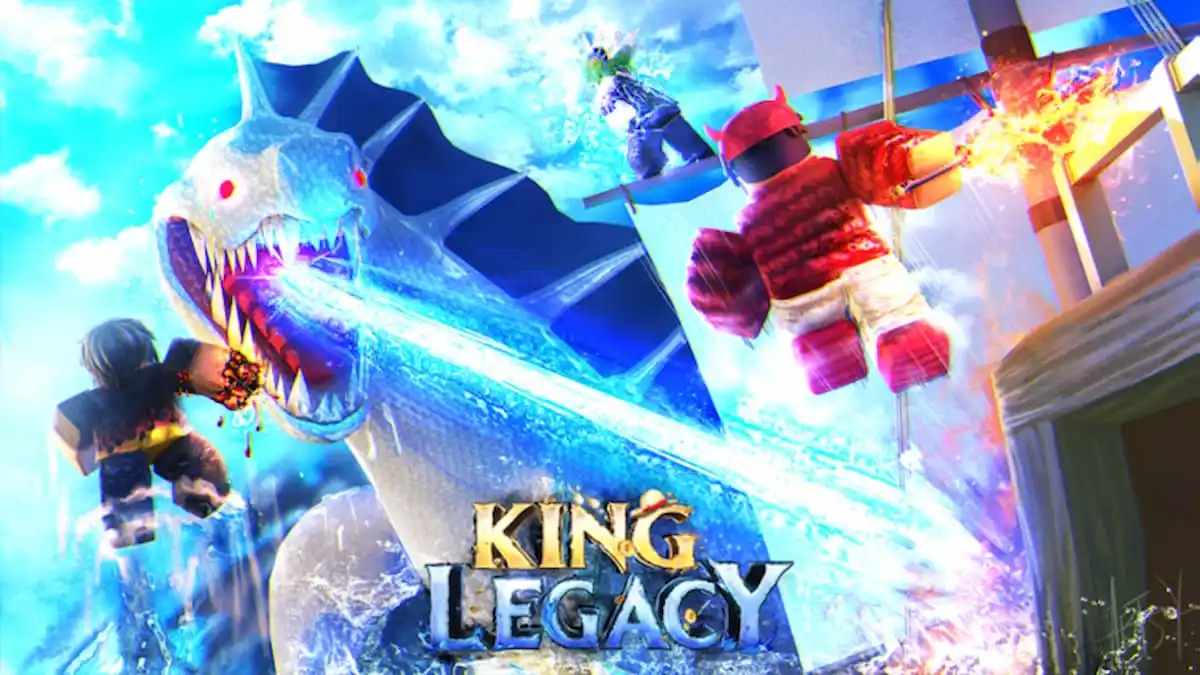
| Gamefam | FIFA Super Soccer | Roblox Meta-Branding | Rebranded December 19, 2025 with All Ages World Cup events |
| Konami and Epic Games | FIFAe Tournament Series | Esports Integration | Utilizes eFootball and Rocket League as official tournament platforms |
The simulation quadrant is led by FIFA World Cup: Launch Edition, which debuted on Netflix Games on June 11, 2026, utilizing smartphones connected via QR codes as controllers. For casual play, EMBER Studio launched the five-a-side arcade game FIFA Heroes on PC and mobile devices on June 22, 2026. The strategic non-action quadrant features Football Manager, which incorporates official tournament pathways. The tactical non-action space is occupied by FIFA Rivals, which launched on June 12, 2025, in partnership with Bacon Studio, offering portrait-oriented matchups, a 5-second action planning window, an on-chain Pulse Market barter economy, and a stat-doubling Super Mode mechanic.
Roblox integration is supported through FIFA Super Soccer, a game operated by Gamefam that was rebranded from Super League Soccer on December 19, 2025, and averages 9.5 million monthly active users. FIFA also partnered with Konami to utilize eFootball for the FIFAe World Cup 2026, and Epic Games to integrate the FIFAe Nations League within Rocket League during Season 23, featuring matches on the United Futura arena. Additionally, the standalone FIFA+ streaming application transitioned into a global hub on DAZN in early 2026, offering 8,500 live matches annually and a daily analysis show titled “The Press.”
What Is the Canonical Lore Behind the Story Mode Called The Journey
During the Frostbite Engine era, Electronic Arts introduced a detailed story mode spanning three consecutive annualized releases. This narrative architecture was established within a narrative-driven campaign mode called “The Journey,” which spanned three separate game iterations. Completing these story arcs rewarded players with permanent, rated character cards for use in Ultimate Team and standard Career Mode, the same mode where scouting the best young strikers worth signing early determines whether a save ages as well as Hunter’s own career did.
| Fictional Character | Primary Roster Role | Biography and Lineage | Major Narrative Milestones |
|---|---|---|---|
| Alex Hunter | Central Protagonist | Born July 6, 1999 in Clapham; grandson of 1960s English legend Jim Hunter | Signs with a Premier League academy, transfers to the LA Galaxy, and wins the UEFA Champions League with Real Madrid |
| Danny Williams | Supporting Protagonist | Born November 21, 1998 in Forest Hill; veteran English striker | Secures a Premier League transfer, battles PSG striker Terry Williams, and faces financial ruin based on school friend Ringo |
| Kim Hunter | Sibling Protagonist | Born in the United States; multiracial forward and Alex Hunter’s half-sister | Makes her USWNT debut alongside Alex Morgan, develops a rivalry with Melanie Trembley, and signs with the Seattle Reign |
| Gareth Walker | Secondary Antagonist | South London childhood friend and competitive rival of Alex Hunter | Signs alongside Hunter but completes a controversial transfer to a primary rival club before reconciling after the FA Cup Final |
Alex Hunter was born on July 6, 1999, in Clapham, London, and began playing on Clapham Common under the guidance of his mother Catherine, his father Harold, and his grandfather Jim Hunter, who scored 22 goals in the 1968 to 1969 First Division season. After signing with a Premier League club, Hunter completes a loan spell at Norwich City, Newcastle United, or Aston Villa, where he befriends Danny Williams. His childhood friend Gareth Walker betrays their parent club to sign for their main rivals, leading to an FA Cup Final clash. Following a fraudulent Real Madrid transfer attempt orchestrated by his agent Michael in the sequel, Hunter joins the LA Galaxy, where he discovers his American half-sister, Kim Hunter. After recovering from a subsequent knee injury in Europe, Hunter joins Real Madrid in the third installment to win the UEFA Champions League.
Danny Williams, born on November 21, 1998, in Forest Hill, establishes himself at Hunter’s former Premier League club, eventually leading them to European competition. Williams must navigate a sibling rivalry with his older brother Terry, who plays for Paris Saint-Germain, and choose between sticking with the agent Michael or school friend Ringo, with the latter choice triggering financial ruin. Kim Hunter rises through the United States youth system to make her senior national team debut during the 2019 Women’s World Cup alongside Alex Morgan, establishing a rivalry with Canadian midfielder Melanie Trembley before turning professional with the Seattle Reign in a deal brokered by agent Beatriz Villanova.






Updated: Jul 10, 2026 03:13 pm