


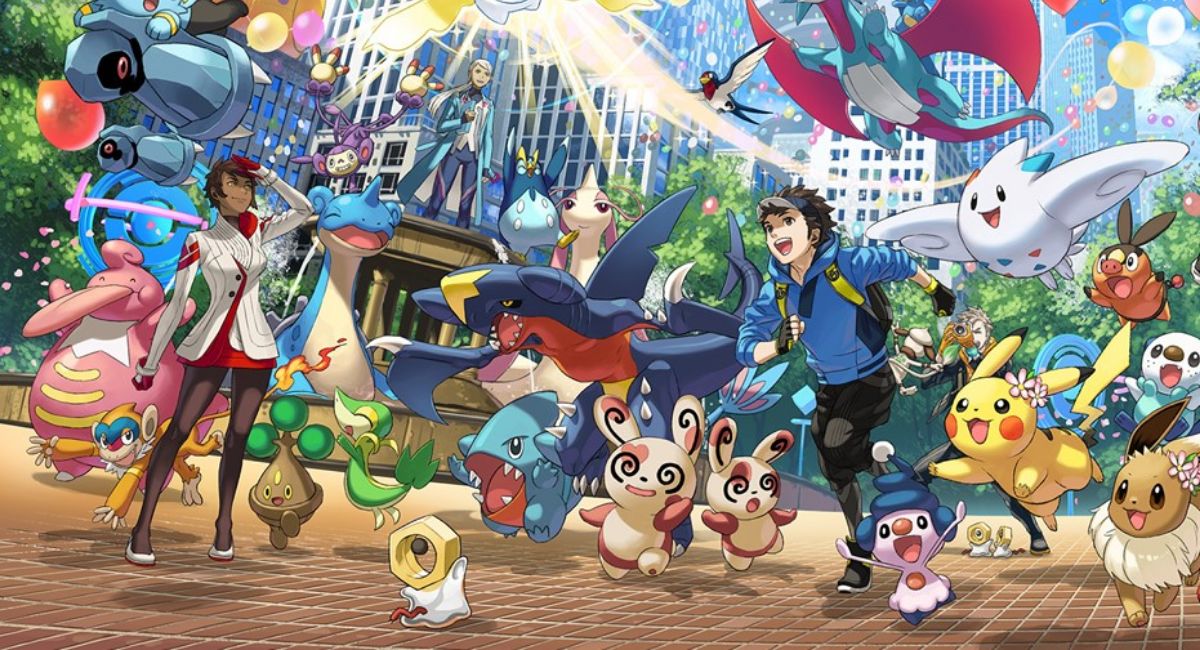
Managing personal favorite species or constructing competitive battle rosters across nine generations and more than 1,000 individual creatures presents major logistical challenges. Manual tracking quickly becomes impractical, leading players to rely on specialized web applications ranging from recursive sorting algorithms to visual matrix grids and dynamic battle calculators.
To evaluate these utilities fairly, we analyze software performance parameters, database coverage, state preservation methods, and interface limitations. Algorithmic efficiency can be evaluated by comparing manual interactions against total output slots:
Efficiency = Total User Selections / Ranked Output Slots
A lower efficiency ratio indicates a faster, less exhausting sorting experience. The following analytical breakdown highlights the strengths, software trade-offs, and target applications for the leading Pokémon pickers and team planners available today.
DragonFlyCave Favorite Pokemon Picker
Best for: detail-oriented collectors who want a mathematically validated, ordinally ranked list of their top favorites without decision fatigue.
The DragonFlyCave Favorite Pokémon Picker operates on a multi-way elimination algorithm that groups species into customizable batches of up to 20 candidates at once. Built specifically to replace inefficient pairwise tournament brackets, the engine constructs a directed acyclic graph of transitive relations. When you select candidates from a batch, unselected entries are marked as eliminated by your picks. Once your top candidate is identified, the system recursively reintroduces only those species directly eliminated by that top pick, ensuring your true second-favorite candidate is accurately placed even if paired against your primary favorite early in the run.
During initial passes, enabling Split mode allows you to filter the entire database in a single round by selecting every species you like and discarding the rest. If an accidental click causes a favored candidate to be discarded, the integrated Rescue menu lets you search the background graph and restore omitted species without resetting active progress. Generating extensive top-100 lists can still take up to an hour of manual selection, and sudden shifts in personal standards mid-run can alter lower-tier rankings.
| Specification Parameter | Verified Metric Value |
|---|---|
| Core Sorter Paradigm | Algorithmic Multi-Way Sorter |
| Database Roster Coverage | Generations 1 to 9 plus Legends Z-A preview assets |
| Base Pricing Model | Free and open-source under GPL-3.0 license |
| Saved State Format | 42-character compressed alphanumeric shortcode |
| Average Click-to-Resolution | 1.21 selections per ranked output slot |
Ultimate Favorite Pokemon Picker
Best for: long-term enthusiasts who want to build, customize, and save an incredibly dense visual matrix of their favorite typings across every single region.
Created by CajunAvenger on GitHub Pages, the Ultimate Favorite Pokémon Picker generates an extensive cataloging grid mapping species by generation and elemental type. It offers unique sub-modules for deep customization. For instance, the Spinda spot editor allows you to adjust facial spot coordinates from 0 to 16 in real time using corner input boxes, while the Vivillon module supports custom regional patterns. You can toggle between Strict mode to remove minor visual variants, Surplus mode to back-add later generation forms into retro regional grids, and Silly mode to bypass canonical rules entirely.
Operational trade-offs center on hardware memory management. Because rendering dense visual grids requires intensive DOM processing, exporting high-density PNG graphics through standard HTML5 canvas functions routinely hits WebKit memory limits on mobile Safari, causing browser tab crashes. Utilizing the developer text-based 284-character configuration string is essential for preventing data loss.
| Specification Parameter | Verified Metric Value |
|---|---|
| Core Sorter Paradigm | Grid Categorization by Type and Generation |
| Database Roster Coverage | Generations 1 to 9 plus Legends Z-A |
| Base Pricing Model | Free and open-source via voluntary Ko-Fi donations |
| Saved State Format | 284-character text configuration string |
| Average Click-to-Resolution | Static selection grid (Not Applicable) |
Trainer Cards Studio
Best for: forum users, roleplayers, and creators who want to build highly customized visual trainer profiles featuring retro and modern sprite eras on a single card.
Trainer Cards Studio is an open-source visual card creator designed to replace legacy tools like PokéCharms. Built on Vue, Nuxt, and TypeScript, it lets users compile customized trainer ID cards equipped with regional gym badges, held items, Poké Balls, and a 6-member team roster. High-precision canvas tools allow you to scale, flip, and rotate individual sprites on the canvas.
To eliminate system stuttering and dropped frames during animated image rendering, the application converts animated sprite layouts into hardware-accelerated MP4 or WebM video files rather than heavy GIF graphics. Initial page loading can occasionally experience slight network latency because the app serves a library exceeding 34,900 static images, and minor software glitches can sometimes hide custom text nicknames on exported files.
| Specification Parameter | Verified Metric Value |
|---|---|
| Core Sorter Paradigm | Card-Based Generator with Custom Templates |
| Database Roster Coverage | Generations 1 to 9 plus custom animated forms |
| Base Pricing Model | Free and open-source under AGPLv3 license |
| Saved State Format | 512-character serialized JSON schema |
| Average Click-to-Resolution | Static canvas composition (Not Applicable) |
My Pokemon Team
Best for: competitive players, VGC battlers, and Showdown theorycrafters who require combat-accurate synergy, movepool, and ability analysis.
My Pokémon Team focuses on competitive mechanics rather than aesthetic presentation. Built with React, TypeScript, and MobX state management, it calculates actual in-battle type resistances, immunities, and offensive coverage gaps. While simple planners analyze only base species typing, this tool evaluates real-world combat conditions, calculating the same interactions laid out in the full type chart of strengths and weaknesses. Equipping a Ground-vulnerable Pokémon with an Air Balloon or selecting a candidate with the Levitate ability dynamically updates the defense matrix to display zero Ground vulnerability.
The primary design bottleneck is its rigid layout framework. The application is locked to exactly 6 active roster slots, meaning you cannot theorycraft bench options or store alternate team choices without editing URL query parameters in an external text editor.
| Specification Parameter | Verified Metric Value |
|---|---|
| Core Sorter Paradigm | TypeScript-MobX Battle Coverage Planner |
| Database Roster Coverage | Generations 1 to 9 with active competitive forms |
| Base Pricing Model | Free and open-source public repository |
| Saved State Format | 94-character URL query string and Showdown text |
| Average Click-to-Resolution | Static analytical builder (Not Applicable) |
Pokemon Team Planner by Richi3f
Best for: beginners and casual players looking for a visually gorgeous, streamlined tool to plan out mainline story playthroughs.
Richi3f’s Pokémon Team Planner is a visual campaign utility hosted on GitHub Pages that utilizes high-resolution 3D models extracted from Pokémon HOME. Its minimal interface lets users quickly filter species by color, shape, and regional pokedex availability to build campaign teams for specific mainline games.
However, players must account for notable logical limitations. Regional filters are overly rigid; planning a LeafGreen campaign completely locks out Slowbro and Ninetales simply because they originally debuted in Generation 2 indices, despite both being normally catchable in the actual remakes. Furthermore, team analysis relies strictly on raw species typing. Adding Pyukumuku to a team registers active Water-type offensive coverage, ignoring the fact that Pyukumuku cannot learn any damaging Water-type moves.
| Specification Parameter | Verified Metric Value |
|---|---|
| Core Sorter Paradigm | Dex-Filtered Campaign Planner |
| Database Roster Coverage | Generations 1 to 9 with HOME assets |
| Base Pricing Model | Free and open-source under MIT license |
| Saved State Format | 112-character URL-encoded configuration string |
| Average Click-to-Resolution | Static aesthetic grid (Not Applicable) |
Marriland’s Pokemon Team Builder
Best for: Nuzlocke runners, casual campaign planners, and retro players who need historical type-matchup accuracy for older generations.
Marriland’s Pokémon Team Builder provides precise cumulative weakness and resistance tracking. Its main technical strength is historical type accuracy. Selecting Generation 1 dynamically alters the matchup matrix, removing Dark, Steel, and Fairy types while restoring original retro interactions. An interactive enemy scouting tool lets you input custom opponent rosters and test offensive coverage, useful when countering Steel and other defensive types before a gym fight.
A major limitation is that defensive effectiveness calculations evaluate typing alone, ignoring active battle abilities like Levitate or Flash Fire. Additionally, heavy third-party ad-tracking scripts can cause noticeable scroll stutter on mobile browsers.
| Specification Parameter | Verified Metric Value |
|---|---|
| Core Sorter Paradigm | Retro-Compatible Coverage Planner |
| Database Roster Coverage | Generations 1 to 9 with custom move lists |
| Base Pricing Model | Free with ad-supported proprietary hosting |
| Saved State Format | 184-character team code block |
| Average Click-to-Resolution | Static coverage builder (Not Applicable) |
Tiermaker’s Every Pokemon Maker
Best for: content creators, streamers, and social media users looking to build quick, highly shareable visual tier lists of their favorite Pokemon.
Tiermaker’s Every Pokémon Maker uses a universal drag-and-drop letter-grade template (S through F) to organize species into visual tiers. The platform is designed specifically for rapid visual export and discussion on social channels, allowing users to customize tier labels and row colors easily.
However, rendering over 1,000 high-resolution images in a single DOM window creates severe hardware bottlenecks. Dragging images across large templates drops browser frame rates into single digits on mid-range computers, and the tool offers zero automated type checking or battle coverage calculations.
| Specification Parameter | Verified Metric Value |
|---|---|
| Core Sorter Paradigm | Visual Drag-and-Drop Tier Builder |
| Database Roster Coverage | Dynamic dependent on user templates |
| Base Pricing Model | Free ad-supported proprietary service |
| Saved State Format | Requires cloud account save or direct image export |
| Average Click-to-Resolution | Approximately 20.5 selections per ordered cohort |
Favorite Pokemon – Pick Your Own!
Best for: nostalgic, casual fans who only care about the first six generations of Pokemon and want a low-friction, binary selection format.
Hosted on GitHub Pages by fio4ri, this utility is a lightweight binary bracket sorter modeled on classic elimination tools. Users begin with two mystery eggs, clicking to reveal candidates and choosing between simple A-versus-B options until a top favorite is isolated. The minimal interface executes smoothly on legacy hardware and low-bandwidth mobile connections.
The primary downside is database truncation; the application capped development at Generation 6 (Volcanion), completely omitting species released over the last decade. Furthermore, pairwise binary elimination requires an average of 14.24 clicks per ranked slot, making extended sorting sessions tedious.
| Specification Parameter | Verified Metric Value |
|---|---|
| Core Sorter Paradigm | Binary Single-Elimination Bracket Sorter |
| Database Roster Coverage | Generations 1 to 6 (Capped at Volcanion / 721 species) |
| Base Pricing Model | Free and open-source fork |
| Saved State Format | Non-serializable (Active session memory only) |
| Average Click-to-Resolution | 14.24 manual selections per ranked output slot |
Centro Pokemon’s Favorite Generator
Best for: casual users wanting to rapidly generate and download an elementary 18-type grid of their favorite Pokemon in less than five minutes.
Hosted by the Spanish fan portal Centro Pokémon, this single-purpose grid builder is designed for speed. Users pick a single favorite species for each of the 18 core elemental types on a streamlined single-page layout. The graphic updates in real time and requires no registration or account setup.
However, the exported PNG graphics hard-code Spanish language elemental headers regardless of browser auto-translation, requiring manual photo editing for English-speaking forum posts. The generator also lacks advanced filters, alternate form selections, or coverage validation features.
| Specification Parameter | Verified Metric Value |
|---|---|
| Core Sorter Paradigm | Quick Single-Page Type Grid |
| Database Roster Coverage | 18 Core Elemental Types |
| Base Pricing Model | Free ad-supported proprietary tool |
| Saved State Format | Direct client-side image rendering |
| Average Click-to-Resolution | Static 18-element grid (Not Applicable) |
Random Pokemon Generator
Best for: streamers, challenge runners, and Nuzlocke players seeking to introduce a fun, highly configured element of chance into their next playthrough.
Hosted at randompokemongenerator.net, this utility generates random rosters under user-defined constraint parameters. It allows players to roll teams of up to 6 Pokémon from the complete National Pokédex. The standout lock feature lets you anchor a specific starter in place while rerolling remaining team slots.
Users can filter candidates by evolution stage, generation, type, and custom shiny probabilities. Because it functions strictly as an on-demand randomizer, it provides no manual ranking tools, visual grid displays, or type coverage analyzers.
| Specification Parameter | Verified Metric Value |
|---|---|
| Core Sorter Paradigm | Responsive Challenge Pool Generator |
| Database Roster Coverage | Generations 1 to 9 with custom random seed arrays |
| Base Pricing Model | Free closed-source ad-supported website |
| Saved State Format | Client-side clipboard string export |
| Average Click-to-Resolution | Static random generator (Not Applicable) |
Feature and Specification Summary
Choosing the ideal Pokémon tool depends on your primary objective, hardware setup, and analytical requirements. Competitive players requiring exact damage coverage math will benefit most from dynamic mechanics engines like My Pokémon Team. Collectors seeking mathematically verified favorite rankings should opt for multi-way algorithmic sorters like DragonFlyCave to avoid click fatigue. Content creators looking for rapid graphic exports will find Trainer Cards Studio and Tiermaker best suited for visual sharing, provided they account for browser memory limits during high-density image generation.














Updated: Aug 3, 2026 02:13 pm