


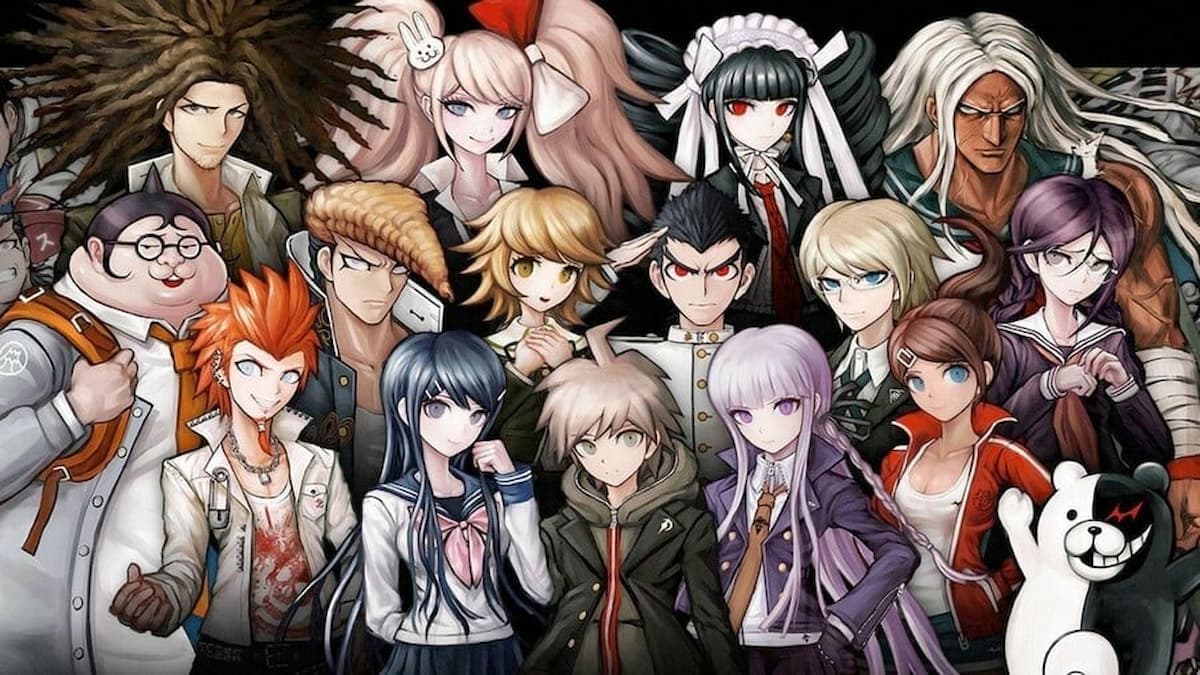
The Danganronpa franchise is an influential visual novel and transmedia gaming series centered on high school students trapped in deadly mutual killing games controlled by the robotic bear Monokuma. Created by writer Kazutaka Kodaka and developed by Spike Chunsoft, the narrative spans mainline video games, light novels, manga, and anime adaptations. Understanding the sprawling universe requires examining its canonical timeline, behind-the-scenes developer history, character profiles, and hidden game engine mechanics.
What Is the Official Danganronpa Release Order and Timeline?
Navigating the story requires distinguishing between real-world release dates and the best order to watch and play the series, which places light novels like Danganronpa Kirigiri and Danganronpa Togami early in the narrative sequence, chronicling events prior to the societal downfall known as The Tragedy. Danganronpa Zero directly sets up the collapse of Hope’s Peak Academy before the first game takes place.
The main story begins with Danganronpa: Trigger Happy Havoc, followed by the interquel Danganronpa Another Episode: Ultra Despair Girls and Danganronpa 2: Goodbye Despair. Later entries explore alternative continuities and non-canon scenarios, such as Danganronpa V3: Killing Harmony and Danganronpa S: Ultimate Summer Camp. The franchise publication history details key platform launches and narrative positions across every major release.
| Title | Original Release Date | Launch Platform | Narrative Timeline Position | Key Production Notes |
|---|---|---|---|---|
| Danganronpa: Trigger Happy Havoc | November 25, 2010 | PlayStation Portable | Main Story: Core Game 1 | Establishes the Class 78 Killing School Life. |
| Danganronpa Zero | September 16, 2011 | Light Novel | Main Story: Prequel to Game 1 | Establishes the origins of The Tragedy. |
| Danganronpa 2: Goodbye Despair | July 26, 2012 | PlayStation Portable | Main Story: Core Game 2 | Sets up the Class 77-B Neo World Program. |
| Danganronpa Kirigiri | September 13, 2013 | Light Novel | Early Prequel: Kyoko’s Middle School Years | Chronicles the Duel Noir homicide cases. |
| Danganronpa Another Episode: Ultra Despair Girls | September 25, 2014 | PlayStation Vita | Interquel: Set between Game 1 and Game 2 | Explores the collapse of Towa City. |
| Danganronpa Togami | November 27, 2015 | Light Novel | Prequel: Set prior to The Tragedy | Details Byakuya Togami’s operations in Prague. |
| Danganronpa Gaiden: Killer Killer | March 2016 | Manga Series | Parallel to Danganronpa 3 anime | Features the Future Foundation 6th Division. |
| Danganronpa V3: Killing Harmony | January 12, 2017 | PlayStation 4 and PlayStation Vita | Alternative Continuity | Investigates Team Danganronpa across 8 chapters. |
| Danganronpa Decadence | December 3, 2021 | Nintendo Switch | Modern Compilation | Includes mainline games and Danganronpa S. |
| Danganronpa S: Ultimate Summer Camp | December 3, 2021 | Nintendo Switch and Multiplatform | Non-Canon Alternate Universe | Expanded standalone version of V3 bonus board game mode. |
| Danganronpa 2×2 | 2026 | PS5, Xbox Series X/S, Switch, Switch 2, PC | Alternate Timeline: Diverging from Game 2 | Developed by Gemdrops; remakes and expands Game 2 branches. |
What Is the Current Production Status of Danganronpa 2×2?
Modern production updates center on Danganronpa 2×2, an enhanced re-release and partial remake of Danganronpa 2: Goodbye Despair. External studio Gemdrops serves as the primary developer, with publishing handled by Spike Chunsoft and additional development support from Ton Kun Comes, a studio founded by former Spike Chunsoft executives.
While retail listings and code on the Psycho Tropical Vacation Package pre-order page in February 2026 pointed toward tentative October shipping dates, Spike Chunsoft has officially confirmed only a 2026 launch window. Producer Shohei Sakakibara cited production pressure due to the expanded campaign matching the scenario length of the original game.
Character voice updates include Kinuta Oshiro replacing the Japanese voice of Monomi, while Spike Chunsoft confirmed on March 10, 2026, that the original English voice cast would return. A public demonstration titled the Special Trial Version debuted in November 2025, featuring Yasuhiro Hagakure as a non-canon murder victim. This follows a long developer tradition of using Hagakure as the dummy victim in trial demos to avoid spoiling main scenario deaths, as previously seen in the 2010 PlayStation Portable and 2016 Danganronpa V3: Killing Harmony demos.
How Did Behind-the-Scenes Production Decisions Shape the Series?
Series creator Kazutaka Kodaka pitched the original concept after working part-time jobs in his mid-to-late twenties. A critical conversation with a female coworker at a second-hand game shop, who pointed out his own lack of social functionality after he criticized her, motivated him to contact industry acquaintances at Spike. Kodaka also cited the Sega Dreamcast horror title Illbleed as a major thematic inspiration for unpredictable narrative pacing.
During early planning, the project was titled Distrust and featured realistic red human blood. Developers realized that realistic gore would result in a restrictive age rating and narrow the target audience. The team shifted to a psycho-pop aesthetic, recoloring all human blood to vibrant magenta pink. This stylized visual direction bypassed censorship while creating a signature contrast between neon colors and dark themes.
Character designer Rui Komatsuzaki works by drafting entire cast rosters as a group first, balancing visual silhouettes before refining individual details based on Kodaka’s archetype briefs. Key character subversions include:
- Sayaka Maizono was designed to shock players by subverting standard heroine tropes, dying in the first chapter as the actual instigator of the murder plot.
- Nagito Komaeda was constructed to be morally ambiguous and uncategorizable, drawing inspiration from the dynamic between Batman and the Joker.
- Chiaki Nanami was created as an empathetic anchor whose death would inflict maximum despair, contrasting with detective Kyoko Kirigiri.
- Monokuma features a black-and-white color split representing innocence and guilt in Japanese legal terminology, combining animal aesthetics with sadistic dialogue like “thrills, chills, kills!” and his trademark “upupupu” laugh.
Vocal performances also reshaped the narrative. Hearing Megumi Ogata’s powerful delivery as protagonist Makoto Naegi prompted Kodaka to rewrite Naegi into an assertive leader in late chapters. Ogata was also cast as Nagito Komaeda to create a subtle parallel, as Komaeda’s name is an anagram for “I am Makoto Naegi” in Japanese. English localization director Robert Schiotis maintained this connection by casting Bryce Papenbrook for both characters. Komatsuzaki considers Toko Fukawa, voiced in Japanese by Miyuki Sawashiro, to be his personal favorite character symbol of the series worldbuilding.
How Do Physical Environments and Transmedia Lore Expand the World?
Level design in the franchise provides tangible clues during murder investigations. In Danganronpa: Trigger Happy Havoc, the student dormitories, named Despair Hotel in project files, contain deliberate structural gender differences. Female ensuite bathrooms possess working interior locks, whereas male bathrooms have no locks. Furthermore, female desk drawers contain sewing kits, while male desk drawers contain mechanical toolkits. Makoto Naegi’s bathroom door frame also features a defect requiring the handle to be lifted while pushing. These architectural facts explain how Sayaka Maizono became trapped in Makoto’s bathroom when Leon Kuwata used mechanical tools to dismantle the handle.
Transmedia publications further expand character backstories:
- Danganronpa Zero reveals that amnesiac protagonist Ryoko Otonashi is actually Junko Enoshima, while Mukuro Ikusaba disguised herself as Enoshima and defeated the Madarai Brothers octuplet bodyguards.
- Danganronpa Kirigiri explains that Kyoko Kirigiri wears studded leather gloves to hide severe burn scars sustained while rescuing detective Yui Samidare from a burning vehicle during the Duel Noir cases.
- Danganronpa Togami details Byakuya Togami’s victory over 107 half-siblings in Prague and reveals that Junko Enoshima forced him to ingest a cognitive-suppression pill, lowering his baseline analytical performance prior to the first game.
- Danganronpa Gaiden: Killer Killer follows Future Foundation investigators Takumi Hijirihara and Shuji Fujigawa, who survived a middle school massacre carried out by Mukuro Ikusaba.
How Do Game Engine Formulas and Mechanics Function?
Behind the visual novel storytelling, game engine code relies on specific mathematical logic. In the school store, the MonoMono Machine contains M = 91 unique available presents. For a player owning k unique items, the base repeat probability R(base) is calculated using integer division:
R(base) = min(floor(10000 / M) x k, 100.28)
Because code truncation converts 10000 / 91 to exactly 109 instead of 109.89, display percentages deviate from true probability by up to -0.80%. Inserting n coins modifies the repeat probability R(actual):
R(actual) = max(R(base)^(n-1) x 1.09, 0)
Players can optimize item farming by spending 1 coin per pull until collecting 91 unique items, then inserting 92 coins on a single pull to force repeat probability to 0%, guaranteeing the final missing item. A code oversight in bonus item probabilities P(1) = floor((10c + 110) / 11) applies a flat +10% modifier when spending fewer than 73 coins, making 72 coins more effective than 82 coins.
In Danganronpa S: Ultimate Summer Camp, combat damage uses ratio-based mitigation models to prevent defensive decay:
DMG = ATK x (ATK / (ATK + DEF))
When enemy defense equals attack power, output damage is reduced by 50%. Subtraction models calculate base damage as DMG(base) = (ATK + rand(0, ATK)) – DEF, clamped to a minimum of 1 damage. High-speed characters like Maki Harukawa and physical sweepers like Peko Pekoyama scale best in higher floors of the Monokuma Tower when equipped with top tier active skills Ultra Defense and Endurance Up.
What Are the Official Character Profiles and Voice Cast Details?
Official student e-Handbooks document specific character metrics and vocal cast lists across all primary class rosters. The following student profiles compile physical parameters and bilingual voice actors for Class 78 from Danganronpa: Trigger Happy Havoc.
| Character | Height | Weight | Blood Type | Chest Size | Birthdate | Japanese Voice Actor | English Voice Actor |
|---|---|---|---|---|---|---|---|
| Makoto Naegi | 160 cm | 52 kg | A | 75 cm | February 5 | Megumi Ogata | Bryce Papenbrook |
| Kyoko Kirigiri | 167 cm | 48 kg | B | 82 cm | October 6 | Yoko Hikasa | Caitlin Glass |
| Byakuya Togami | 185 cm | 68 kg | B | 81 cm | May 5 | Akira Ishida | Jason Wishnov |
| Toko Fukawa | 164 cm | 47 kg | O | 79 cm | March 3 | Miyuki Sawashiro | Amanda C. Miller |
| Aoi Asahina | 160 cm | 50 kg | B | 88 cm | April 24 | Chiwa Saito | Cassandra Lee Morris |
| Yasuhiro Hagakure | 180 cm | 71 kg | B | 82 cm | July 25 | Masaya Matsukaze | Kaiji Tang |
| Sayaka Maizono | 165 cm | 49 kg | B | 83 cm | July 7 | Makiko Ohmoto | Dorothy Elias-Fahn |
| Leon Kuwata | 175 cm | 67 kg | O | 86 cm | January 3 | Takahiro Sakurai | Grant George |
| Chihiro Fujisaki | 148 cm | 41 kg | O | 70 cm | March 14 | Koki Miyata | Dorothy Elias-Fahn |
| Mondo Owada | 187 cm | 76 kg | O | 86 cm | June 9 | Kazuya Nakai | Keith Silverstein |
| Kiyotaka Ishimaru | 175 cm | 66 kg | B | 79 cm | August 31 | Kosuke Toriumi | Sean Chiplock |
| Hifumi Yamada | 170 cm | 155 kg | A | 150 cm | December 31 | Kappei Yamaguchi | Lucien Dodge |
| Celestia Ludenberg | 164 cm | 46 kg | B | 80 cm | November 23 | Hekiru Shiina | Marieve Herington |
| Sakura Ogami | 196 cm | 99 kg | O | 110 cm | September 13 | Kujira | Patrick Seitz |
| Junko Enoshima | 169 cm | 45 kg | AB | 90 cm | December 24 | Megumi Toyoguchi | Amanda C. Miller |
The Class 77-B student roster from Danganronpa 2: Goodbye Despair features the following official profiles and performance credits.
| Character | Height | Weight | Blood Type | Chest Size | Birthdate | Japanese Voice Actor | English Voice Actor |
|---|---|---|---|---|---|---|---|
| Hajime Hinata | 179 cm | 67 kg | A | 91 cm | January 1 | Minami Takayama | Johnny Yong Bosch |
| Chiaki Nanami | 160 cm | 46 kg | O | 88 cm | March 14 | Kana Hanazawa | Christine Marie Cabanos |
| Nagito Komaeda | 180 cm | 65 kg | O | 84 cm | April 28 | Megumi Ogata | Bryce Papenbrook |
| Fuyuhiko Kuzuryu | 156 cm | 43 kg | AB | 73 cm | August 16 | Daisuke Kishio | Derek Stephen Prince |
| Akane Owari | 176 cm | 56 kg | B | 93 cm | July 15 | Romi Park | Morgan Berry |
| Sonia Nevermind | 174 cm | 50 kg | A | 86 cm | October 13 | Miho Arakawa | Natalie Hoover |
| Kazuichi Soda | 172 cm | 64 kg | A | 92 cm | June 29 | Yoshimasa Hosoya | Kyle Hebert |
| Ultimate Imposter | 185 cm | 130 kg | B | 115 cm | Unknown | Kanata Hongo | Jason Wishnov |
| Teruteru Hanamura | 133 cm | 69 kg | A | 88 cm | September 2 | Junko Fukuda | Todd Haberkorn |
| Mahiru Koizumi | 165 cm | 46 kg | A | 77 cm | April 24 | Yu Kobayashi | Carrie Keranen |
| Peko Pekoyama | 172 cm | 51 kg | O | 82 cm | June 30 | Kotono Mitsuishi | Janice Kawaye |
| Ibuki Mioda | 164 cm | 42 kg | AB | 76 cm | November 27 | Ami Koshimizu | Julie Ann Taylor |
| Hiyoko Saionji | 130 cm | 31 kg | B | 64 cm | March 9 | Suzuko Mimori | Kira Buckland |
| Mikan Tsumiki | 165 cm | 57 kg | A | 89 cm | May 12 | Ai Kayano | Stephanie Sheh |
| Nekomaru Nidai | 198 cm | 112 kg | O | 122 cm | February 22 | Hiroki Yasumoto | Patrick Seitz |
| Gundham Tanaka | 182 cm | 74 kg | B | 93 cm | December 14 | Tomokazu Sugita | Chris Tergliafera |
The Class 79 cast registry from Danganronpa V3: Killing Harmony outlines character measurements and official voice talent.
| Character | Height | Weight | Blood Type | Chest Size | Birthdate | Japanese Voice Actor | English Voice Actor |
|---|---|---|---|---|---|---|---|
| Kaede Akamatsu | 167 cm | 53 kg | O | 90 cm | March 26 | Sayaka Kanda | Erika Harlacher |
| Shuichi Saihara | 171 cm | 58 kg | AB | 80 cm | September 7 | Megumi Hayashibara | Grant George |
| K1-B0 (Keebo) | 160 cm | 89 kg | Unknown | 88 cm | October 29 | Tetsuya Kakihara | Lucien Dodge |
| Maki Harukawa | 162 cm | 44 kg | A | 77 cm | February 2 | Maaya Sakamoto | Erica Mendez |
| Kokichi Oma | 156 cm | 44 kg | A | 70 cm | June 21 | Hiro Shimono | Derek Stephen Prince |
| Rantaro Amami | 179 cm | 62 kg | B | 82 cm | October 3 | Hikaru Midorikawa | Johnny Yong Bosch |
| Ryoma Hoshi | 105 cm | 40 kg | B | 60 cm | July 1 | Akio Otsuka | Chris Tergliafera |
| Kirumi Tojo | 176 cm | 52 kg | B | 84 cm | May 10 | Kikuko Inoue | Kira Buckland |
| Angie Yonaga | 157 cm | 41 kg | A | 72 cm | April 18 | Minori Suzuki | Cassandra Lee Morris |
| Tenko Chabashira | 165 cm | 52 kg | B | 88 cm | January 9 | Sora Tokui | Reba Buhr |
| Korekiyo Shinguji | 188 cm | 65 kg | O | 81 cm | July 31 | Kenichi Suzumura | Todd Haberkorn |
| Miu Iruma | 173 cm | 56 kg | AB | 99 cm | November 16 | Haruka Ishida | Wendee Lee |
| Gonta Gokuhara | 190 cm | 94 kg | A | 108 cm | January 23 | Shunsuke Takeuchi | Kaiji Tang |
| Kaito Momota | 184 cm | 74 kg | O | 90 cm | April 12 | Ryohei Kimura | Kyle Hebert |
| Tsumugi Shirogane | 174 cm | 51 kg | A | 83 cm | August 15 | Mikako Komatsu | Dorothy Elias-Fahn |
| Himiko Yumeno | 150 cm | 39 kg | O | 68 cm | December 3 | Aimi Tanaka | Christine Marie Cabanos |







Updated: Jul 29, 2026 06:40 pm