


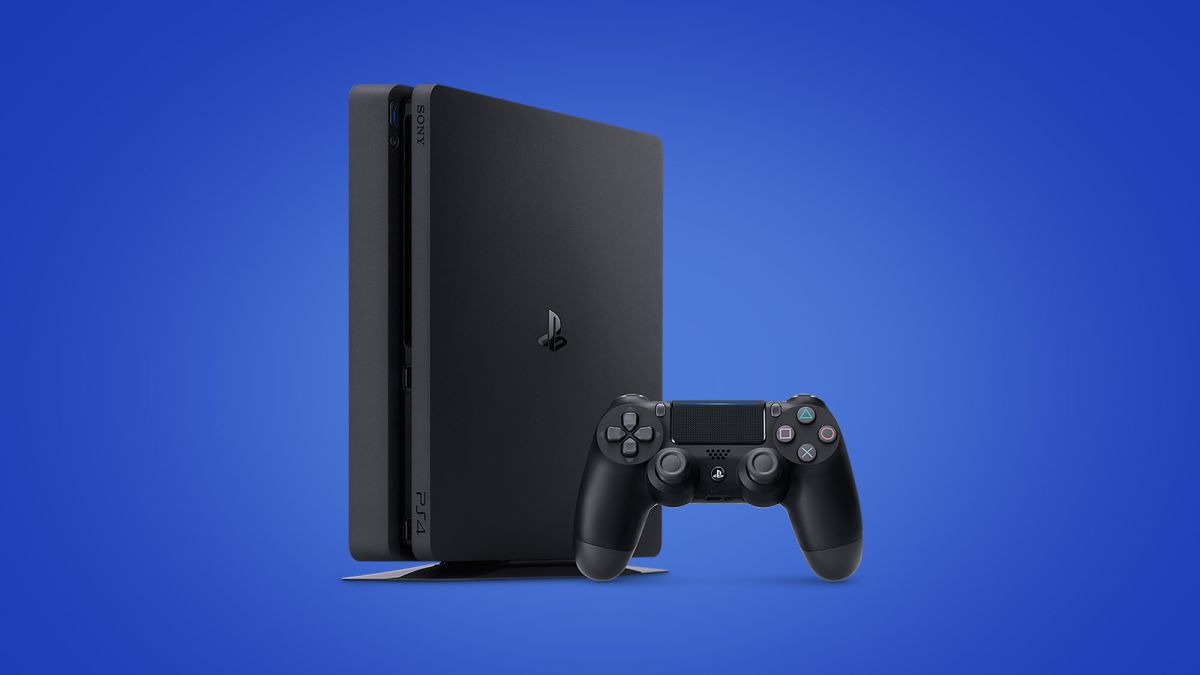
The PlayStation 4, an eighth-generation home video game console developed by Sony Interactive Entertainment, officially launched in North America on November 15, 2013, before expanding to Europe, Australasia, and South America on November 29, 2013, and Japan on February 22, 2014. Reaching over 117.2 million lifetime unit sales, the platform transitioned Sony from the complex Cell processor of the PlayStation 3 to a highly accessible x86-64 AMD architecture.
When Did the PlayStation 4 Release in Each Region?
The global rollout of the PlayStation 4 was executed through a staggered regional distribution model to ensure local retail readiness, language localization, and territory-specific regulatory compliance. While prominent competitor pages frequently make historical errors by listing the European and Australian releases as occurring in late 2014, official hardware databases confirm that the PAL rollout occurred on November 29, 2013, exactly two weeks after the North American debut.
| Region | Exact Launch Date | Launch MSRP | Logistical and Regulatory Realities |
|---|---|---|---|
| United States & Canada | November 15, 2013 | US $399.99 / CAD $399.00 | Initial market deployment; targeted high-volume retail locations to counter competing hardware announcements. |
| Europe & United Kingdom | November 29, 2013 | €399.99 / £349.00 | Required extensive multi-language system software localization across the European Economic Area. |
| Australia & New Zealand | November 29, 2013 | AUD $549.00 | Distributed through primary regional retail partners including EB Games and JB Hi-Fi. |
| Latin America | November 29, 2013 | Varies by territory | Managed complex tariff structures and specialized Spanish and Portuguese system translations. |
| Japan | February 22, 2014 | ¥39,980 | Launch deferred to align with the development of locally targeted software. System discontinued on March 28, 2024. |
| Mainland China | March 20, 2015 | RMB 2,899 | Delayed by two months due to censorship and region-lock negotiations with the Ministry of Culture. |
Entering the Mainland Chinese market presented unique geopolitical and regulatory hurdles following the partial lifting of the 14-year foreign console ban within the Shanghai Free Trade Zone. While Sony formed joint ventures to launch the console on January 11, 2015, the Chinese Ministry of Culture delayed the rollout to negotiate region-locking mandates.
A technical compromise allowed the Chinese console to physically read imported, uncensored game discs and download foreign title updates, although digital accounts were strictly locked to the Chinese branch of the PlayStation Network. Consequently, the domestic launch library was restricted to just six government-approved, heavily censored titles.
Looking to the future, official corporate statements indicate that the active lifecycle of the PlayStation 5 continues well past 2025. Although early research and development for the eventual PlayStation 6 platform is currently underway, Sony has confirmed that no successor will launch before 2027.
What Are the Technical Specifications of the PlayStation 4?
The internal architecture of the console represented a complete departure from the custom Cell Broadband Engine utilized in the PlayStation 3, which had stymied third-party software developers with its steep learning curve. Lead system architect Mark Cerny initiated the hardware design phase in 2008 with a mandate to deliver a “supercharged PC architecture” that offered immediate familiarity to developers.
The centerpiece of this design was a single-chip custom Accelerated Processing Unit (APU) engineered alongside AMD, integrating an 8-core x86-64 CPU with a Radeon-based graphics processor capable of 1.84 teraflops.
| Guaranteed Game RAM | Flexible RAM | Reserved OS RAM |
|---|---|---|
| 4.5 GB – Used directly by game engines | 1 GB – Reclaimed dynamically | 2.5 GB – Multitasking & recording |
A critical behind-the-scenes engineering shift occurred in late 2012. Up until the final stages of hardware planning, official development kits were equipped with only 4GB of GDDR5 RAM, allocating roughly 3.5GB to games and 512MB to the operating system.
Concerned by competitor memory specifications, Sony made the confidential decision to double the physical RAM to 8GB of unified GDDR5 with a bandwidth of 176 GB/s. Third-party studios using 4GB development kits only discovered the upgrade when Cerny announced it publicly at the PlayStation Meeting on February 20, 2013.
| Component | Base PlayStation 4 | PlayStation 4 Slim | PlayStation 4 Pro |
|---|---|---|---|
| Chassis Designation | Liverpool APU | CUH-2000 Series | CUH-7000 Series |
| CPU Architecture | 8-core x86-64 AMD Jaguar @ 1.6 GHz | 8-core x86-64 AMD Jaguar @ 1.6 GHz | 8-core x86-64 AMD Jaguar @ 2.1 GHz |
| GPU Compute Power | 1.84 TFLOPS (AMD Radeon, 18 CUs) | 1.84 TFLOPS (AMD Radeon, 18 CUs) | 4.2 TFLOPS (AMD Polaris, 36 CUs) |
| Memory Pool | 8GB GDDR5 (Unified) | 8GB GDDR5 (Unified) | 8GB GDDR5 (Unified) plus 1GB DDR3 |
| Memory Bandwidth | 176 GB/s | 176 GB/s | 218 GB/s |
| Optical Drive | 6x CAV Blu-ray / 8x DVD | 6x CAV Blu-ray / 8x DVD | 6x CAV Blu-ray / 8x DVD |
| Physical Weight | 2.8 kg | 2.1 kg | 3.3 kg |
| Video Output | 1080p SDR (HDR10 via firmware) | 1080p HDR10 | 4K rendering, HDR10 |
How Did the DualShock 4 Controller Design Evolve?
The engineering of the DualShock 4 controller began in 2010 under Toshimasa Aoki, Manager of Product Planning. The design team constructed and evaluated over 20 distinct physical prototypes, testing radical departures from traditional gamepad layouts.
Early concepts included completely buttonless controllers covered in capacitive touch panels and a prototype that replaced physical face buttons with a single touch-sensitive screen. Aoki noted that during focus testing, the touchscreen face concept was rejected with an overwhelming “100-0” vote. First-party development studios heavily opposed any design requiring players to look down at their hands rather than focusing entirely on the primary television display.
Symmetrical analog stick placement was also intensely debated. Responding to feedback from shooter development teams who praised the offset layout of the Xbox 360 controller, Sony built prototypes with asymmetrical sticks. Another prototype mirrored the Wii U Pro controller layout, placing both analog sticks above the primary inputs. Both configurations were ultimately discarded.
Aoki explained that shifting the face buttons moved the highly utilized Cross button too far from the natural resting position of the thumb, disrupting established muscle memory. Furthermore, the symmetrical stick design was determined to be an essential part of “PlayStation’s DNA” and had to be preserved.
Experimental Prototype Layouts Evaluated (2010 to 2012):
- Touchscreen Face: No physical face buttons; rejected due to loss of tactile feedback.
- Asymmetrical Offset: Xbox 360 style; rejected due to disruption of X-button muscle memory.
- Double-Top Analog: Wii U Pro style; rejected as it moved primary face buttons too low.
- Symmetrical Bottom: Traditional DualShock DNA; selected and refined with longer grips.
The dedicated Share button was conceived by Nathan Gary, a creative director at Sony Santa Monica who was overseeing external indie projects like Journey and The Unfinished Swan. Gary presented a PowerPoint proposal directly to Worldwide Studios President Shuhei Yoshida, suggesting a dedicated hardware input to instantly capture and broadcast gameplay without requiring complex, external PC capture cards.
The inclusion of this social feature and the central touchpad necessitated the retirement of the historical Start and Select buttons. Aoki jokingly commented that “Start never starts the game, and Select doesn’t select anything,” prompting the consolidation of their functions into a single Options button.
The physical geometry of the input buttons is deeply tied to original controller designer Teiyu Goto, who chose geometric icons rather than letters or colors to establish a universal visual language. Each symbol was assigned a specific colored meaning:
- Triangle (Green): Represents viewpoint, symbolizing head or direction.
- Square (Pink): Represents a piece of paper, symbolizing menus, documents, or map screens.
- Circle (Red) & Cross (Blue): Represent “yes” and “no” decision-making, respectively.
While Eastern territories utilized Circle for confirmation and Cross for cancellation to align with Japanese cultural symbols, play-testing for the original PlayStation console in North America revealed that Western users associated Cross with marking a selection box on a document. This led Western divisions to reverse the confirm and cancel layouts, standardizing Cross as confirm and Circle as cancel.
Furthermore, Sony Interactive Entertainment’s official corporate stance is that the button is pronounced “Cross” rather than “X.” PlayStation UK publicly confirmed this in September 2019, noting that a true cross features equal-distance legs that form a perfect square, distinct from the alphabetical letter.
| Concept Variation | Core Design Features | Evaluation Outcome and Decisions |
|---|---|---|
| All-Capacitive Touch | Lacked physical buttons; utilized touch panels. | Rejected due to loss of tactile feedback and muscle memory. |
| Embedded Face Touchscreen | Replaced physical face buttons with a central screen. | Rejected 100-0 by developers who opposed looking down at the controller. |
| Asymmetrical Sticks | Mimicked the offset layout of the Xbox 360 controller. | Rejected to preserve symmetrical PlayStation DNA and muscle memory. |
| Symmetrical Concave | Symmetrical sticks with recessed concave thumb grips. | Selected for final retail; improved thumb stability over DualShock 3. |
What Are the Official Lore Profiles for Knack and Astro Bot?
To build its first-party brand identity, Sony Computer Entertainment established dedicated intellectual properties that served as technical showcases and cross-media anchors for the hardware.
| Attribute | Knack (Ancient Relic Golem) | Astro Bot (Robotic Starship Captain) |
|---|---|---|
| Primary Microstructure | Conscious core magnetizing ancient civilization relics. | Inorganic white-and-blue chassis with chrome-plated skull. |
| Size Adaptability | Shifts dynamically from 2 feet to over 30 feet tall. | Constant 30-centimeter stature with temporary gear scaling. |
| Acoustic Profile | Nonexistent vocalizations at small scale; baritone at large scale. | High-pitched synthesis of English and Japanese syllables. |
| Environmental Interaction | Infuses physical body with ambient ice, metal, or wood. | Utilizes heel-thrusters and integrates classic crossover tools. |
| Primary Antagonist | Primordial Goblins commanding advanced military weaponry. | Space Bully Nebulax, who dismantled the mothership CPU. |
In Knack, engineered by Japan Studio under Mark Cerny, the character is a living golem built from ancient remnants of a lost civilization known as relics, which serve as the primary power source for humanity. Imbued with consciousness by Doctor Vargas, Knack’s size, mass, and acoustic properties shift dynamically based on magnetic relic density.
At his base height of two feet, Knack is highly agile but mute. By absorbing relics, he can expand past 30 feet tall, which deepens his vocal register to a booming baritone. The character also absorbs environmental elements like ice, metal, or highly flammable wood to modify his physical attributes. His cross-media presence was supported by Knack’s Quest, a tile-matching mobile game released in 2013 that connected to the PlayStation Network to unlock specialized relics in the main game.
In Astro Bot, developed by Team Asobi under Nicolas Doucet, the character officially debuted as Captain Astro in the virtual reality platformer Astro Bot Rescue Mission (2018) after originating from a technical demonstration titled Little AR Men. Officially documented canon establishes Astro Bot as the silent captain of a robotic crew exploring space in a mothership shaped like a PlayStation console.
Astro’s physical design utilizes blue LED eyes to convey emotions, a reflective chrome-plated head, heel-based propulsion thrusters, and synthesized vocal sounds that combine phonetic syllables from English and Japanese to remain universally recognizable. In his canonical adventures, Astro recovers his 300 crew members scattered by the extraterrestrial antagonist Space Bully Nebulax. He temporarily integrates iconic crossover gear from historic PlayStation protagonists, including Kratos’ Leviathan Axe, Nathan Drake’s semi-automatic sidearm, and Aloy’s Hunter Bow.
How Many Units Did the PlayStation 4 Sell Worldwide?
Following its North American launch, the PlayStation 4 established immediate market dominance, moving over 1.0 million units within its first 24 hours of retail availability. Cumulative sales reached 2.1 million units globally by December 1, 2013, which included 700,000 units sold through PAL territories.
| Milestone | Units Sold |
|---|---|
| Day 1 Launch | 1.0 Million Units Sold |
| Day 16 Milestone | 2.1 Million Units Sold |
| Day 60 Milestone | 4.2 Million Units Sold |
This sales momentum was driven by a competitive launch price of $399.99, undercutting Microsoft’s competing Xbox One console by $100. On October 9, 2015, Sony implemented Western price adjustments, lowering the base retail cost to $349.99 and introducing the first sub-£300 UK bundle with The Uncharted: Nathan Drake Collection.
On September 15, 2016, the system was revised with the PlayStation 4 Slim, which reduced power draw and physical volume. This was followed by the PlayStation 4 Pro on November 10, 2016, introducing a 4.2-teraflop GPU to support checkerboard 4K rendering and HDR10 video output.
During the transition to the ninth console generation, global semiconductor and supply chain constraints limited the production of the PlayStation 5. To maintain active user engagement and digital subscription revenue, Sony extended support for the older platform.
According to data presented at Sony’s 2022 Business Segment Briefings, this transition strategy was highly effective. In FY21, the active PlayStation 4 install base accounted for 65% of all digital transactions on the PlayStation Store. This consistent profitability was driven by a post-2016 digital shift, which saw digital software transaction ratios grow from 20% in FY13 to 80% by FY21, alongside free-to-play titles like Fortnite accounting for over 25% of total user spending on the platform.
The financial success of the platform was heavily bolstered by its software ecosystem, with the definitive ranking of all 35 major PS4 exclusives highlighting the top-performing first-party titles below.
| Rank | Software Title | Initial Release Year | Lifetime Units Sold | Estimated Gross Revenue (USD) |
|---|---|---|---|---|
| 1 | Marvel’s Spider-Man | 2018 | 26,685,000 | $910,000,000 |
| 2 | God of War | 2018 | 23,000,000 | $623,200,000 |
| 3 | Horizon Zero Dawn | 2017 | 21,695,000 | $541,000,000 |
| 4 | The Last of Us Remastered | 2014 | 20,632,000 | $760,000,000 |
| 5 | Uncharted 4: A Thief’s End | 2016 | 18,652,000 | $585,000,000 |
Cumulatively, the PlayStation 4 concluded its primary production run with 117.2 million units sold, cementing it as the second-best-selling home console in Sony’s corporate history. It sits behind the legendary PlayStation 2, which remained the dominant sales standard at a finalized figure of 155 million units for over a decade.
However, in a March 2024 podcast celebrating his retirement, outgoing SIE CEO Jim Ryan disclosed that the final lifetime sales of the PlayStation 2 actually reached 160 million units. Following this public statement, Sony updated its official corporate history page in 2024 to verify the 160 million figure as the high-water mark for the brand.











Updated: Jul 14, 2026 04:08 pm