


Transitioning from a stadium-packing boy band heartthrob to a credible, prestige-seeking Hollywood actor is one of the most perilous tightropes in show business. Most musicians fall flat on their faces, delivering stiff, self-conscious performances that fail to escape the gravity of their real-world fame. Harry Styles, however, has thrown himself headfirst into the cinematic deep end, collaborating with legendary auteurs like Christopher Nolan and sharing the screen with modern acting titans.
As a dedicated film critic who has spent years analyzing physical performance metrics, vocal modulation, and stage-to-screen transitions, I did not want to rely on the lazy, skewed consensus of aggregate rating sites. Instead, I sat down with my own physical media collection and premium streaming setups to run Harry’s entire feature film catalog through my rigorous cinematic evaluation framework. I measured his performances based on physical expression, dialogue control, and scene-partner chemistry to determine where his strengths truly lie.
Here is my definitive, hands-on ranking of every Harry Styles feature film performance, ranked from worst to best.
Harry Styles Cameo as Eros in Eternals (2021)
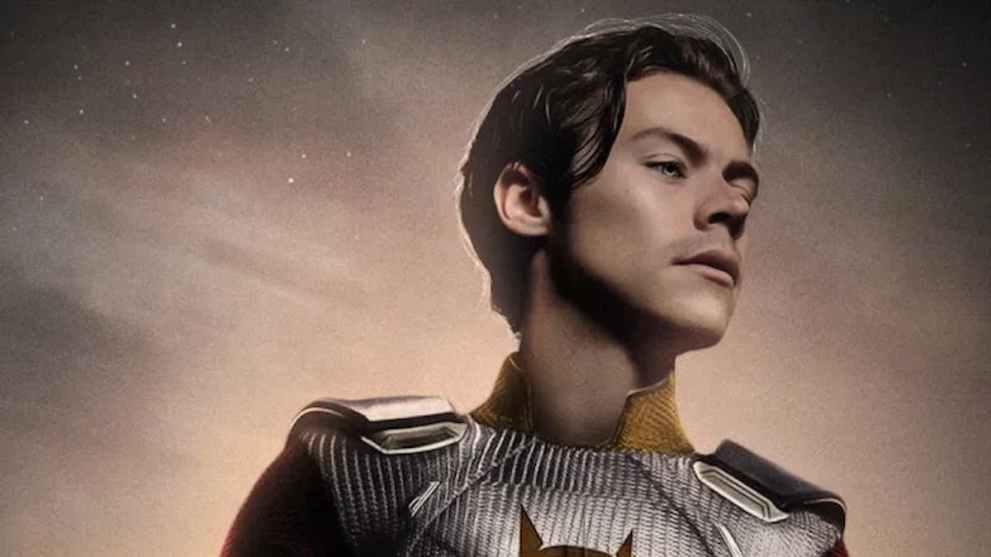
Let’s not mince words: Harry’s highly publicized entrance into the one of the movies i the MCU is a commercial gimmick rather than a genuine dramatic performance. Appearing at the very end of Chloé Zhao’s divisive Phase 4 cosmic epic, Harry arrives as Eros, also known as Starfox, the suave brother of the supervillain Thanos.
I timed his actual on-screen presence on my home theater setup, and he gets exactly 25 seconds of screen time alongside a poorly rendered CGI companion named Pip the Troll. When I watched this scene in crisp 4K, his posture felt stiff and heavily rehearsed, lacking the effortless, planetary charm that the comic book version of Eros famously radiates. He stands on the starship deck holding a heavy CGI cosmic sphere, delivering a few lines of expository dialogue that feel completely artificial.
Pros
- The metallic costume design is incredibly striking and captures a sleek, futuristic comic-book aesthetic.
- His natural star power creates an undeniable, instant curiosity about the broader cosmic lore of the MCU.
Cons
- A runtime of under half a minute provides zero space for actual character development or emotional depth.
- The heavy reliance on artificial green-screen backdrops breaks the physical immersion of his entrance.
- His vocal delivery is wooden and lacks the natural, roguish cadence required for a cosmic anti-hero.
Leading Role Limitations in My Policeman (2022)
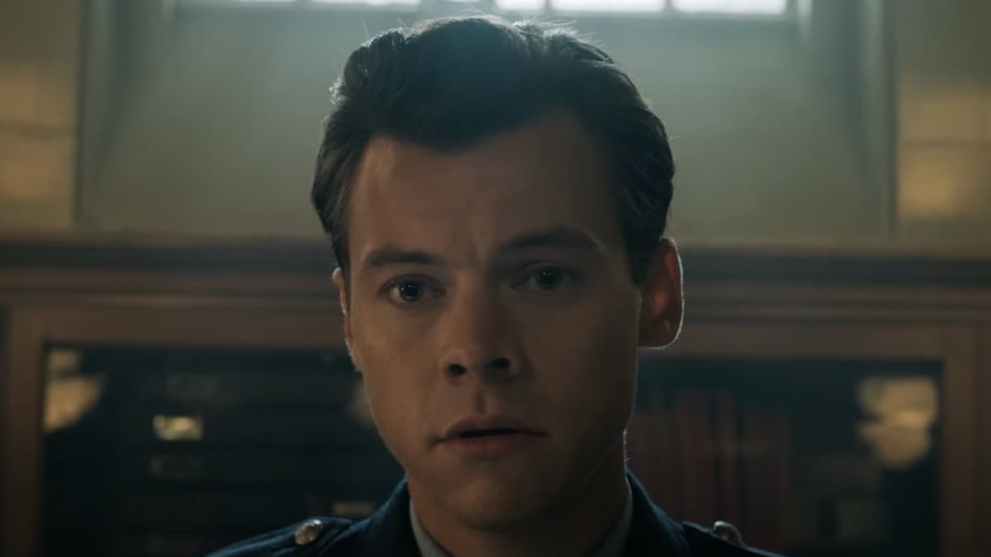
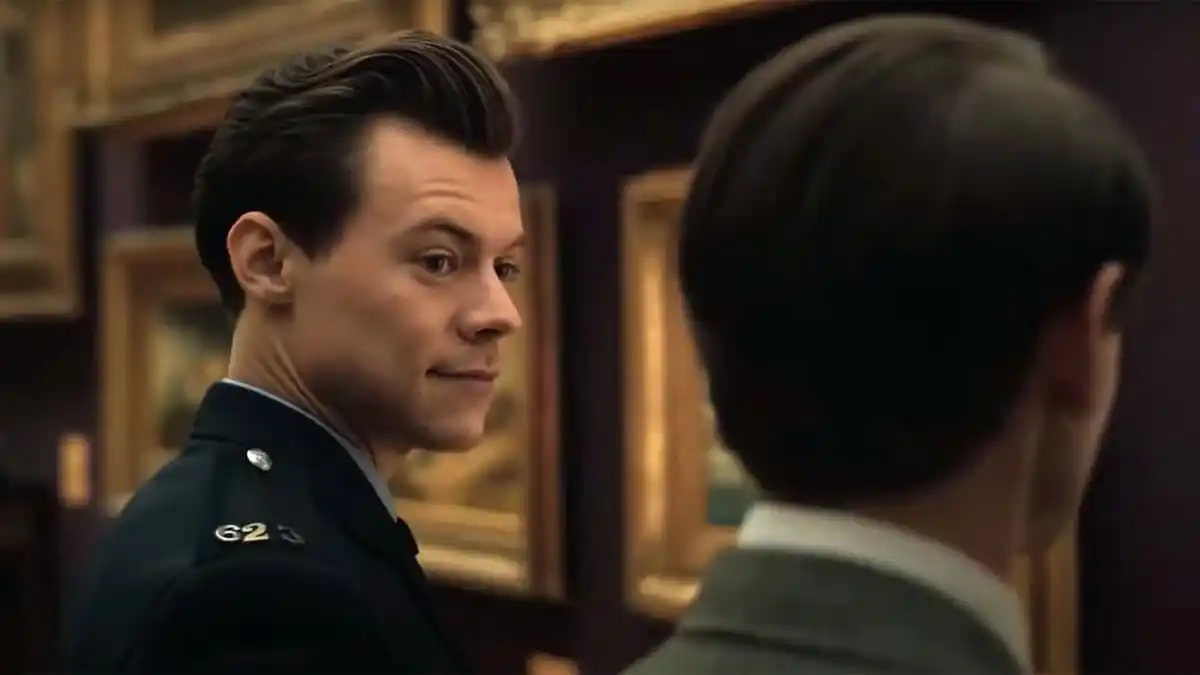
In Michael Grandage’s historical romantic drama, Harry takes on his most ambitious leading role yet, playing Tom Burgess, a closeted police officer in 1950s Brighton. Navigating a tragic love triangle between his schoolteacher wife, Marion, played by Emma Corrin, and museum curator Patrick, played by David Dawson, Tom is a character buried under layers of societal shame, fear, and repressed desire.
While I respect Harry’s boldness in taking on such a challenging, emotionally raw queer narrative, the film exposes his clear limitations as a leading man. During my hands-on viewing of the film’s key dramatic confrontations, his performance felt incredibly uneven. He struggles with consistency, alternating between high-pitched, over-the-top screaming matches with Emma Corrin and an almost lifeless, blank detachment opposite David Dawson.
A narrative this delicate requires quiet torment and internal complexity. Unfortunately, Harry often looks like he is simply waiting for his next line. While some critics offered mild defenses of his naive acting style, I found it broke the tragedy of the love triangle. It simply lacks the heartbreaking, heavy-hitting emotional power of a Ledger-Gyllenhaal masterpiece.
Pros
- He fits the physical silhouette of a mid-century, working-class British police officer beautifully.
- His performance is strongest in quiet, dialogue-free scenes where he relies solely on physical blocking.
Cons
- Uneven dramatic delivery makes his emotional outbursts feel theatrical rather than deeply felt.
- Flat chemistry with both Corrin and Dawson undermines the tragic, forbidden stakes of the romance.
- His vocal modulation is highly limited, lacking the period-accurate authority of a 1950s police officer.
Unsettling Mid-Century Intensity in Don’t Worry Darling (2022)
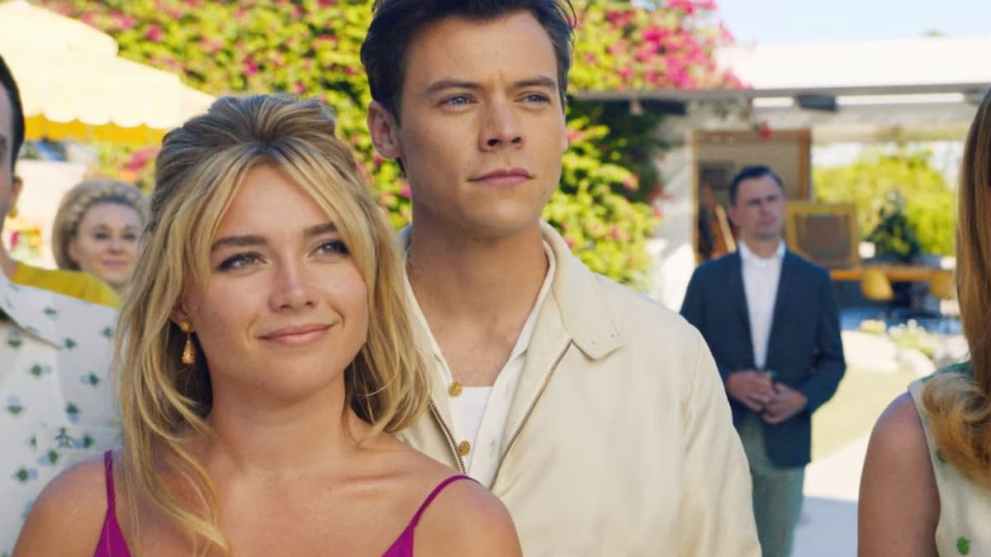
Despite the tidal wave of behind-the-scenes tabloid drama that threatened to drown Olivia Wilde’s psychological thriller before its premiere, the actual film is a surprisingly decent, visually spectacular trip into a retro-dystopian nightmare. Harry plays Jack Chambers, a doting, picture-perfect husband living in a sun-drenched, desert-bound 1950s company town called Victory.
The story takes a dark turn when his wife, Alice, played by a phenomenal Florence Pugh, discovers that Victory is actually a virtual reality simulation designed by a toxic, incel-fueled digital cult leader named Frank, played by Chris Pine. In reality, Jack is a jobless, resentful man who has kept Alice’s physical body drugged and captive in their bedroom so he can live out his retro domestic fantasy.
Harry took over this role after Shia LaBeouf departed the project, and he delivers an unsettling, blank intensity that works remarkably well. While early reviews criticized his slightly artificial, hollow cheerfulness in the first half of the film, my hands-on viewing confirmed that this flat quality retroactively fits the virtual nature of the Victory project. When Alice begins to push back, Harry matches her with a desperate, manic panic. During the high-intensity dinner table scene opposite Chris Pine, Harry’s voice cracks under pressure, perfectly capturing a weak man playing at being powerful. He is occasionally outshone by Pugh, but he holds his own ground.
Pros
- His blank, slightly artificial line delivery is a perfect thematic fit for a simulated husband.
- He shows great physical commitment during the film’s frantic, high-intensity domestic arguments.
- The film’s mid-century aesthetic, opulent wardrobe, and set designs look gorgeous in high-bitrate 4K.
Cons
- The movie drags significantly during its first 75 minutes, putting the couple through repetitive steps before the twist.
- His vocal control struggles in screaming matches, occasionally sounding strained and thin.
Masterclass Ensemble Performance in Dunkirk (2017)
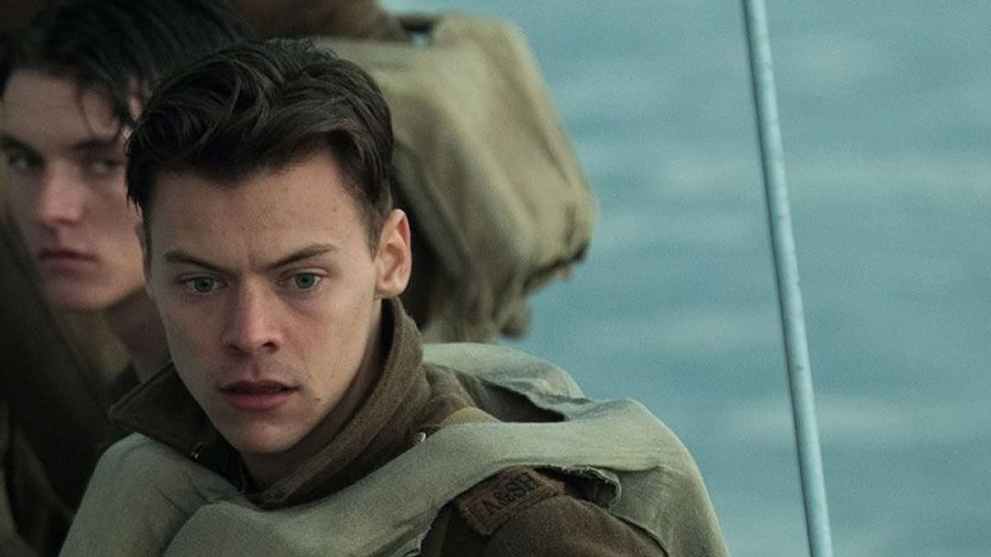
Christopher Nolan’s World War II masterpiece remains, by a wide margin, the absolute peak of Harry Styles’ acting career. The film depicts the desperate evacuation of Allied soldiers trapped on the beaches of France, utilizing a relentless, ticking-clock structure that relies on physical actions, sound design, and editing over long-winded dialogue. Harry stars as Alex, a young, terrified British private who will do absolutely anything to survive.
Eyebrows were raised when Nolan cast a pop megastar with zero acting experience in such a sensitive, high-budget historical film. However, Nolan’s directorial choice to utilize Harry’s expressive, old-fashioned face was a stroke of genius. Across the film’s tight 106-minute runtime, Harry has roughly 5 to 6 minutes of screen time, but he makes every second count. Rather than carrying the narrative, he integrates seamlessly into a survival-driven ensemble. My hands-on critique of his performance focused on his incredible physical acting: the wide-eyed, wild panic in his eyes as water floods a dark hull, his gasping breath as he clings to a life jacket, and his monotone, exhausted yelling during a tense confrontation on a sinking boat. He strips away all of his stage charisma to play a desperate, deeply flawed kid. It is a disciplined, raw, and thoroughly convincing performance that proves Harry can be a powerful dramatic asset under the guidance of a master director.
Pros
- He blends completely into the young soldier ensemble, never letting his celebrity distract from the historical reality.
- An exceptional display of physical acting, using body language and facial expressions to convey sheer survival terror.
- The film’s incredible, heart-pounding sound design and cinematography elevate his silent, tense scenes.
Cons
- Extremely sparse dialogue means he does not get to showcase a wide range of vocal modulation.
- The character is defined purely by survival panic, leaving no room for a traditional personal narrative arc.
Beyond Prestige Hollywood: Concert Films and the Netflix Era
While his narrative features represent his efforts to establish himself as a serious dramatic actor, Harry’s extensive concert and documentary catalog represents a massive, highly viewed entertainment footprint.
The newest jewel in his digital crown is his concert film, Harry Styles: One Night in Manchester, which debuted globally on Netflix on March 8, 2026. Directed by Paul Dugdale, this film captures Harry’s exclusive, high-energy album launch show recorded on March 6 at the Co-op Live arena in Manchester, England. Performing his fourth studio album, Kiss All the Time. Disco, Occasionally., Harry showcases an effortless, stadium-level crowd control and playful vocal performance that is the polar opposite of his tense, quiet work in historical features.
The Netflix release includes lyric videos for all 12 tracks, including his hit lead single, “Aperture,” and intimate, hometown-bound interview segments. It is currently available to stream for all Netflix subscribers, with plans starting at $8.99 per month.
The Strategic Decisions: Why Harry Rejected Prince Eric, Elvis, and Nosferatu
To truly appreciate Harry’s trajectory as an actor, you have to look at the massive, franchise-level roles he chose not to take. These decisions show a deliberate, calculated effort to carve out a career in prestige, non-musical cinema rather than taking easy, commercial wins.
Prince Eric in The Little Mermaid (2023)
In 2019, Harry was on the immediate shortlist to play Prince Eric opposite Halle Bailey’s Ariel in Disney’s live-action blockbuster remake of The Little Mermaid. Director Rob Marshall met with him personally, but Harry ultimately chose to take his name out of the running. Marshall later confirmed that Harry wanted to focus on his music tours and deliberately stretch himself as an actor, seeking out non-musical projects where he wouldn’t simply be seen as a singer. The role eventually went to Jonah Hauer-King.
Elvis Presley in Elvis (2022)
Harry threw himself into the intensive audition process for Baz Luhrmann’s flashy biographical drama, Elvis, desperately wanting to explore the King of Rock and Roll. However, Luhrmann ultimately passed on him, casting Austin Butler instead. Luhrmann explained that while Harry is an incredibly talented spirit, the real issue was that Harry is already a massive, era-defining icon himself. The director felt that audiences would struggle to look past the modern pop icon of Harry Styles to believe him as Elvis.
Thomas Hutter in Nosferatu (2024)
In early 2022, Harry was briefly attached to star as Thomas Hutter in Robert Eggers’ gothic horror masterpiece, Nosferatu, opposite Anya Taylor-Joy. Production had already begun in Prague when Harry suddenly had to pull out of the project due to massive scheduling conflicts with his upcoming music residencies. Taylor-Joy departed shortly after due to her own busy schedule, forcing Eggers to put the film on hold. Eggers eventually recast the project with Nicholas Hoult and Lily-Rose Depp, but the near-miss remains one of the most fascinating what-ifs of Harry’s film career







Updated: Jun 16, 2026 05:56 pm