


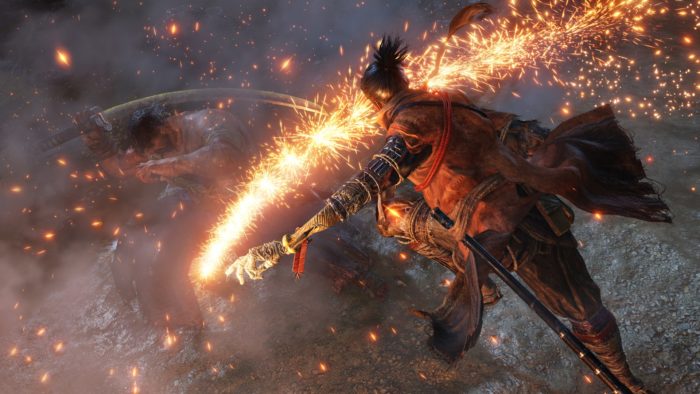

Mechanics in Sekiro: Shadows Die Twice That Will Confuse Souls Fans
No Stamina, It’s All About Posture
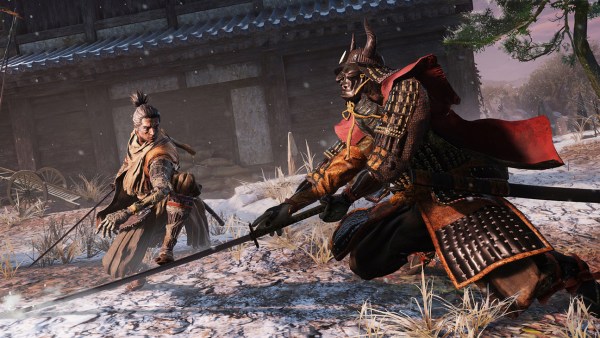
Demon’s Souls, Dark Souls, and Bloodborne have all made use of a stamina system that would determine how many actions you could take in a short span of time. Sekiro: Shadows Die Twice removes that aspect completely, which means that you can spam attacks as much as you want.
However, that doesn’t mean you can spam attacks without consequences. Instead of managing a stamina bar, Sekiro makes use of a posture bar instead, which kind of works similarly to poise in the Souls games.
As you continue to attack an enemy or successfully deflect their attacks, you’ll build up their posture bar while weakening them.
Once the bar is completely filled up, you’ll break their posture, thus staggering them in the process. This allows you to inflict a critical hit or deathblow on them, significantly draining their health.
This design change alone could shake up the entire balance of the game, as you’re no longer limited by a stamina bar. You’ll be focusing on blocking attacks and dealing damage, while also keeping an eye on your own posture bar to make sure that enemies don’t stagger you as well.
Mechanics in Sekiro: Shadows Die Twice That Will Confuse Souls Fans
Blocking Good, Dodging Bad
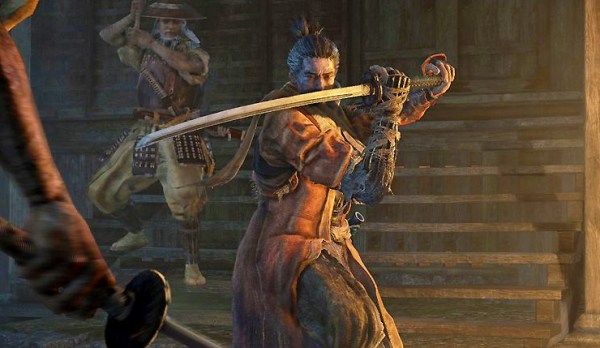
Another interesting change in Sekiro: Shadows Die Twice is the emphasis on blocking and parrying attacks. In the Souls games, if you have a shield equipped, you could block most attacks and counterattack. However, blocking would drain your stamina, and is generally regarded as kind of an inefficient way to play.
In Bloodborne, you didn’t have a shield at all (well there are two shields, but both are pretty useless), which meant that you had to solely rely on dodging attacks. In both series, dodging was by far the superior way to play, as it allowed players to react to enemy moves that little bit faster.
In Sekiro, blocking and parrying attacks is simply a key component of the game that you’ll need to get used to. Because enemies are balanced around their posture meters, and some bosses can’t be killed without deathblows, you definitely need to learn to block and parry in order to progress.
Interestingly enough, Sekiro does actually give players an indication whenever an enemy’s about to use an attack that can’t be blocked. A red kanji character will appear on-screen, signaling to you that the upcoming attack needs to be dodged.
By and large, though, Souls fans will likely need to discard the mentality that all attacks should be dodged.
Mechanics in Sekiro: Shadows Die Twice That Will Confuse Souls Fans
Using Stealth and the Grappling Hook
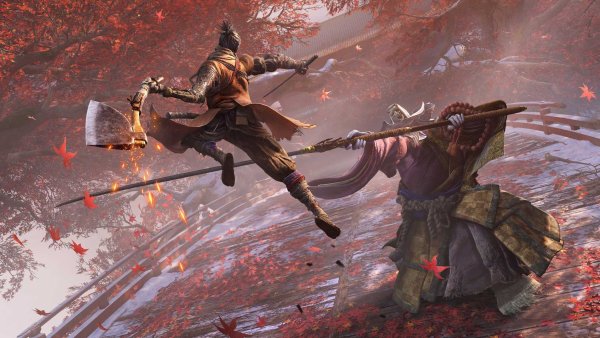
Unlike in the Soulsborne games, Sekiro has a large emphasis on stealth and sneaky gameplay. This is well demonstrated by the fact that you can press a button to crouch and sneak up on enemies. Your foes also have colored indicators that show you whether they’re aware of your presence. If you can sneak up to them, you can land a backstab.
Another new addition is the grappling hook itself, which allows you to grapple to rooftops and high areas to get to a good vantage point in the area. While you’re sneaking around, grappling to a high point is a great way for you to scope out the environment and figure out how best to proceed.
If you’re in combat, grappling lets you break away from the fight when you’re in trouble. That’s not to say that enemy encounters can be cheesed, as enemies can still find ways of dealing with you in the air once they’re fully aggroed.
Mobility is an extremely big part of Sekiro, even more so than it was in Bloodborne, so you can expect to be constantly zipping from one point to another on your adventure.
Mechanics in Sekiro: Shadows Die Twice That Will Confuse Souls Fans
Resurrecting After Dying

Possibly the major, headline new mechanic of Sekiro: Shadows Die Twice is the ability to resurrect immediately after death. Upon dying, you can press a button to resurrect, allowing you to jump back into the fight instantly.
This sounds pretty broken, but it’s not. For starters, you’ll need to charge up your resurrection meter by dealing damage to enemies and killing them, so there’s still a risk-reward system in place.
In addition to that, constantly resurrecting after death also causes the Dragon Rot disease to spread in the world and among the people around you.
From a gameplay perspective, the more the disease spreads, the lower your chances are of triggering Unseen Aid, which is another mechanic that prevents you from losing money and experience upon death.
However, from what we’ve seen so far, the Dragon Rot disease actually could seem a little similar to the world tendency mechanic we saw in Demon’s Souls. Depending on your actions in that game, the world tendency would shift to black or white, and that would determine the kinds of enemies you faced.
It’s still unclear how the Dragon Rot will actually impact the world in Sekiro, but considering that the game makes it a point to tell you when the disease spreading has gotten worse, it’s probably safe to assume that there will be far-reaching consequences.








Updated: Mar 8, 2019 09:09 am