


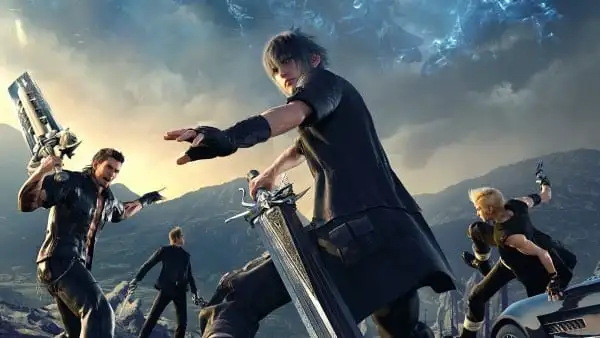

It’s been a long time since the game we now know as Final Fantasy XV was announced, all the way back in 2006 as Final Fantasy Versus XIII. Since then, the game has transitioned from the PlayStation 3 over to both the PlayStation 4 and Xbox One, and undergone some drastic design changes in the process.
This puts us right at the release of Final Fantasy XV, a game 10 years in the making with an absolutely unreasonable amount of expectations. But there’s an important question to think about: what happens to the series after XV?
One thing is clear, and that’s the fact that Final Fantasy XV is very different for the series, both in game design and tone. For some fans, this is a welcome change in a series that has been languishing for some time. However, for others this is a big split from what made the series so great in the first place, and a worrisome step. Ever since Final Fantasy XII, some fans have felt disillusioned with the series, and the XIII trilogy certainly didn’t help with that.

Since the game was announced as Versus XIII it’s been an ambitious project, completely different from Final Fantasy XIII, which was unveiled at the same time. The studio is using a brand new engine known as the Luminous Engine for XV, and this plays into the massive world design, and stunning graphical clarity.
XV is a game that has embraced more western design ideas than any other game in the series, boasting an open world, a more focused story on four party members, fast-paced action combat, and a wealth of sidequests and activities to do. These are all things that represent a change for the series, some small and some large. Of course, because of the focus on a large seamless world, the technology behind the game had to be incredibly powerful.
Final Fantasy XV’s director, Hajime Tabata, has talked about how the game needed to have a lot of power behind it in multiple interviews. Tabata said this to Kotaku in a recent interview:
“The thing we really felt like we had to do when we switched over from being Versus XIII to XV was to overhaul the technology behind Final Fantasy XV, to make it a new modern up-to-date game technologically. The way we approached making it was very much to have that technological base that we worked in, include the combat system that we feel the game needs, and the world-building the game needs, have that whole technical base.”

You can see this represented in the sweeping world we’ve seen in gameplay footage, and jaw dropping summon animations and boss battles. Not to mention the environmental effects present in the game. Using a fire spell leaves areas of the earth scorched and will leave burn marks on any party members it hits. This also goes for weather effects like rain and wind. The technology being used for Final Fantasy XV is certainly impressive.
The shift to an action focused combat system is perhaps the biggest changing piece in the new title. Final Fantasy games have always been turn-based, or featured a variation of the ATB (active-time battle) system. This change drastically alters the way a player interacts with the game world, giving them the feeling of having more direct control.
Tabata and his team opted to go with a battle system that would appeal to longtime fans of the series, while simultaneously not being off-putting for anyone who might be experiencing Final Fantasy for the first time. He addressed concerns in an interview with GameSpot stating:
“I understand that there are people who are concerned and have negative opinions about the changes in the Final Fantasy series’ systems, and certainly about Final Fantasy XV’s. It’s also undeniable that it’s part of the DNA of the series to challenge ourselves and try new things, to make explorations within the genre itself. Certainly with Final Fantasy XV, we’ve been trying to update and change the technology base that powers Final Fantasy games. Then to provide new gameplay experiences made possible because of that new technological benchmark.”
This idea of change can be seen across the series, and games stepping back from the advancements of previous entries have been a mixed bag. On one hand you have Final Fantasy IX, which returned to form with a more classic Final Fantasy story and class based system, and was met with great reception. On the other hand, you have Final Fantasy XIII which went more linear from the open style world of XII, and was criticized for it.
Final Fantasy XII presented a huge world that was fairly open, an interesting spin on traditional combat with a complex narrative that built more on the world and setting than individual characters. XIII may have been more of a futuristic setting for the series, but design wise it played things far more safely than the previously title. It felt far lesss ambitious than its predecessor, and fan reception to XIII was mixed at best. One thing is perfectly clear however, and that’s the fact that the series needs to continuously move forward, especially now.

Final Fantasy XV is in many ways a proving ground, potentially deciding the future of the series. All of the changes and design choices for the game reflect the series trying to match the modern industry, and the rising popularity of open world games. The only thing is, taking a step back after XV might feel too much like just that, taking a step back. With the amount of resources and time Square Enix has sunk into Final Fantasy XV, it’s hard to imagine them going larger, but that’s really what they need to do, at least with the mainline entries.
There will always be a place for nostalgic spinoffs like World of Final Fantasy, but the mainline games have to keep trying new things and innovating. Earlier this year Tabata talked about something he called “The Final Fantasy Disease,” and how it makes people behind the games think certain things are integral to what a Final Fantasy title is. Here’s his description from International Business Times:
” [It]refers to people within the company who can’t imagine anything other than their own view of Final Fantasy. Since the root is a strong self-affirmation, one’s own view of Final Fantasy takes more priority than the team’s success. If that view of Final Fantasy isn’t fulfilled, then they’re convinced that it’s bad for Final Fantasy. They think, ‘Since Final Fantasy is a special team, then we are also special because we are making it. When the new Final Fantasy comes out, everybody is going to be so into it.’ But that’s not the reality of the situation, is it?”
With the Final Fantasy VII Remake now looming on the horizon, many fans wonder what Square Enix plans to do with the title. After all, VII is possibly the most beloved title ever made by the company. It remains to be seen whether the huge technical gambles and new designs of XV will pay off, but either way it represents something core to the series, and how Final Fantasy is trying to redefine the JRPG genre.
Final Fantasy has always been one of the defining franchises for JRPGs, and it’s set precedents in the genre many times over, with the dramatic storytelling of Final Fantasy IV, and the world building of VI. Then moving on from that the leap to 3D with VII, the voice acting of X, and the MMO XI. Many of Final Fantasy’s best successes have come when the development team tries something new, and goes for it.

It’s important for the series to continue this trend of advancement if it wants to stay relevant and interesting. Final Fantasy needs to be fresh and new with each main entry, and not a retread in design. That means not going back to turn-based battles or linear design – things that would feel like a step back for the series after XV. When Tabata talked about the Final Fantasy Disease he touched on this fact:
“Making ourselves challenge ourselves to do more than we’ve been doing really is the most important thing here. I really feel that the original identity of Final Fantasy came from being a challenger in that way. Where we are now, and even though we’ve got the number 15 in our title, our goal is to go back to that original point of being a challenger and trying to do something new and different. It’s in engaging with that challenge that we can find the real meaning of Final Fantasy” Tabata says.
No matter how Final Fantasy XV is received by fans and critics it will undoubtedly change the series. It’s two steps forward, and there’s no turning back now.









Updated: Nov 9, 2016 01:05 pm