


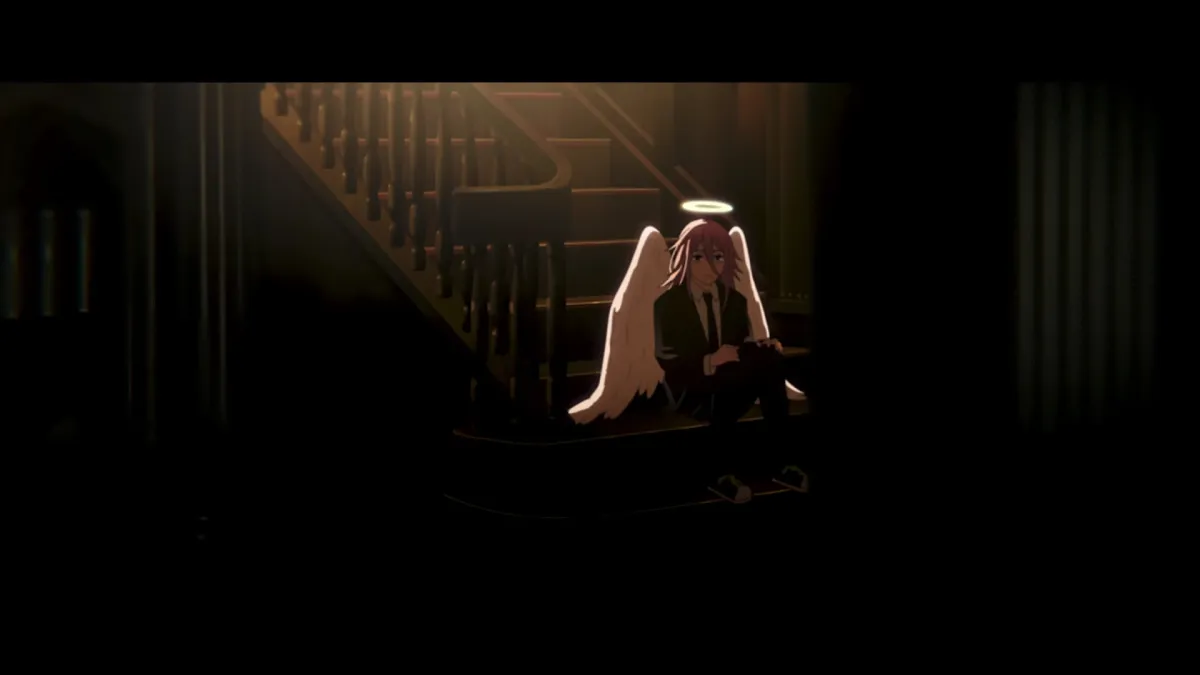
The Angel Devil is a central entity in the Chainsaw Man universe, embodying humanity’s collective fear of celestial beings while exhibiting a completely passive nature toward humans. Operating as a Public Safety Devil Hunter in Tokyo Special Division 4, the character possesses the ability to drain human lifespans through physical contact and convert stored time into powerful weapons. Beyond basic narrative traits, the Angel Devil represents a unique case of real-world editorial interventions, intricate vocal direction adjustments, and key thematic connections across manga, television, light novels, feature films, and stage plays.
What is the Official Release Chronology of the Angel Devil?
The media expansion of the franchise across print, television, film, and live theater follows a verified release trajectory managed by Shueisha, MAPPA, Toho, and Crunchyroll. The integration of the character across primary media formats outlines key publication dates and adaptation milestones.
| Media Format | Milestone Event | Official Premiere Date | Production and Distribution Details |
|---|---|---|---|
| Manga | Part 1 Public Safety Arc Serialization | December 3, 2018 to December 14, 2020 | Published weekly in Shueisha’s Weekly Shonen Jump and collected in 11 tankobon volumes. |
| Manga | Angel Devil Debut in Chapter 34: Full Team | October 4, 2019 | Included in Volume 4 and published in English by Viz Media on April 6, 2021. |
| Light Novel | Chainsaw Man: Buddy Stories Release | November 4, 2021 | Written by Sakaku Hishikawa and illustrated by Tatsuki Fujimoto. |
| Anime TV Series | Broadcast Premiere | October 12, 2022 | Directed by Ryu Nakayama, produced by MAPPA, and broadcast on TV Tokyo. |
| Anime TV Series | Angel Devil TV Debut in Episode 11: Mission Start | December 21, 2022 | Adapted from Chapter 34 and streamed globally by Crunchyroll. |
| Light Novel | Chainsaw Man: Buddy Stories Western Release | July 25, 2023 for eBook and August 3, 2023 for Print | Translated and published globally by Viz Media. |
| Cinema | Chainsaw Man The Movie: Reze Arc Japan Debut | September 19, 2025 | Produced by MAPPA and distributed by Toho across standard, RealD 3D, and IMAX formats. |
| Cinema | Premium Format Expansion | October 4, 2025 | Expanded to 4DX, MX4D, and Dolby Cinema theatrical screenings in Japan. |
| Cinema | International Theatrical Release | October 24, 2025 | Released in over 80 countries and distributed across 3,003 theaters in North America. |
| Cinema | Home Video and Digital Launch | December 9, 2025 | Released digitally by Sony Pictures Home Entertainment. |
| Stage Play | Chainsaw Man: Assassins Arc Announcement | December 2025 | Continuation officially confirmed by production committee while exact launch dates remain unconfirmed. |
| Manga | Part 2 Academy Arc Serialization End | March 25, 2026 | Serialized digitally on Shonen Jump+ and collected across Volumes 12 to 24. |
| Cinema | Global Subscription Streaming Premiere | April 30, 2026 | Streaming rollout on Crunchyroll for global premium subscribers. |
| Stage Play | Chainsaw Man the Stage: Reze Arc Tokyo Debut | July 25, 2026 | Live-action stage play adaptation premiering in Tokyo, Japan. |
How Did Editorial Decisions Shape the Character Fate?
The narrative trajectory of the Angel Devil underwent a fundamental alteration due to real-world interactions between series creator Tatsuki Fujimoto and his editor, Shihei Lin. During a live panel broadcast at Jump Festa, Fujimoto and Lin revealed that the fatal climax of the Public Safety Arc was not originally planned in initial manuscript outlines. Fujimoto hit a structural roadblock and could not decide whether Kobeni Higashiyama or the Angel Devil should perish, despite initial drafts slating Kobeni for a permanent and gruesome death.
Fujimoto directly consulted Lin, asking: “Who’d you rather want dead? Kobeni or Angel Devil?” Assuming Fujimoto wanted to preserve fan-favorite cast members, Lin expressed a strong preference to spare the Angel Devil. Operating on the creative principle that character deaths carry far greater emotional impact if both editorial staff and readers are invested in their survival, Fujimoto chose the exact opposite of Lin’s suggestion. He spared Kobeni and immediately drafted the sudden off-screen demise of the Angel Devil. Lin later recalled his shock upon reading the raw manuscript pages, stating: “I got scared after I read that chapter, because I remembered you asked me. It really freaked me out.”
This editorial pivot left noticeable narrative residues in the final chapters of Part 1. Specifically, the grounded, philosophical speech regarding ordinary human dreams delivered by Kobeni to Denji in Chapter 92 is highly unusual for her comedic relief role. Thematic analysis indicates this reflection on stolen human potential was originally drafted for the Angel Devil, whose personal arc focused on being haunted by the stolen lifespans and unfulfilled dreams of his human victims.
What Behind-the-Scenes Vocal Direction Guided the Voice Cast?
Adapting the Angel Devil across animated screen adaptations required specific vocal performances to capture his soft-spoken, lazy, and gender-ambiguous personality. The voice roster reflects the international performers chosen for television and film adaptations.
| Performer Name | Language Register | Adaptation Format | Production Focus and Performance Notes |
|---|---|---|---|
| Maaya Uchida | Japanese Voice | TV Anime and Reze Arc Film | Selected for wide range across youthful male and female roles. Directed to suppress natural feminine tones during high-tension scenes to act strictly in a boyish register. |
| Shogo Sakata | Japanese Voice | TV Anime and Reze Arc Film | Performed as Aki Hayakawa. Strained his throat into a raspy, exhausted delivery to prevent Aki’s voice from overpowering Uchida’s delicate dialogue. |
| Casey Mongillo | English Voice | Global Dub | Selected for ability to portray emotionally vulnerable, gender-neutral characters using a soft-spoken vocal range. |
| Yutaro | Japanese Live Action | Reze Arc Stage Play | Cast for the Tokyo stage production, utilizing harness aerial work and physical movement choreography. |
During test recording sessions, Maaya Uchida was instructed by sound directors to avoid feminine pitch inflections when raising her voice, enforcing a boyish register to maintain the character’s beautiful yet masculine identity. This quiet delivery, meant to preserve a boyish register even though the Angel Devil identifies as male despite his androgynous design, forced co-star Shogo Sakata to intentionally strain his voice during recording sessions.
How Does Devil Physiology and Canonical Lore Function?
The lore of the franchise strictly distinguishes supernatural entities based on biological origin, cranial anatomy, and host requirements. Misconceptions frequently label the Angel Devil as a Fiend, but official taxonomy confirms his status as a Pure Devil.
| Entity Classification | Core Biological Rules | Anatomical Characteristics | Host Requirement |
|---|---|---|---|
| Pure Devil | Born directly from conceptual names and human fear; immortal reincarnation cycle between Earth and Hell. | Humanoid or monstrous forms; lacks cranial head sutures, facial deformities, or skull marks. | Exists independently as a standalone conceptual entity without a host. |
| Fiend | A Devil possessing a deceased human corpse to preserve its own life. | Always exhibits distinct cranial head markings, horns, fins, or segmented face plates. | Requires a dead human body, erasing the original human personality. |
| Hybrid | Rare contract fusion replacing a vital human organ such as the heart. | Standard human appearance until a physical trigger activates weapon transformation. | Retains full human consciousness, original personality, and agency. |
Because the Angel Devil is a Pure Devil, his halo and white wings are natural physiological features of his conceptual name rather than possessed biological elements. Under the rules established in Chapter 34, all humanoid devils display lower hostility toward humans. The Angel Devil sits at the apex of this rule, showing zero active malice, preferring isolation, and comforting dying humans despite claiming to despise them.
His ability requires direct skin contact to siphon human lifespans, meaning indirect contact through materials like clothing is completely safe. The Angel Devil can then convert absorbed lifespans through his halo into physical Lifespan Weapons. These summonable items include 5-Year, 10-Year, and 100-Year Swords, and 1,000-Year Spears capable of cutting through intangible entities or inflicting massive structural damage. As the character explained to Aki: “Sometimes… the humans my power killed and turned into weapons show up in my dreams and blame me for doing it.”
What Celestial Hierarchy and Prose Adaptation Gaps Exist?
The naming and thematic structure of Makima’s Public Safety followers correspond directly to the nine traditional choirs of the Christian angelic hierarchy.
| Theological Choir | Character Equivalent | Canon Physiological Manifestation |
|---|---|---|
| Seraphim | Seraphim | Multi-winged, monstrous insectoid devil under Makima’s control. |
| Cherubim | Beam (Shark Devil) | Loyal shark entity capable of swimming through solid matter. |
| Thrones | Galgali (Violence Fiend) | Wears a poison mask to suppress physical strength. |
| Dominions | Dominion | Humanoid winged follower shown under Makima’s command. |
| Virtues | Virtue | Unseen celestial devil representing physical natural order. |
| Powers | Power (Blood Fiend) | Chaotic, blood-manipulating fiend. |
| Principalities | Princi (Spider Devil) | Humanoid waist-up with spider legs; opens portals to Hell. |
| Archangels | Archangel | High-ranking messenger class unseen in active combat. |
| Angels | Angel Devil | Lowest-ranking humanoid messenger class possessing wings and halo. |
This structure demonstrates that the Angel Devil represents the lowest choir rank, making him a subordinate messenger canonically designed to be vulnerable to the absolute domination of the Control Devil.
Despite placing high in official popularity polls, the Angel Devil is completely omitted from the prose light novel Chainsaw Man: Buddy Stories. The book explores four partner dynamics: Denji and Power, Kishibe and Quanxi, Himeno and Aki, and an Enoshima vacation bonus story. Failing to cover Aki and the Angel Devil’s partnership created a media gap that was later addressed when MAPPA released theatrical adaptation details for the Reze Arc movie, effectively functioning as episode zero for their bond.
Regarding fan speculation about a potential Devil Devil, creator Tatsuki Fujimoto was directly asked at Jump Festa if such an entity exists. Fujimoto stated: “I’ve thought about this too, but that’s a setting for future, so no comment.” Consequently, the existence or status of a Devil Devil remains officially unconfirmed.
How Do Popularity Metrics Reflect Adaptation Impact?
Character popularity metrics across official Shueisha voting cycles illustrate how anime broadcasts and theatrical releases reshape fan perception. Examining the official Chainsaw Man character popularity rankings reveals clear shifts over time.
| Character Name | First Poll (2020) Japan | Second Poll (2020) West | Second Poll (2021) Japan | Third Poll (2026) Overall | Narrative and Adaptation Impact |
|---|---|---|---|---|---|
| Character Name | First Poll (2020) Japan | Second Poll (2020) West | Second Poll (2021) Japan | Third Poll (2026) Overall | Narrative and Adaptation Impact |
| Reze (Bomb Devil) | 4th | 5th | 5th (45,741 votes) | 1st (205,775 votes) | Surged to 1st place following massive visual focus in the 2025 feature film. |
| Aki Hayakawa | 3rd | 4th | 1st (88,568 votes) | 3rd | Maintained top placement due to emotional arc and film presence. |
| Makima | 2nd | 3rd | 2nd (76,733 votes) | 2nd | Held 2nd place consistently across consecutive polling periods. |
| Power | 1st | 2nd | 3rd (69,850 votes) | 5th | Experienced minor drop following narrative death. |
| Denji | 5th | 1st | 4th (59,130 votes) | 4th | Solid top five presence throughout serialization. |
| Angel Devil | 6th | 9th | 7th (27,716 votes) | 7th (49,899 votes) | Remarkable stability bolstered by key film sequences and partner focus. |
| Hirofumi Yoshida | 10th | Outside Top 10 | 6th (32,161 votes) | 8th | Strong domestic support despite limited Part 1 panel count. |
| Kobeni Higashiyama | 8th | 8th | 10th (22,862 votes) | 13th | Consistent fanbase successfully outranking her own car. |
| Pochita | 9th | 6th | 9th (26,722 votes) | 9th | Maintained steady mascot popularity. |
| Asa Mitaka | N/A | N/A | N/A | 10th | Only Part 2 exclusive character to break into the top ten. |
| Kobeni’s Car | 7th | Outside Top 10 | 15th | 19th | Meme entry gradually declining in vote share over time. |
In the 2021 poll, rankings closely matched panel volume in the manga. However, the theatrical release of the Reze Arc feature film completely disrupted this baseline, vaulting Reze to 1st place with over 205,000 votes. The Angel Devil maintained a resilient 7th place finish with 49,899 votes, demonstrating that memorable cinematic visual sequences and strong voice direction sustain long-term character popularity across the franchise.









Updated: Jul 29, 2026 07:41 pm