


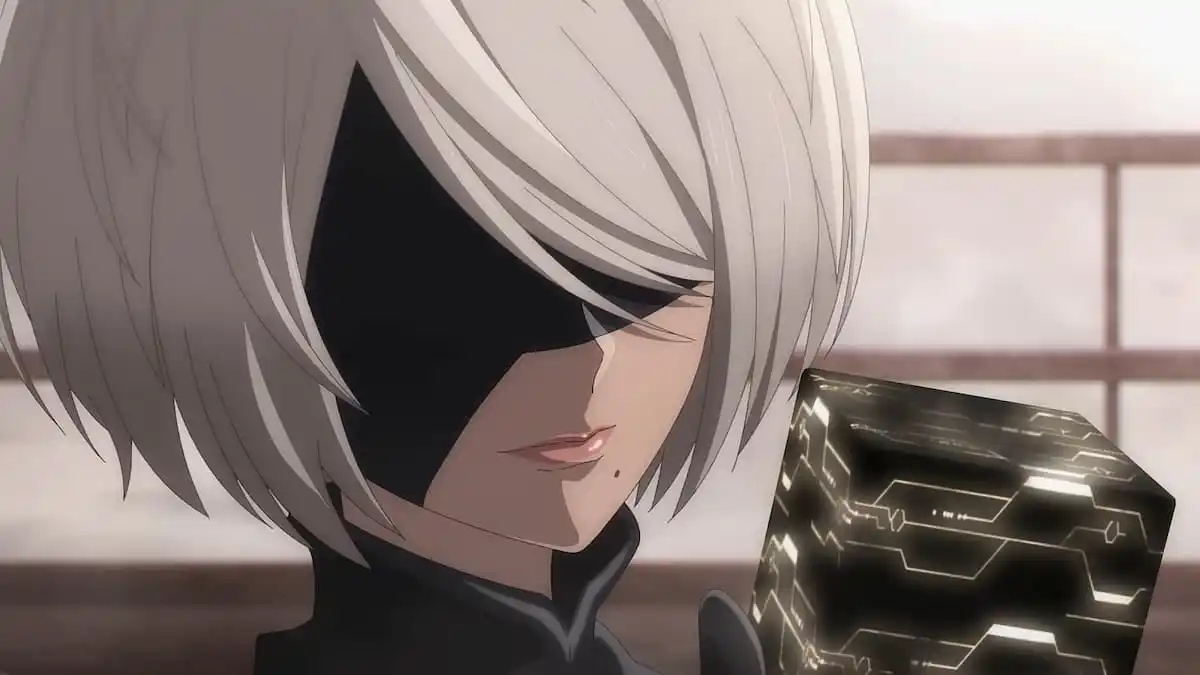
The television adaptation NieR:Automata Ver1.1a has brought renewed attention to one of the most complex figures in the franchise: YoRHa Type A No. 2, commonly referred to as A2. While her brief, violent appearances in the early segments of the story paint her as a ruthless defector, her history is deeply intertwined with the creation of the entire YoRHa organization.
To fully comprehend A2’s motivations, her combat capabilities, and her ultimate fate, one must look beyond the surface of the game’s initial campaign. Reconstructing her narrative requires analyzing technical specifications, stage play developmental histories, verified anime release schedules, and cross-media lore.
Technical Profile and Anatomical Specifications of YoRHa Prototype Attacker Number 2
To understand A2’s physical capabilities, it is necessary to examine her design parameters. As an experimental prototype, her chassis was built to test extreme offensive outputs before the standardization of subsequent model series.
Analyzing the technical parameters of A2’s custom-built chassis reveals a layout engineered for high close-quarters impact:
| Specification | Parameter |
|---|---|
| Official Designation | YoRHa Type A No. 2 (Attacker Number 2) / Freesia |
| Model Classification | Experimental Prototype Attacker (Decommissioned Series) |
| Active Combat Role | Close-Quarters Melee Specialist |
| Japanese Voice Actor | Ayaka Suwa |
| English Voice Actor | Cherami Leigh |
| Height Parameter | 168 cm (including high-heeled chassis stabilizers) |
| Physical Weight | 139.2 kg |
| Chassis Color Palette | Stark white hair, gray iris coloration, highly damaged black outer casing |
| Primary Arsenal | Type-4O Blade (Heavy Two-Handed Greatsword) |
| Unique Core System | Overclocked Berserker Mode (B-Mode) |
High Density Mechanical Design and Physiological Limits
While the outer appearance of a YoRHa android mirrors human anatomy, the internal structural layout consists of high-density military alloys and complex mechanical components. This dense design drastically alters her physical mass. The relationship between a YoRHa unit’s weight and that of an organic human of comparable height can be expressed as: M(YoRHa) = approximately 2.5 x M(human).
This high structural density has direct operational consequences. Because their mechanical frames lack natural buoyancy, YoRHa units cannot swim and require their tactical support Pods to perform emergency aquatic rescues whenever they fall underwater.
A2’s prototype chassis is unique due to her Berserker Mode (B-Mode), a system that overclocks her offensive power by bypassing standard safety limiters at the direct expense of her defensive barrier systems. Because this feature proved highly volatile and resulted in severe systemic strain, it was omitted from the standardized YoRHa Type B units that followed.
The Crucible of the Pearl Harbor Descent Operation and the Mount Kaala Timeline
The defining event of A2’s existence is the Pearl Harbor Descent Operation, officially cataloged as the 126th Descent Mission. This military offensive marked the formal beginning of the Fourteenth Machine War.
Reconstructing the timeline of the Pearl Harbor Descent reveals how closely the narrative aligns with twentieth-century military history:
| Calendar Timeline (U.C.) | In-Universe Lore Milestone | Real-World Historical Parallel |
|---|---|---|
| December 8, 11941 | Launch of the Pearl Harbor Descent Operation at Mount Ka’ala | December 8, 1941: Outbreak of the Pacific War (local timezone) |
| January 11942 | Extraction of A2’s combat data to establish the YoRHa Type E series | January 1942: Mass industrialization of specialized wartime programs |
| March 10, 11945 | Standardized deployment of 2B and 9S across the Earth’s surface | March 10, 1945: The firebombing of Tokyo |
| August 6, 11945 | Destruction of the Machine Tower, concluding the Fourteenth Machine War | August 6, 1945: The atomic bombing of Hiroshima |
On December 8, 11941, an experimental squadron launched an assault on Oahu Island with the primary objective of destroying a Goliath-class machine server located beneath Mount Ka’ala. The server directed all machine lifeforms across the critical Asia-Pacific region.
While official Bunker records are heavily redacted to falsely indicate that only twelve units were deployed, the actual descent force comprised sixteen prototype YoRHa androids. The descent was immediately compromised by heavy enemy anti-air defenses, which obliterated twelve of the sixteen descending units. This left only four survivors to reach the surface of the Earth:
- YoRHa Type A No. 2 (Attacker Number 2)
- YoRHa Type A No. 4 (Attacker Number 4)
- YoRHa Type G No. 16 (Gunner Number 16)
- YoRHa Type S No. 21 (Scanner Number 21)
Upon landing, the survivors encountered a local Resistance faction comprised of android desertion remnants from the previous Eighth Descent force, who had been stranded on Earth for 200 years. Led by Captain Rose, this group included Anemone, Lily, Gerbera, Sonia, Erica, Margaret, Shion, and Dahlia.
Initial hostilities flared due to the Resistance’s deep distrust of the masked YoRHa units. A combat engagement was prevented when A2 (then designated simply as Number 2) stepped forward, deactivated her weapons, and delivered a speech expressing their shared plight and absolute isolation.
During their alliance, Lily was infected by a highly volatile machine logic virus. Rather than executing her under standard protocols, Scanner Number 21 used her terminal to successfully rewrite Lily’s core programming and purge the virus.
The mission concluded in the deep server room beneath Mount Ka’ala. Facing over 300,000 machine units, Attacker Number 4 overloaded her black box fusion reactor, sacrificing herself to collapse the mountain and destroy the server, leaving A2 as the sole surviving YoRHa unit.
Project YoRHa and the Covert Birth of the Executioner Class
While the destruction of the Mount Ka’ala server was presented to the squad as a vital tactical objective, the entire Pearl Harbor operation was a controlled, disposable experiment. The primary mandate of the descent was to monitor and analyze how these experimental prototype models performed under extreme psychological and physical stress. The command center at the Bunker deliberately denied all requests for backup to observe how the units behaved in a hopeless scenario.
A2’s performance data proved to be of exceptional value. Her superb analytical reflexes, combat adaptation, and durability under pressure were recorded by the Bunker’s monitoring systems.
This behavioral and combat data was harvested to construct the standardized YoRHa Type E (Executioner) division, which was officially established in January 11942. Standardized combat units, such as 2B, are physical and cognitive derivatives of A2’s base model. The Executioner class was designed specifically to systematically assassinate YoRHa units that discovered the truth of Project YoRHa, most notably the recurring Scanner unit 9S.
Because A2 survived the Mount Ka’ala blast and became aware of the systemic betrayal by the Bunker command, she deserted the military organization. Her continued existence and her live black box signal represented a severe security breach. To prevent her from leaking the truth of Project YoRHa, command marked her for immediate disposal, tasking the Type E division with hunting her down and terminating her. This established the tragic cycle where 2B was repeatedly sent to execute her own lineage predecessor.
Dismantling the Kaine Memory Connection: Canonical Realities
A major point of speculation within the franchise’s fanbase is the theoretical connection between A2 and Kainé, the heroine of NieR Replicant. This theory is based on a monologue delivered by Number 2 in the early iterations of the YoRHa stage plays (Ver. 1.0 and Ver. 1.1), where she describes her programmed pseudo-memories.
In these false memories, Number 2 describes a peaceful childhood in the country, tending a farm, knitting with her grandmother, and enjoying the support of a kind, tight-knit village community. Because Kainé was also raised by a grandmother, fans assumed A2 was programmed with Kainé’s memories.
However, a rigorous analysis of the canon reveals that this connection is incorrect due to three major discrepancies:
- Environmental Clash: Kainé’s historical iterations never lived on a farm. Human (Gestalt) Kainé lived in a grand, high-society mansion with her grandmother, who was a decorated general in the military. Replicant Kainé lived in a dilapidated shack outside the Aerie and was violently ostracized and abused by the local villagers, a stark contrast to the kind, supportive neighbors described in A2’s memories.
- Personality Disconnect: A2’s original personality prior to the Pearl Harbor betrayal was exceptionally cheerful, optimistic, and timid, which is why Captain Rose gave her the gentle flower name Freesia. This contrasts sharply with Kainé’s vulgar, aggressive, and highly abrasive disposition.
- Production Reality: The original 2014 stage play was written by Kaoru Asakusa and was not initially conceived as a direct prequel to the NieR franchise. The thematic similarities were coincidental. Once Yoko Taro assumed direct control of the scripts for later play versions (Ver. 1.3a, 1.3aa), the manga, and the anime, he removed the grandmother and the farm monologue entirely. This structural omission confirms that the theory is canonically dead and was never part of Yoko Taro’s grand narrative framework.
Developmental History of the YoRHa Stage Plays
To understand how A2’s narrative was refined, one must look at the production history of the YoRHa stage plays. These live performances served as the developmental foundation for the characters and themes that eventually defined the video game.
| Stage Play Version | Performance Dates | Narrative Adaptations and Cast Variations |
|---|---|---|
| YoRHa Ver. 1.0 | October 1 to 5, 2014 | Original debut managed by Alicein Project featuring an all-female cast |
| YoRHa Ver. 1.1 | May 23 to 31, 2015 | Expanded venues to Shinjuku Mura LIVE with new scenes written by Yoko Taro |
| YoRHa Ver. 1.2 Musical | February 9 to 13, 2018 | Upgraded budget after Automata success; Daisy added to the cast |
| YoRHa Ver. 1.3a | July 4 to 14, 2019 | All-male cast introduced; Accord added as a weapons dealer |
| YoRHa Ver. 1.3aa | March 29, 2020 | Livestreamed on March 29 due to COVID-19; Jackass replaced Anemone |
| YoRHa Girls Ver. 1.1a | December 3 to 6, 2020 | Female cast reprisal of the YoRHa Boys storyline set in Tokyo |
These productions feature several notable behind-the-scenes details:
- Idol Group Origins: Project YoRHa initially began as an Akihabara idol group collaboration in 2012 between Yoko Taro, MONACA, and DearStage, with vocalists Eri Aino, Yuna Ichikura, and Tamaki Sakurai performing the original vocals.
- Saito’s Discovery: The stage play originally had no connection to the NieR franchise. In 2014, producer Yosuke Saito attended a performance of Ver. 1.0 and proposed using it as the foundation for the video game, though Yoko Taro was initially hesitant to establish a direct connection between the properties.
- The Non-Canon Male Accord: In the 1.3 series, the role of Accord was portrayed by a male actor, Kyousuke Suga. While highly popular, Yoko Taro later clarified that this casting choice was an ad-hoc decision by director Ichidai Matsuda and is technically non-canon, as Accord units are strictly female-model androids.
- Jackass Replacement: In Ver. 1.3aa, the key Resistance character Anemone was written out of the script and replaced with Jackass solely because the original actress was unavailable for the scheduled performance dates.
- Acoustic Minimalism: Scored by guitarist Takanori Goto, the musical arrangements for the 1.3 plays were restricted to a minimal ensemble of guitar, violin, and percussion to amplify thematic feelings of fear and sadness.
Anime Timeline Divergences and the Accord Intervention
The climax of NieR:Automata Ver1.1a departs significantly from the video game’s narrative structure, introducing major timeline divergences that reshape the franchise’s future. The television series aired critical episodes on confirmed historical schedules:
- Episode 6 — Lone Wolf (March 5, 2023): This episode introduced Lily’s backstory and A2’s original optimistic personality.
- Episode 17 — Bad Judgment (August 2, 2024): This episode explored the tragic climax of the Pearl Harbor Descent through A2’s recovered memory data.
- Episode 24 — the [E]nd of YoRHa (September 27, 2024): This finale resolved the conflict with the machines.
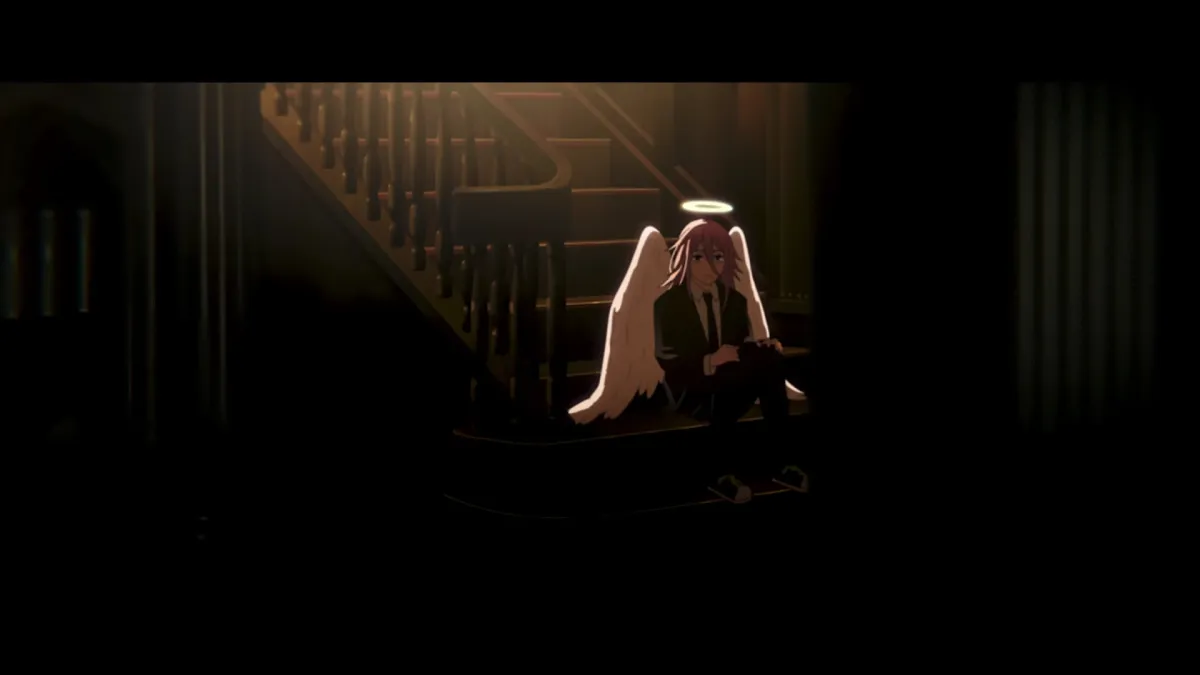
In Episode 24, after A2 defeats 9S in Berserker Mode and is buried beneath the collapsing debris of the Tower, a massive timeline divergence occurs. Accord, carrying her signature large brown suitcase and wearing circular, white-framed glasses, appears amidst the smoking ruins. She physically repairs A2’s shattered chassis, places her next to a blooming Lunar Tear, and disappears.
This structural change has profound lore implications across Yoko Taro’s broader franchise:
- Multiverse Integration: Accord’s physical appearance confirms that the anime series is a distinct timeline branch monitored by her.
- A Favorable Branch: Unlike her interventions in Drakengard 3, which often ended in tragedy, Accord’s repair of A2 secures a hopeful branch where 2B, 9S, and A2 are rebuilt and allowed to live free from their military directives. This open-ended conclusion leaves several narrative threads hanging, fueling intense fan speculation following the franchise’s milestone sales.
- Pandemic Tribute: In a clever production Easter egg, the Pod unit that assists in the final sequence is named Pod 567. The numbers 567 can be read phonetically in Japanese as “Corona,” a deliberate nod to the pandemic that delayed production multiple times.




Updated: Jun 16, 2026 07:48 pm