


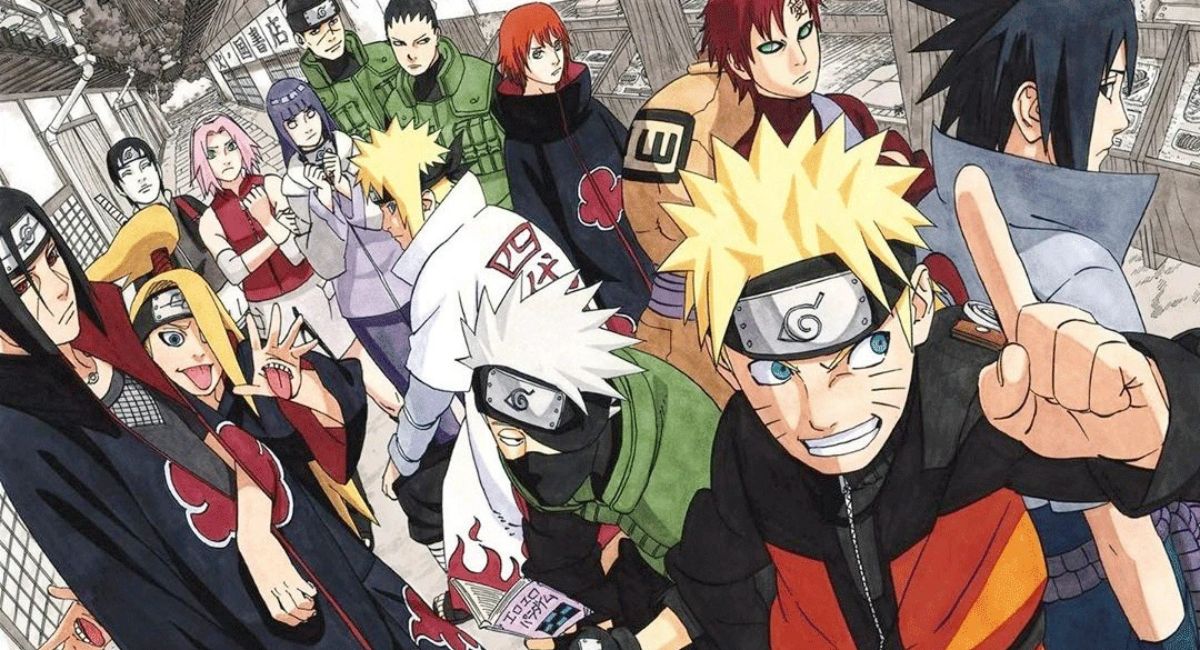
Boasting 500 episodes adapted from Masashi Kishimoto’s iconic manga, Naruto Shippuden is a cornerstone of modern shonen anime. However, with approximately 41% of its run composed of anime-original content, navigating the series requires a precise understanding of its canon boundaries. This definitive guide provides a meticulously audited roadmap of all 203 filler episodes, rectifying historical categorization errors found in standard online skip lists.
Which Naruto Shippuden Episodes Can Be Safely Skipped?
Standard internet guides frequently list massive, uninterrupted blocks as filler, resulting in viewers inadvertently skipping critical, manga-canon plot developments. The most prominent example is the common categorization of episodes 257 to 271 as a unified filler run. A rigorous analysis reveals that this sequence actually contains a core stretch of manga-canon content. While episodes 257 to 260 are flashback-heavy recaps and episode 271 is a standalone promotional tie-in, the intervening range of episodes 261 to 270 is strictly canonical. This block establishes the mobilization of the Allied Shinobi Forces and features the reunion of Sai with his reanimated brother Shin, as well as the duel between Mifune and Hanzo.
Similarly, standard guides claim the Twelve Guardian Ninja filler run spans from episode 57 to 71. However, the true narrative arc begins at episode 54, with episodes 54 and 56 serving as critical mixed-canon transition episodes that depict Naruto’s wind-style chakra nature training with Kakashi and Asuma.
| Episodes | Arc Name or Theme | Skip Recommendation |
|---|---|---|
| 57-71 | Twelve Guardian Ninja Arc | Skip |
| 91-112 | Three-Tails Appearance Arc | Skip |
| 144-151 | Six-Tails Unleashed Arc | Skip |
| 170-171 | Quest for the Fourth Hokage’s Legacy | Skip |
| 176-196 | Past Arc: The Locus of Konoha | Skip |
| 223-242 | Paradise Life on a Boat Arc | Skip |
| 257-260 | Two Fates Flashbacks | Skip |
| 271 | Road to Sakura Special | Skip |
| 279-281 | Allied Shinobi Forces Side Battles | Skip |
| 284-295 | War-Era Missions and Power Arc | Skip |
| 303-320 | Fourth Shinobi World War Side Stories | Skip |
| 347-361 | Kakashi’s Anbu: Shadow of the ANBU Black Ops | Skip |
| 376-377 | Mecha Naruto Special | Skip |
| 388-390 | Hyuga Clan Backstory | Skip |
| 394-413 | In Naruto’s Footsteps: The Friends’ Paths Arc | Skip |
| 416-417 | Team Minato Formation | Skip |
| 422-423 | Konohamaru Training Special | Skip |
| 427-450 | Jiraiya Shinobi Handbook / Infinite Tsukuyomi Dreams | Skip |
| 464-468 | Ashura and Indra Origin | Skip |
| 480-483 | Childhood Days Arc | Skip |
What Are the Mixed Canon Episodes in Naruto Shippuden?
Mixed-canon episodes combine vital manga story development with anime-original padding, making them highly recommended for viewers who want to avoid narrative gaps.
| Episodes | Content and Story Significance |
|---|---|
| 1-19 | Early Shippuden setups containing extended scene transitions |
| 24-25 | Tactical combat breakdowns preceding major battles |
| 45 | Infiltration sequences in the Grass Country |
| 49-50 | Character development details involving Sai |
| 54 | Training transition introducing wind-style chakra nature |
| 56 | Wind-style training progress and tactical setups |
| 89-90 | Initial discovery of the Three-Tails and Guren’s team |
| 113 | Infiltration setups and Sasuke’s rebellion aftermath |
| 115 | Team Kakashi tactical analysis and movement tracking |
| 127-128 | Jiraiya’s investigation and backstory elements |
| 213 | Flashback memories linking to the Five Kage Summit |
| 254 | Pre-war intelligence gathering on the turtle island |
| 296 | Naruto’s entry into the war and combat transitions |
| 324 | War-era battle coordination and tactical plans |
| 327-328 | Core recollections of the Nine-Tails and Kushina |
| 330-331 | Strategic battlefield reports and defensive setups |
| 338 | Izanami explanation and Uchiha history details |
| 346 | Backstory connections regarding the Akatsuki’s origin |
| 362 | Obito’s flashbacks and ideological clashes |
| 385-386 | Emotional reflections on childhood and war |
| 415 | Flashback memories amidst the Ten-Tails’ awakening |
| 419 | Might Guy’s past and youth training sequences |
| 426 | Tsukuyomi activation sequences and transition |
| 451-458 | Itachi Shinden adaptation combining light novel and anime-original lore |
| 460-462 | Kaguya Otsutsuki’s backstory and divine tree origin |
| 469 | Kakashi Hatake’s face reveal special |
| 471-472 | Final battle progression against Kaguya |
| 478-479 | Emotional resolution at the Valley of the End and aftermath |
How Does the Official Franchise and Production Chronology Line Up?
The anime adaptation continuously ran the risk of overtaking the weekly manga serialization, prompting Studio Pierrot to implement extended flashback arcs and standalone comedic segments to allow the source material to pull ahead.
| Milestone Event | Broadcast or Serialization Window | Creative and Producing Entities |
|---|---|---|
| Manga Serialization | September 21, 1999 to November 10, 2014 | Masashi Kishimoto and Shueisha |
| Original Anime Broadcast | October 3, 2002 to February 8, 2007 | Studio Pierrot, TV Tokyo, and Aniplex |
| Naruto Shippuden Broadcast | February 15, 2007 to March 23, 2017 | Studio Pierrot, TV Tokyo, and Aniplex |
| Feature Film Release | December 6, 2014 | Studio Pierrot, Shueisha, and Toho |
| 20th-Anniversary Project Delay | Delayed from September 2023 (Status: Active Production) | Studio Pierrot and TV Tokyo |
Regarding the four-episode 20th-anniversary project, Studio Pierrot and TV Tokyo officially postponed the September 2023 broadcast to improve the animation quality. As of 2026, the project remains in active production without an officially confirmed release date.
Who Directed the Late-Series Creative Transitions and Novel Adaptations?
The late-stage production of the anime was defined by a major shift in directorial leadership. Series director Hayato Date directed both the original series and the sequel for over a decade, but officially stepped down as series director after episode 479, which marked the completion of the primary manga chapters. Studio Pierrot subsequently abandoned the unified directorial model for the remaining 21 episodes, which adapted Shueisha’s light novels.
- Osamu Kobayashi (episodes 480 to 483): Directed the Childhood Arc, utilizing a distinct, slow-paced pastel aesthetic to emphasize the emotional vulnerability of the young protagonists. Kobayashi, who passed away on April 17, 2021, left a personal message to fans: “It is regrettable, because there are still things I wanted to do and projects I wanted to make. When I am reborn again, I will surely create some great works! Adios. The eternal 23-year-old.”
- Chiaki Kon (episodes 484 to 488): Directed Sasuke Shinden: Book of Sunrise, introducing a dark, moody visual style that functioned as a visual bridge between Sasuke’s teenage design and his adult look in the sequel era.
- Toshinori Watabe (episodes 489 to 493): Supervised Shikamaru Hiden: A Cloud Drifting in Silent Darkness, presenting a grounded, espionage-inspired look.
- Masahiko Murata (episodes 494 to 500): Supervised Konoha Hiden: The Perfect Day for a Wedding. Murata, who also directed the comedic spin-off Rock Lee & His Ninja Pals, brought a lighter, comedic tone to close out the series.
This directorial variance also occurred earlier in the series. Notable director Toshiyuki Tsuru, operating under the pen name Yasuaki Kurotsu, collaborated with animation director Hirofumi Suzuki on several stylized, emotionally heavy episodes, such as episode 82, which depicts Shikamaru Nara coping with Asuma’s death through silent, cinematic sequences without background music. Tsuru also directed the visually distinct Power Arc (episodes 290 to 295) to celebrate reaching 500 total franchise episodes.
What Are the Major Lore Differences Between the Novels and the Anime?
One major point of divergence involves the patriarch of the Uchiha clan, Fugaku Uchiha. In the Itachi Shinden anime adaptation, Fugaku is depicted as possessing the Mangekyō Sharingan, which he reveals to Itachi. However, in Takashi Yano’s novels and the original manga, Fugaku never had this visual prowess. His famous title of Wicked Eye Fugaku was strictly earned due to his exceptional lethality with a standard three-tomoe Sharingan.
The execution of Izumi Uchiha represents another major shift. In the light novel Itachi Shinden: Book of Dark Night, Itachi targets Izumi first during the Uchiha massacre to eliminate his own hesitation. He subjects her to Tsukuyomi, where the perception of time is dilated according to the following mathematical scale:
Delta-t(real) = Delta-t(Tsukuyomi) x 10^-9
Through this dilation, Izumi experiences a peaceful, 70-year life with Itachi inside the illusion in exactly 0.000000001 seconds of real time, eventually dying of old age. Because her mind and body are functionally inseparable, her consciousness departs reality, causing her physical body to collapse and die in Itachi’s arms. In the anime, Studio Pierrot altered this by having Obito Uchiha execute her, with Izumi calling out for Itachi to save her in her final moments.
The animated adaptation also omitted elite characters and backstories. The anime completely bypassed Mukai Kohinata, a branch-family member of the Hyuga clan with a single Byakugan. In the novels, Mukai easily overpowers both Itachi and Shisui, forcing Shisui to activate his Mangekyō Sharingan to survive.
For post-war development, the Sasuke Shinden novel – part of the same light-novel tradition that later produced Sasuke’s Story: The Uchiha and the Heavenly Stardust, co-written with Kishimoto’s original concept – establishes Sasuke’s realization that Kaguya constructed the White Zetsu army as defensive preparations for an impending invasion by her own clan, the Otsutsuki. This structural choice mirrors the narrative prioritization of primary conflict arcs.
What Did the Series Creators Reveal in Behind-the-Scenes Interviews?
Behind-the-scenes interviews with key staff members highlight the creative decisions and production struggles that shaped the series’ narrative identity.
Hayato Date on Sasuke’s Role: Date asserted that Sasuke was the true heroine of the story, emphasizing how Sasuke’s emotional journey and his bond with Naruto acted as the primary narrative engine of both anime series.
Yoshihiro Togashi on Kishimoto’s Art: Togashi praised Kishimoto’s ability to establish power dynamics through subtle visual cues, stating, “When I read the scene where Kakashi fights Team 7 while holding his book, I couldn’t help but compliment Kishimoto-sensei, using that little detail to show the difference of experience between the characters…”
Masashi Kishimoto on His Artistic Focus: Kishimoto explained his detailed focus on drawing anatomy, noting, “Back when I was in Highschool, I had a notebook filled with drawings of hands and legs under different angles, I guess you could call it my fetish.”
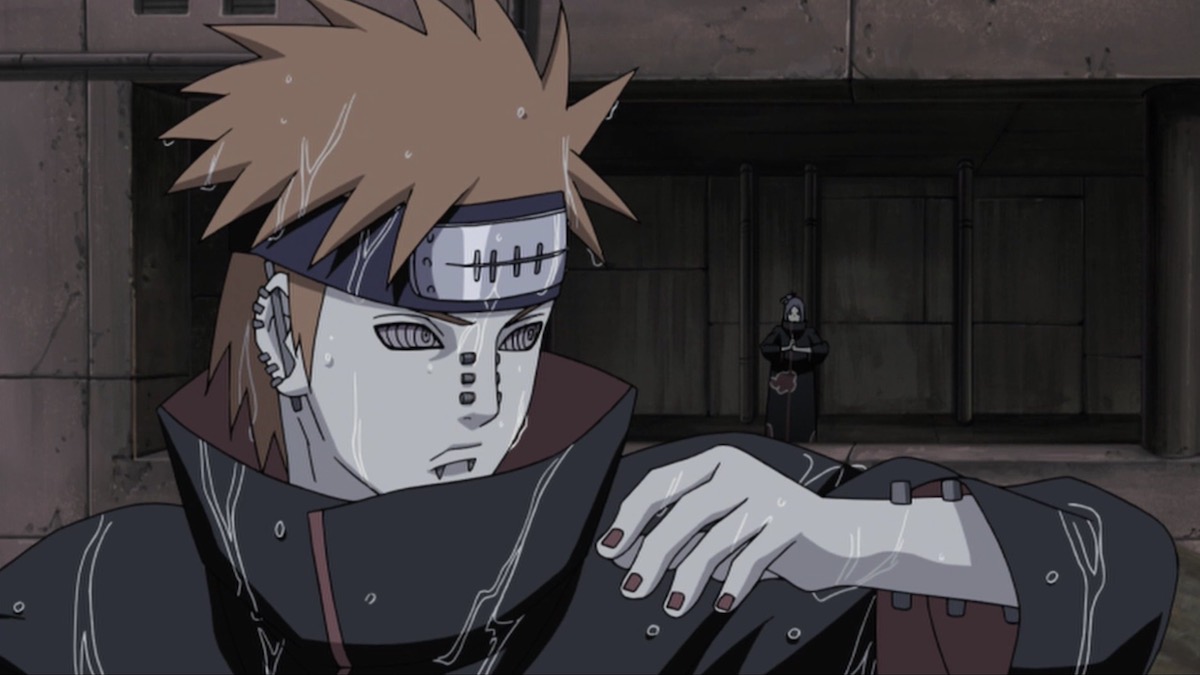
This thematic struggle to define justice and villainy reflects the core qualities of the best anime villains of all time who challenge heroes on a systemic level. Kishimoto also revealed the massive psychological toll of writing the Pain’s Assault arc, recounting waking up covered in sweat, struggling to resolve the confrontation between Naruto and Pain.






Updated: Jul 15, 2026 06:07 pm