


Rabbit-inspired Pokémon represent a crucial intersection of biological design, cultural folklore, and competitive utility within the Game Freak franchise. From the poisonous spines of the Generation I Nidoran family to the athletic prowess of Generation VIII’s Cinderace, these lagomorph creatures are meticulously crafted to serve specific mechanical and visual roles.
Which Pokemon Are Classified as True Lagomorphs?
True lagomorphs in the Pokémon franchise exhibit distinct anatomical features directly modeled after real-world rabbits and hares, showcasing highly specialized physical behaviors such as burrowing, leaping, or physical kicking. Developer Game Freak introduced the first anatomically dedicated rabbit species in Generation IV, gradually expanding the family to cover various typing and combat niches.
Buneary and Lopunny
Introduced in the Sinnoh region, Buneary is characterized by a unique design where one of its ears remains permanently rolled up. Historical observations suggest this behavior limits sound entry to protect Buneary’s exceptionally keen hearing, while also serving as a coiled spring to unleash boulder-shattering strikes. Upon evolving via high friendship, it matures into Lopunny. Lopunny’s physical design features thick fur cuffs on its limbs, originally designed to resemble heavy winter clothing suitable for Sinnoh’s cold mountainous environments.
Bunnelby and Diggersby
Debuting in the Kalos region, Bunnelby features shovel-like ears designed to excavate burrows up to 33 feet deep in a single night. Its Ground-type evolution, Diggersby, possesses ears powerful enough to reduce dense bedrock to rubble and lift objects weighing over a ton. Diggersby’s belly fur retains heat exceptionally well, leading humans to historically manufacture heavy winter garments from its shed coat.
Scorbunny, Raboot, and Cinderace
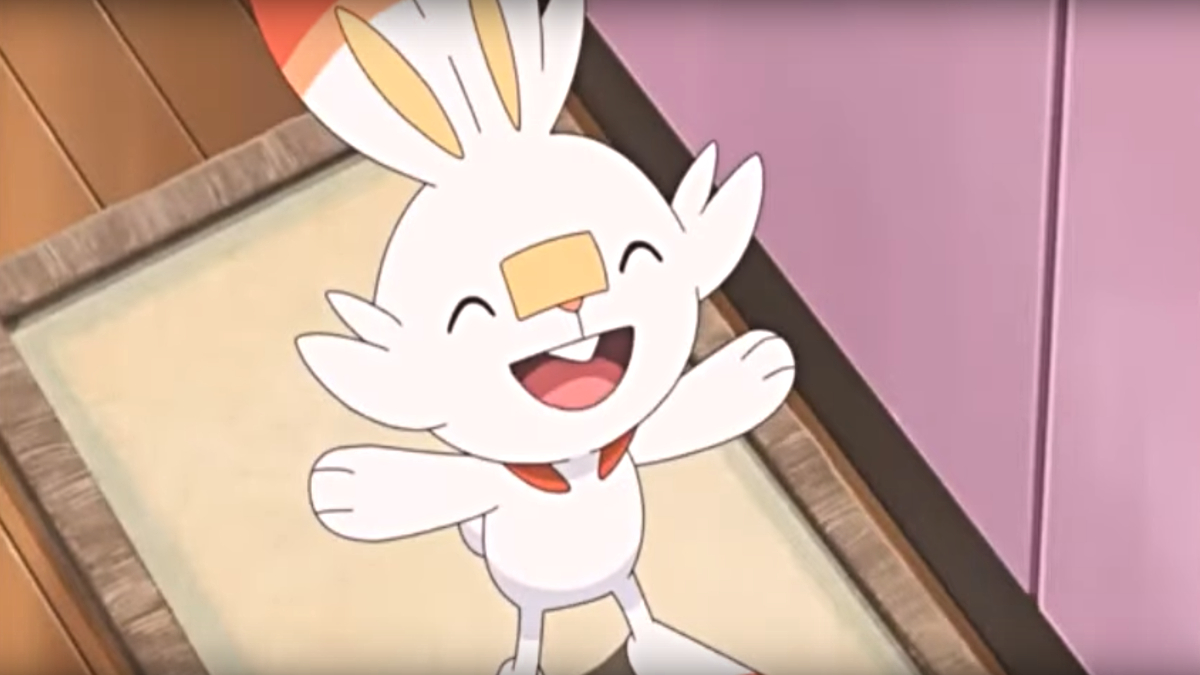
The Fire-type starter line from the Galar region, one of the three starter options revealed for Pokemon Sword & Shield, represents a bipedal lagomorph family focused on athletic progression. Scorbunny runs on heat-generating footpads that warm its body to unlock its physical potential. Raboot’s thick fur coat mimics an athletic tracksuit and a protective balaclava, reflecting a moody, adolescent developmental stage. Its final evolution, Cinderace, relies on a soccer-striker motif, using its powerful legs to kick stones into blazing fireballs.
How Did Real-World Cultures Inspire Rabbit Pokemon?
Several species incorporate leporine aesthetics to reference mythological or culinary traditions rather than biological accuracy.
Azumarill
Though evolving from the mouse-like Marill, Azumarill is officially categorized as the Aqua Rabbit Pokémon. Archival data from the 1997 Nintendo Space World demo indicates that Marill was originally a pink, single-stage entity; its evolved form was added in 1999 as a yellow sprite, which eventually became Azumarill’s official shiny coloration.
Victini
The Psychic/Fire-type Legendary Pokémon Victini features pointed, flame-orange ears that form a distinct V shape. While some theorized a connection to historical military events, the physical design is actually modeled after usagi-ringo, a traditional Japanese culinary technique of slicing apples to resemble rabbit ears. This design serves as a thematic nod to the Unova region’s real-world inspiration, New York City, famously known as The Big Apple.
Audino and the Moon Stones
The Normal-type Audino is modeled after the East Asian folklore of the moon rabbit, a mythical spirit tasked with compounding life-saving medicine. This directly aligns with Audino’s role as a medical assistant, utilizing its sensitive, feeler-tipped ears to assess a patient’s heartbeat and health status. This lunar connection is shared by the classic Kanto-region families of Nidoran and Wigglytuff; both possess distinct rabbit ears and buck teeth, utilizing the Moon Stone to trigger their final evolutionary stages.
Who Are the Creative Minds Behind Rabbit Pokemon Designs?
The visual identity of these creatures is shaped by a diverse team of illustrators at Game Freak, each bringing distinct philosophies to the drawing board.
British artist James Turner, the first Westerner to officially design species for the franchise, served as the Art Director for Generation VIII. Turner directed the opening sequence of Pokémon Sword and Shield, utilizing stylized, object-based motifs to emphasize the energetic personalities of the Galar starters.
Conversely, veteran designer Atsuko Nishida pioneered the cute aesthetic of the franchise. Nishida designed the iconic Fairy-type Sylveon for Generation VI, blending mammalian feline structures with prominent, long rabbit ears and ribbon-like feelers. Nishida also designed the electric cheerleader duo Plusle and Minun for Generation III, utilizing elongated, color-coded ears to establish a highly recognizable, hopping visual silhouette.
For future titles, the design team continues to innovate, introducing new starter trios such as Browt, Pombon, and Gecqua for the upcoming Generation X titles, Pokémon Winds & Waves. These future design directions emphasize that lagomorph aesthetics remain a core element of Game Freak’s ongoing visual evolution.
What Is the Chronological Timeline of Rabbit Pokemon Releases?
The historical integration of rabbit-like Pokémon spans across every major video game generation, transitioning from simple monochrome sprites on the Game Boy to complex 3D models on high-definition hardware.
| National Dex # | Pokemon Name | Primary Designer | Core Inspiration | Hardware Debut |
|---|---|---|---|---|
| #029 / #032 | Nidoran (F/M) | Ken Sugimori | Lunar Moon Rabbit Folklore | Game Boy (1996) |
| #040 | Wigglytuff | Ken Sugimori | Balloon-like Leporine Silhouette | Game Boy (1996) |
| #184 | Azumarill | Game Freak Team | Aqua Rabbit Camouflage | Game Boy Color (1999) |
| #311 / #312 | Plusle / Minun | Atsuko Nishida | Electric Cheerleaders | Game Boy Advance (2002) |
| #327 | Spinda | Game Freak Team | Panda-Lagomorph Hybridization | Game Boy Advance (2002) |
| #427 / #428 | Buneary / Lopunny | Game Freak Team | Cold-Weather Fur Cuffs | Nintendo DS (2006) |
| #531 | Audino | Game Freak Team | Medicinal Moon Rabbit Mythology | Nintendo DS (2010) |
| #494 | Victini | Game Freak Team | Usagi-Ringo Apple Slices | Nintendo DS (2010) |
| #659 | Bunnelby | Hyunjung Lee | Wild French Hares | Nintendo 3DS (2013) |
| #660 | Diggersby | Ken Sugimori | Heavy Construction Excavators | Nintendo 3DS (2013) |
| #700 | Sylveon | Atsuko Nishida | Fairy Ribbon-like Feelers | Nintendo 3DS (2013) |
| #801 | Magearna | Game Freak Team | Karakuri Mechanical Puppet | Nintendo 3DS (2016) |
| #813 | Scorbunny | James Turner | Japanese Nose Bandage Motif | Nintendo Switch (2019) |
| #814 | Raboot | James Turner | Athletic Tracksuit and Balaclava | Nintendo Switch (2019) |
| #815 | Cinderace | James Turner | Professional Soccer Striker | Nintendo Switch (2019) |
How Do Rabbit Pokemon Perform in Competitive Battles?
In competitive battle environments, rabbit Pokémon frequently outperform their modest base statistics through highly specialized abilities and signature move pools.
Huge Power Offense
Both Azumarill and Diggersby are staples of physical offense due to the ability Huge Power, placing them among the strongest overall picks for a competitive Scarlet and Violet team. While Diggersby possesses a low base Attack stat of only 56, Huge Power mathematically doubles its physical Attack in battle, turning moves like Earthquake into devastating offensive tools.
Libero and Type Fluency
Cinderace dominated Generation VIII’s competitive meta-game using its Hidden Ability, Libero, paired with a high base Speed of 119. Libero changes Cinderace’s typing to match the move it is about to execute, granting a consistent 1.5x Same Type Attack Bonus (STAB) on all offensive maneuvers, such as its 120-base-power signature attack, Pyro Ball. This mechanic was balanced in Generation IX’s Pokémon Scarlet and Violet, restricting the type change to activate only once per entry into battle.
Double Battle Synergy
Plusle and Minun were introduced in Generation III to showcase the double battle format, relying on their respective Plus and Minus abilities to grant each other a 50% boost to their Special Attack statistics when standing side-by-side. However, their narrow move pools and vulnerability to Ground-type attacks make them highly susceptible to high-damage moves like Earthquake.





Updated: Jul 15, 2026 01:44 pm