


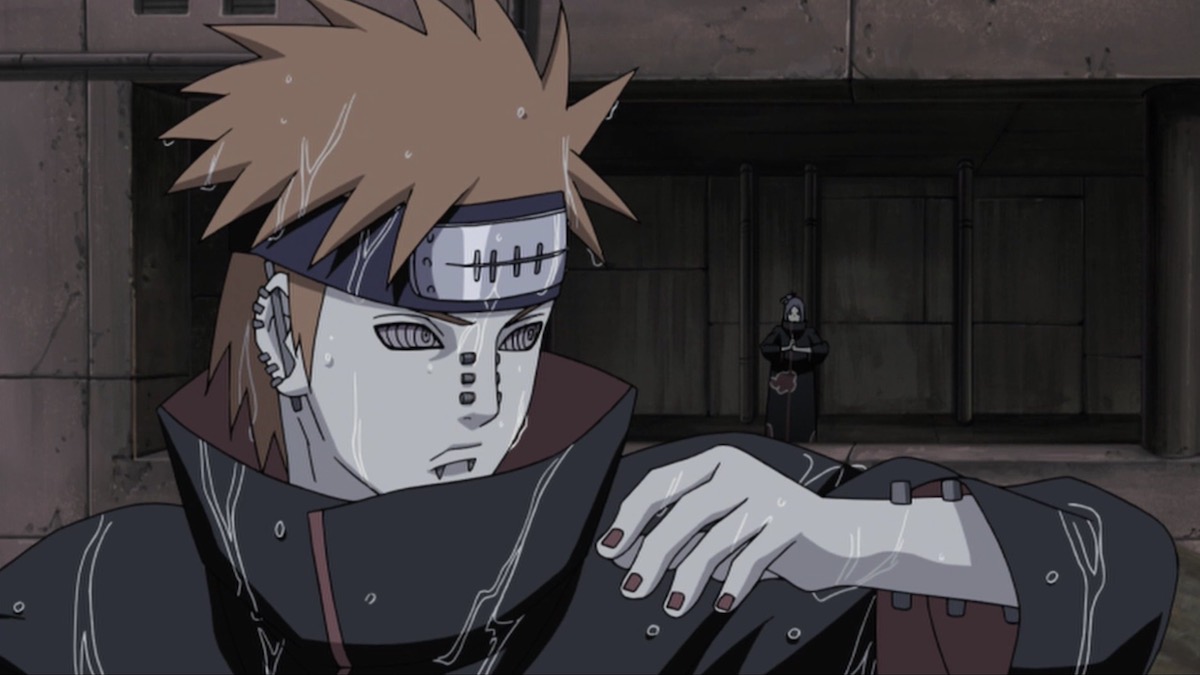
The Six Paths of Pain represent one of the most formidable and complex antagonistic forces in the Naruto universe, serving as the physical proxies of Nagato Uzumaki. Powered by the legendary Rinnegan dojutsu and controlled remotely via black chakra receivers, these six reanimated corpses allow Nagato to distribute his immense power across specialized combat roles. Named after the realms of Buddhist reincarnation, each Path possesses a singular, devastating ability that challenges the core philosophies of the ninja world, ultimately culminating in the catastrophic invasion of the Hidden Leaf Village.
Who Is the Mastermind Behind the Six Paths of Pain?
The physical vessels comprising Pain are orchestrated by Nagato Uzumaki, a war orphan born in Amegakure during the Second Shinobi World War. His legendary Rinnegan, which fueled his god-like reputation, was secretly transplanted into him during his infancy by Madara Uchiha. Seeking to establish global peace and end the cycle of violence, Nagato co-founded the original Akatsuki alongside his childhood companions, Yahiko and Konan. However, Hanzo of Amegakure conspired with Danzo Shimura to eliminate the growing movement, leading to a betrayal that forced Yahiko to sacrifice his life.
The resulting trauma left Nagato crippled, emaciated, and physically bound to a mechanical walker due to the severe backlash of summoning the Demonic Statue of the Outer Path. He adopted the alias of “Pain” to enforce global peace by teaching the world the reality of shared suffering. While the antagonist is widely ranked among the strongest characters in the Naruto franchise due to this versatile arsenal, the narrative role of the Paths extends far deeper than simple combat power.
What Are the Individual Powers of the Six Paths of Pain?
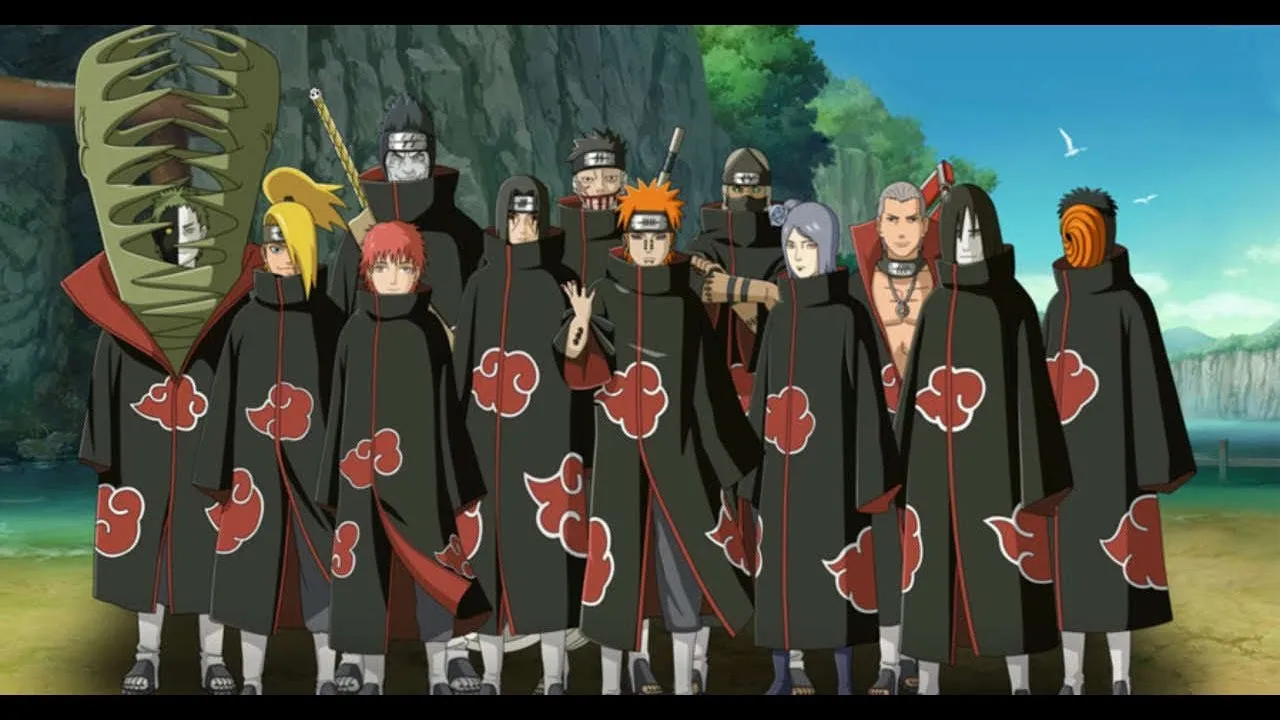
To achieve visual uniformity, Nagato dyed the hair of each corpse a vibrant orange and placed matching Akatsuki cloaks on them, while the purple concentric rings of the Rinnegan overwrote their eyes to form a shared sensory network. Masashi Kishimoto designed Pain to look cool but also look like a victim of war, adding body piercings as a physical metaphor for how Nagato willingly inflicts pain upon himself. These piercings function as chakra receivers molded from black metal rods generated via the Outer Path.
The Deva Path – reanimated from Yahiko’s corpse – had a higher density of facial piercings to allow highly precise control over the facial muscles, enabling it to speak and express subtle micro-expressions to maintain the illusion of being the active leader. Early unused sketches reveal Kishimoto considered a partial mask with feather or horn-like accessories before finalizing the iconic visual of metal studs and exposed piercings.
The combat efficacy of the Six Paths of Pain relies on the absolute specialization of each physical vessel. Each reanimated corpse represents an active shinobi whom Jiraiya personally met during his life journeys, aligning with the Great Toad Sage’s prophecy.
| Path Designation | Original Human Identity | Regional Affiliation | Primary Mechanical Ability | Tactical Role and Combat Limits |
|---|---|---|---|---|
| Deva Path | Yahiko: Co-founder of the original Akatsuki who died to protect Nagato and Konan. | Amegakure (Hidden Rain) | Precise control over gravitational attraction and repulsion, specifically Almighty Push and Universal Pull. | Serves as the primary leader and diplomatic proxy. Requires a five-second cooldown between standard attacks. |
| Asura Path | Unknown Puppeteer: A traveling ninja puppeteer encountered by Jiraiya in his youth. | Unknown Region | Cybernetic alteration of body mass, generating mechanized limbs, armor, and high-yield rocket ballistics. | Acts as heavy artillery and physical defense for other utility-focused Paths. Can generate extra faces and limbs. |
| Human Path | Unknown Shinobi: A level-headed diplomat who believed in educating the next generation to survive war. | Takigakure (Hidden Waterfall) | Soul extraction through physical contact, instantly reading memories in the process. | Operates as an intelligence-gathering unit. Possesses low defensive capabilities and is easily sacrificed. |
| Animal Path | First Body: Fuma clan shinobi. Second Body: Ajisai, a Rain kunoichi selected after the first was captured. | Amegakure (Second Body) | Summoning of massive, immortal creatures sharing the Rinnegan’s linked vision. | Provides versatile crowd control and transportation, summoning other Paths to bypass defenses. |
| Preta Path | Unknown Farmer: A regional agriculturalist forced into military conscription, failing to feed his family. | Kusagakure (Hidden Grass) | Absorption of all active chakra and elemental ninjutsu via the Blocking Technique Absorption Seal. | Serves as the primary defensive shield against energy-based attacks. Vulnerable to turning to stone from senjutsu. |
| Naraka Path | Unknown Priest: A regional religious preacher and moral philosopher encountered by Jiraiya. | Unknown Region | Summoning of the King of Hell for absolute interrogation and restoration of damaged Paths. | Kept strictly at the rear of tactical formations to revive fallen Paths inside the King of Hell. |
What Is the Chronological Release Timeline of the Pain Arc?
The publishing and broadcasting history of the Invasion of Pain narrative arc spans multiple formats, tracing the journey from the pages of Weekly Shonen Jump to its physical home video distribution under the collection title Two Saviours.
| Media Format | Included Narrative Content | Japanese Release Date | North American Release Date | Regional Distribution Format |
|---|---|---|---|---|
| Manga Volume 45 | Chapters 413 to 422 | February 4, 2009 | July 7, 2009 | Softcover Graphic Novel |
| Manga Volume 46 | Chapters 423 to 432 | May 1, 2009 | October 6, 2009 | Softcover Graphic Novel |
| Manga Volume 47 | Chapters 433 to 442 | August 4, 2009 | February 2, 2010 | Softcover Graphic Novel |
| Manga Volume 48 | Chapters 443 to 453 | November 4, 2009 | June 1, 2010 | Softcover Graphic Novel |
| Anime Block One | Episodes 152 to 169 | March 25, 2010 to July 22, 2010 | October 9, 2012 to March 23, 2013 | TV Tokyo and Toonami Broadcast |
| Filler Interruption | Episodes 170 and 171 | July 29, 2010 | March 23, 2013 | Standalone Comedic Filler Episode |
| Anime Block Two | Episodes 172 to 175 | August 5, 2010 to August 26, 2010 | March 23, 2013 to March 30, 2013 | TV Tokyo and Toonami Broadcast |
How Did Behind-the-Scenes Animation Struggles Shape Episode 167?
The animated execution of Naruto Shippuden Episode 167, Chibaku Tensei, represents an exceptional case study in auteur-driven television production. Directed and storyboarded by Atsushi Wakabayashi, the episode deliberately bypassed the standardized design manual in favor of an experimental, highly fluid approach to convey the absolute, world-shattering force of the clash between a rampaging eight-tailed Naruto and the Deva Path. Wakabayashi’s prestigious career in action animation was heavily built on his partnership with legendary animator Norio Matsumoto.
For Episode 167, Wakabayashi assembled a lean production team of just four key animators, which included Matsumoto, Kenichi Fujisawa, and Shingo Yamashita. The absence of Atsuko Inoue, Wakabayashi’s traditional collaborator for character acting sequences, forced the director to handle a significant portion of the character layouts himself. Consequently, dialogue-heavy scenes utilized a simplified approach with static close-ups, allowing the team to focus their temporal and financial resources on dynamic backgrounds, complex lighting, and highly expressive action.
Yamashita, who was only twenty-two years old at the time of production, was tasked with animating the entire first seven minutes of the fight, depicting the unbridled rage of the transformed protagonist. Yamashita utilized digital drawing tools to achieve highly fluid, organic transitions that simulated the chaotic nature of wild energy. The resulting visual design featured extreme, cartoonish deformations of Pain’s face and limbs, such as the character’s head being hammered directly into solid rock, his face folding under impact, and his running form mimicking stylized, rubber-hose animation. These stylistic choices were executed at the direct request of the director. The physical ugliness and infantile, tantrum-like movements of the Deva Path were designed to mirror Nagato’s spiritual hypocrisy, exposing the childish, destructive rage underlying his lofty, god-like rhetoric of world peace.
Despite the technical complexity of the animation, the episode met with severe criticism from a substantial portion of the audience. Viewers accustomed to rigid, highly detailed model sheets interpreted the fluid, expressive deformation of Pain’s features as low-quality rendering. The dramatic mismatch between the comical visual physics and the dark, emotional stakes of the narrative caused some fans to reject the episode entirely. This strong viewer backlash had lasting professional repercussions. Following the broadcast of Episode 167, Atsushi Wakabayashi was permanently removed from supervising high-priority action episodes or major flagship projects for Studio Pierrot, illustrating the commercial risks associated with introducing artistic experimentation into long-running shonen properties.
Why Does the Pain Arc Remain a Creative Peak for Naruto?
Writing the climax of the Pain arc proved to be the most intellectually demanding period of Kishimoto’s eleven-year tenure. The creator frequently noted in retrospective interviews that the narrative was exceptionally difficult to write because the protagonist does not resolve the conflict by killing his enemy, but rather by choosing path-altering forgiveness and mutual reconciliation. The pressure of resolving a deeply personal cycle of hatred under tight weekly publishing deadlines caused Kishimoto severe stress, occasionally waking him up in cold sweats as he struggled to devise a convincing resolution that remained authentic to the characters’ established moral compasses.
This rigorous approach contrasted with the highly collaborative, fast-paced environment of early serialization. During the initial planning phases of Naruto, Kishimoto relied heavily on the structural guidance of his first editor, Kosuke Yahagi, who famously vetoed slow-paced storytelling elements in favor of introducing rivals like Sasuke Uchiha and demanding the immediate execution of a high-stakes tournament format. Furthermore, as the production expanded, Kishimoto delegated high-volume drawing tasks to his assistants. His long-term collaborator, Mikio Ikemoto, frequently struggled with the physical demands of illustrating the series’ iconic shadow clones.
In a retrospective dialogue, Kishimoto recalled that Ikemoto’s aversion to drawing the clones was directly linked to the sheer volume of assets demanded of him, noting that he had forced Ikemoto to illustrate a massive sequence containing approximately 1,200 shadow doppelgangers. Kishimoto ultimately concluded that the physical and emotional volatility of maintaining a major weekly manga serialization for over a decade taught him to maintain his personal equilibrium, avoiding both excessive excitement and paralyzing despair to preserve a healthy lifestyle.
The invasion of the Hidden Leaf Village is frequently cited by fans as one of the emotional and narrative high points covered in the breakdown of the Naruto Shippuden story and ending, representing the emotional and thematic peak of the series. By confronting the protagonist with the literal destruction of his home and the loss of his mentor, the narrative forced Naruto to directly experience the same trauma that had corrupted Sasuke Uchiha and Nagato.
However, this narrative success presented major creative challenges for the remainder of the series. Having resolved the core thematic conflict of the franchise, Kishimoto struggled to sustain narrative momentum. The rapid progression into the Fourth Shinobi World War necessitated a continuous escalation of physical threats. The introduction of planetary antagonists like Obito, Madara, and Kaguya created persistent pacing issues, as the story struggled to balance complex power scaling with the grounded, emotional focus that had defined the Pain arc. Ultimately, while the post-Pain era struggled to match the precise emotional resonance of Nagato’s invasion, the creative challenges Kishimoto faced during this transition solidified the arc’s legacy as the intellectual and structural peak of the franchise.







Updated: Jul 17, 2026 02:26 pm