


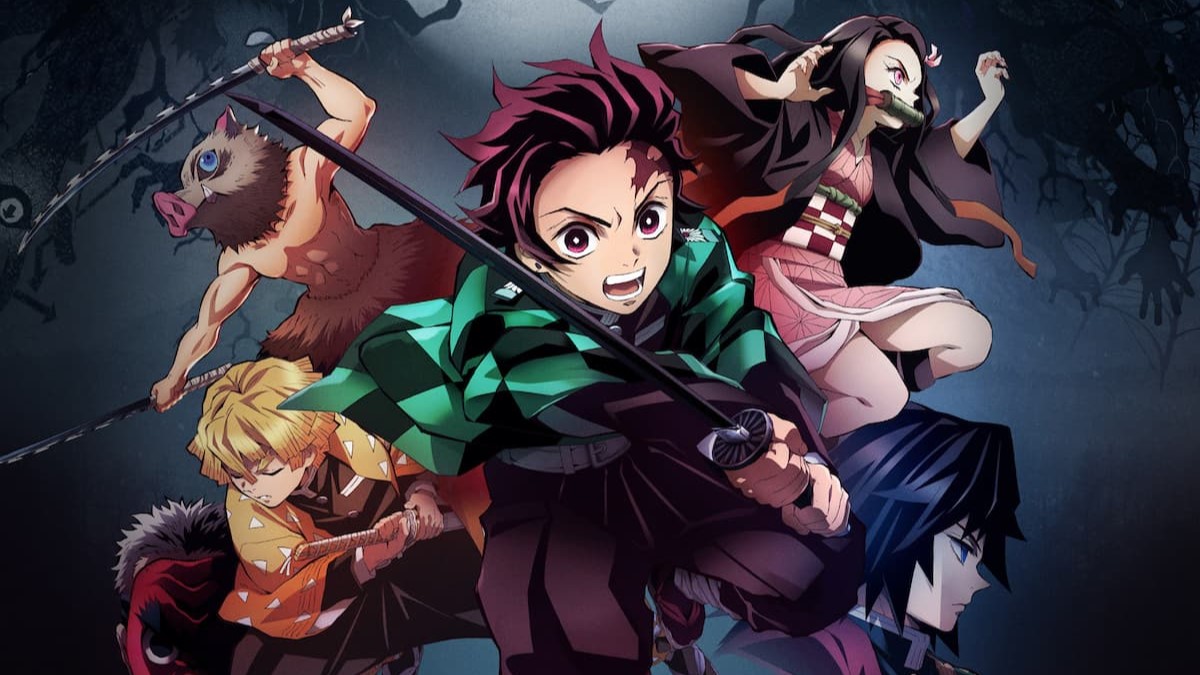
The Demon Slayer Corps employs a highly structured 10-tier ranking system, based on the traditional Ten Heavenly Stems, to classify its swordsmen from the beginner Mizunoto tier to the peak Kinoe rank. Elite warriors who surpass this standard system and execute legendary feats become Hashira. Unlike common misconceptions of stagnant progression, official canon reveals that central protagonists systematically ascend through these ranks. This authoritative guide details the entire operational hierarchy, specialized support divisions, and biological mechanics governing the Twelve Kizuki, utilizing verified data from official databooks and the animation studio.
What are the official ranks of the Demon Slayer Corps?
Upon surviving the grueling seven-night Final Selection exam on Mt. Fujikasane, every newly initiated swordsman enters the organization at the lowest level, Mizunoto. Progression through the subsequent eight tiers is determined by standard mission completion, accumulated combat experience, and survival under high-hazard conditions.
A common misconception compares the protagonist, Tanjiro Kamado, to characters in other shōnen series who remain stagnant at their starting ranks despite performing world-saving feats. However, the publication of the official databook, Kimetsu no Yaiba Official Fanbook 2: Kisatsutai Kenbunroku 2, confirms that Tanjiro, Zenitsu Agatsuma, and Inosuke Hashibira successfully ascended to the rank of Hinoe, the third-highest rank within the 10-tier system, prior to the organization’s final campaign. Meanwhile, their peers Kanao Tsuyuri and Genya Shinazugawa achieved the rank of Hinoto.
The baseline rank of Kinoe is achieved through standard progression. Slaying 50 demons or defeating a member of the Twelve Kizuki is the strict prerequisite required of a warrior who is already of the Kinoe rank to be eligible for promotion to the elite status of a Hashira.
The complete organizational hierarchy of active combatants is structured as follows:
| Heavenly Stem Order | Kanji Representative | Rōmaji Transcription | Canon Character Association |
|---|---|---|---|
| Rank 10 (Base) | 癸 | Mizunoto | Baseline entry level for all Final Selection survivors |
| Rank 9 | 壬 | Mizunoe | Standard initial promotion step |
| Rank 8 | 辛 | Kanoto | Intermediate junior tier |
| Rank 7 | 庚 | Kanoe | Murata (Active rank during the Mount Natagumo campaign) |
| Rank 6 | 己 | Tsuchinoto | Intermediate mid-tier |
| Rank 5 | 戊 | Tsuchinoe | Advanced mid-tier |
| Rank 4 | 丁 | Hinoto | Kanao Tsuyuri and Genya Shinazugawa (Final verified ranks) |
| Rank 3 | 丙 | Hinoe | Tanjiro Kamado, Zenitsu Agatsuma, and Inosuke Hashibira (Final verified ranks) |
| Rank 2 | 乙 | Kinoto | Elite senior tier immediately below the peak non-elite ranking |
| Rank 1 (Peak) | 甲 | Kinoe | Minimum rank required before a slayer can attempt Hashira eligibility feats |
How do swordsmen check and progress their rank?
The physical tracking of a swordsman’s rank within the Corps is managed through a biological marking system known as Wisteria Flower Engraving, or Fuji no Hana Horimono. Following their survival of the entrance exam, each swordsman has their rank inscribed on the back of their hand using a special wisteria-based formulation. Under standard conditions, this marking remains invisible. To inspect their current ranking, the swordsman must execute a precise forearm muscle contraction and recite a specific verbal password, which causes the corresponding kanji character to manifest visible skin coloration. Within the animated adaptation, this mechanical lore element is showcased on-screen during Season 2, Episode 4 (or Episode 11 when accounting for the combined Mugen Train television broadcast sequence), where Tanjiro Kamado demonstrates the technique on a rooftop to Inosuke Hashibira.
While standard progression requires sequential advancement through each step, the central protagonists benefited from a structural shortcut. Following their high-hazard survival at Mount Natagumo and their subsequent combat participation on the Mugen Train, Tanjiro, Zenitsu, and Inosuke bypassed the intermediate Mizunoe and Kanoto steps entirely, receiving an immediate jump to the Kanoe tier in recognition of their exceptional survival capabilities.
Who are the supporting divisions of the organization?
The operational viability of the Demon Slayer Corps depends on four supporting divisions that provide medical, industrial, instructional, and administrative infrastructure. The logistics and weapon manufacturing operations are designed horizontally to ensure absolute secrecy and protect vital locations, such as the Butterfly Estate and the Swordsmith Village.
To ensure security, transport Kakushi work in blind relays, passing unconscious or blindfolded slayers from one carrier to another along a continuously changing route. Similarly, the swordsmiths of the Katanakaji division are prohibited from knowing each other’s true identities to prevent a captured smith from revealing the locations of the remaining craftsmen under interrogation.
The specialized supporting roles within the organization operate under the following parameters:
| Supporting Division | Structural Designation | Standard Uniform and Equipment | Primary Operational Responsibilities |
|---|---|---|---|
| Logistics and Recovery | Kakushi (Post-Battle Cleanup) | All-black standard uniforms with full head coverings and masks to conceal facial identities | Field medical assistance, transporting wounded slayers to the Butterfly Estate, uniform mending, and battlefield restoration |
| Weapons Manufacture | Katanakaji (Swordsmiths) | Traditional robes and specialized hyottoko masks worn to obscure personal identities | Crafting Nichirin Swords using specialized ore; maintaining absolute secrecy regarding their village location |
| Instructional Cadre | Cultivators | Highly varied; frequently wear customized haori or masks reflecting their historical breathing style | Training aspiring candidates, instructing them in fundamental breathing patterns to survive the Final Selection |
| Administrative Command | Oyakata-sama (Head of the Corps) | Traditional formal kimono with specialized patterns | Overseeing the strategic direction of the Corps, managing Hashira meetings, and coordinating crow communications |
The administrative head of the entire organization is historically occupied by a member of the Ubuyashiki family, addressed as Oyakata-sama. Because the family carries a genetic curse resulting from their bloodline connection to the original demon, Muzan Kibutsuji, the male heirs suffer from a progressive skin necrosis that leads to early mortality, requiring them to operate as spiritual and strategic leaders rather than physical combatants.
What is the hierarchy of Muzan’s demonic forces?
In direct contrast to the horizontal, peer-supported structure of the Demon Slayer Corps, the demonic forces are organized into a strict vertical hierarchy known as the Twelve Kizuki, which is governed by Muzan Kibutsuji through biological manipulation. The strength of each member is directly proportional to the volume of Muzan’s blood their physical form can successfully assimilate without triggering cellular collapse.
The Twelve Kizuki are divided into two distinct structural tiers: the six Upper Ranks and the six Lower Ranks. This division is reinforced by physical marking, which is biologically engraved directly into the eyes of the demons:
| Demonic Classification | Eye Engraving Protocol | Structural Power Differential | Reconstitution and Re-staffing Process |
|---|---|---|---|
| Upper Ranks (1 through 6) | Kanji for the specific rank number is engraved in one eye; the kanji for Upper Rank is engraved in the other | Possess power that far surpasses the Lower Ranks; they regularly defeat and consume Hashira | Highly stagnant hierarchy; the roster remained unchanged for over a century until the campaign of Tanjiro Kamado |
| Lower Ranks (1 through 6) | Kanji for the specific rank number is engraved in a single eye only | Frequently defeated by active Hashira; their rapid turnover rates reflect their relative vulnerability | Highly volatile; Muzan eventually executed the majority of the Lower Ranks himself due to their persistent failures |
Muzan exercises absolute biological authority over the ranking structure of his subordinates. When a member of the Twelve Kizuki is deemed to have failed their objectives or exhibited weakness, Muzan executes a physical demotion. This process is carried out by Muzan using his claws to physically slash across the pupil of the eye where the rank is engraved, leaving a permanent X-shaped scar over the digit. This mechanical scarring process signifies their official expulsion from the elite ranks and strips them of their special blood privileges. The primary example of this mechanical demotion is Kyogai, the Drum Demon, who was stripped of his rank as Lower Rank 6 because his body reached its biological limit for processing additional blood, causing his power to plateau.
When does the final animated adaptation release?
The production history of the animated series involves calculated adaptations, technical shifts, and creative collaborations led by studio ufotable. Supervising Director Hikaru Kondo established the studio’s guiding principle: “If it’s not fun, it doesn’t matter.” This philosophy emphasizes that while high-end visual effects and action choreography are necessary to attract audiences, the emotional core and character drama must remain the foundation of the work. Producer Yūma Takahashi highlighted this focus, stating that the studio’s primary objective is not to create “the best anime ever,” but rather to produce “the best version of Demon Slayer” by respecting the source material.
The transition of the final Infinity Castle Arc into a theatrical film trilogy was conceived early in the franchise’s lifecycle. In October 2020, during the initial theatrical release of Mugen Train, ufotable President Kondo met with Aniplex President Atsuhiro Iwakami to propose that the final confrontation within the Infinity Castle was of such a grand scale that it could only be properly adapted as a continuous trilogy of theatrical feature films.
The dynamic movement through the shifting, non-Euclidean geometry of the Infinity Castle represents a major achievement for ufotable’s technical team. The structure of the castle first appeared on-screen in Episode 26, the finale of the first television season. However, the initial 3D digital model built for that episode was completely scrapped. The model was entirely rebuilt from the ground up during the production of the Swordsmith Village Arc. To manage the intense rendering calculations required for these expansive 3D environments, the studio modified its physical server room, upgrading the ventilation systems to handle increased heat dissipation. At the peak of production, nearly all of the studio’s available electrical power was routed directly to the rendering machines.
The chronological release timeline and production formats of the animated adaptation are structured as follows:
| Season or Film Title | Japanese Broadcast or Premiere | North American Premiere | Format and Episode Count |
|---|---|---|---|
| Season 1: Unwavering Resolve | April 6, 2019 to September 28, 2019 | October 13, 2019 (Adult Swim/Toonami) | TV Series; 26 Episodes |
| The Movie: Mugen Train | October 16, 2020 | October 23, 2020 | Theatrical Feature Film; 117 Minutes |
| Season 2: Mugen Train Arc | October 10, 2021 to November 28, 2021 | November 12, 2023 (TV Dub) | TV Series; 7 Episodes |
| Season 2: Entertainment District | December 5, 2021 to February 13, 2022 | January 14, 2024 (TV Dub) | TV Series; 11 Episodes |
| Season 3: Swordsmith Village | April 9, 2023 to June 18, 2023 | April 9, 2023 (Simulcast) | TV Series; 11 Episodes |
| Season 4: Hashira Training | May 12, 2024 to June 30, 2024 | May 12, 2024 (Simulcast) | TV Series; 8 Episodes |
| The Movie: Infinity Castle I | July 18, 2025 | September 12, 2025 | Theatrical Feature Film; 155 Minutes |
The creation of the first Infinity Castle film marked a major milestone for ufotable: the complete transition of all in-house animators to a fully digital drawing workflow, including veteran staff members such as Director Haruo Sotozaki and Chief Animation Director Akira Matsushima. Sotozaki noted the collaborative efficiency at San Diego Comic-Con 2025: “We always give 100% when producing the anime… But ever since the Unwavering Resolve Arc, we’ve had, luckily, the same staff. A lot of the core same team members. So, I don’t have to go into so much detail, per se. I think there is a lot of shorthand communication, so they kind of understand what it is we’re trying to achieve.”
To handle the heavy action demands of the film, ufotable established a dedicated action team led by four of its top key animators: Go Kimura, Mitsuru Obunai, Masayuki Kunihiro, and Nozomu Abe. Each of these animators personally drew the rough key frames for their assigned sequences. Despite the studio-wide digital transition, veteran animator Nozomu Abe requested special permission to draw his assigned action sequence entirely on paper to preserve the physical weight and analog drag of graphite. Abe hand-drew approximately 5,000 individual frames for a sequence lasting roughly 60 seconds, depicting Akaza’s Destructive Death: Disorder technique. This sequence stands as ufotable’s final paper-drawn key animation.
Masayuki Kunihiro was tasked with animating approximately 80% of the combat sequence involving Akaza, Tanjiro, and Giyu. Kunihiro’s action style features fast transitions where characters travel up to 100 meters within a single-frame transition. Because standard physics-based rendering engines cannot process these rapid perspective shifts, ufotable inverted its traditional production pipeline for his cuts. Kunihiro drew his stylized 2D action key frames first, and then 3D Director Kazuki Nishiwaki and his team took those finished layouts and dynamically warped, scaled, and rebuilt the 3D environments around his frames.
The release timeline for the remaining two Infinity Castle films has been adjusted to allow for higher quality animation. Studio ufotable, Aniplex, and global distributor Crunchyroll have confirmed that Infinity Castle II is in production. In February 2026, ufotable released a promotional reel that moved Infinity Castle II out of its theatrical slate and placed the film into its future projects category. This indicates a theatrical release window of 2027 at the earliest for Part II, with the film expected to follow in 2029 to allow a two-year production cycle for each installment. To correct earlier media reports, a formal correction published on January 2, 2026, clarified that no specific release dates have been officially locked in for the second and third installments. In the interim, Infinity Castle I is scheduled to begin streaming globally on Crunchyroll starting July 28, 2026.





Updated: Jul 24, 2026 01:51 pm